North India Statesman
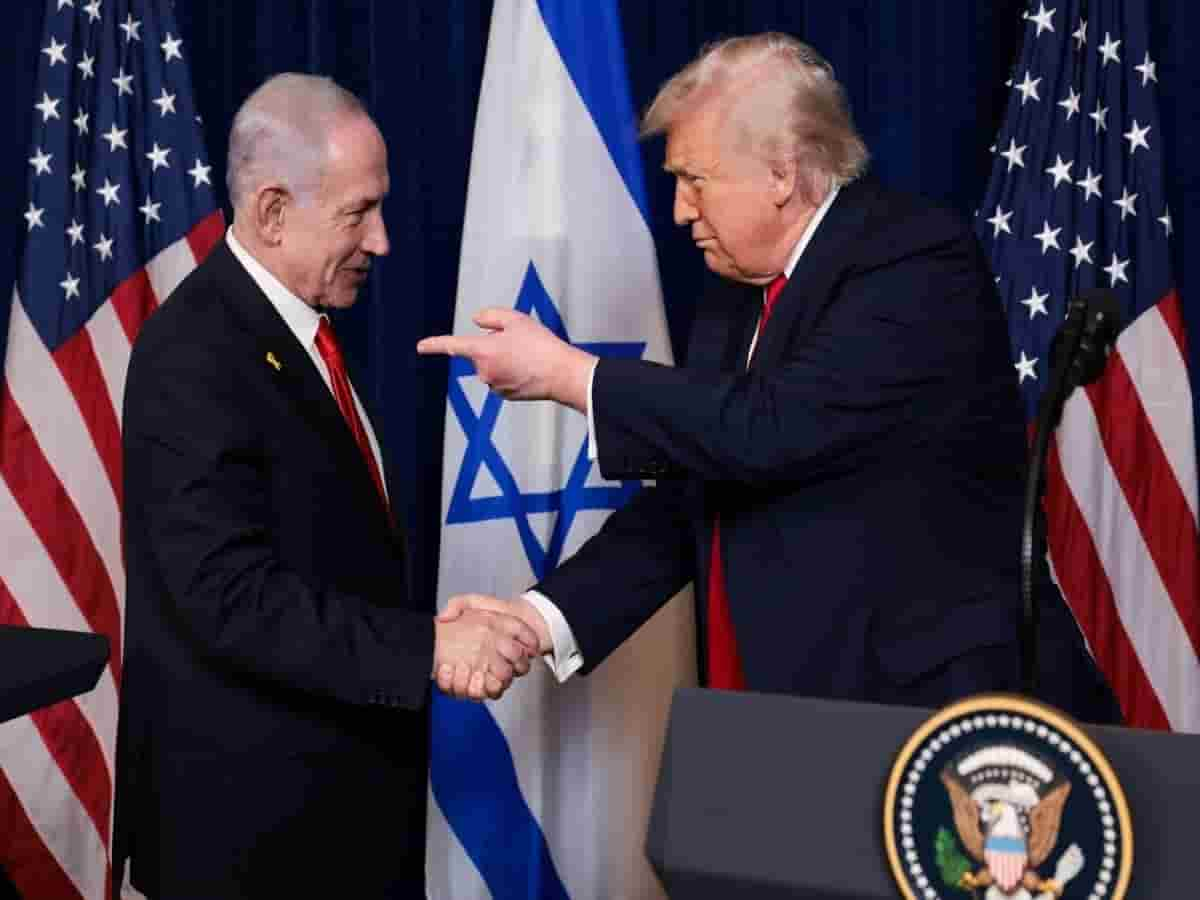
A private weekend telephone conversation between United States President Donald Trump and Israeli Prime Minister Benjamin Netanyahu has sparked intense diplomatic scrutiny after Israeli media reports described the exchange as an unusually fierce confrontation over the future of the war with Iran. According to accounts published by Israeli outlets Ynet and Yedioth Ahronoth, the call between the two longtime political allies escalated into what one source familiar with the discussion called a “shouting match from hell”. Although Netanyahu’s office has flatly rejected the portrayal of the conversation as hostile and dismissed the reports as “fake news”, the leak has exposed a widening strategic rift between Washington and Jerusalem. More than eight months after the United States and Israel launched a joint military offensive against Iran on February 28, 2026, the two leaders appear sharply divided over whether to resume direct military strikes or rely on diplomacy and economic containment to conclude the conflict. For readers following global geopolitics from New Delhi and Mumbai to Washington and Tel Aviv, the reported clash highlights how shifting domestic politics, regional alliances, and competing endgames are testing one of modern diplomacy’s closest partnerships.
Why Netanyahu Is Pushing for Renewed Strikes While Trump Favours Diplomacy
At the core of the reported dispute is a fundamental disagreement over how far military action against Tehran should go. According to reporting by Ynet and the Financial Times, Netanyahu has been telephoning Trump almost daily to press the White House to authorize fresh military strikes against Iran. From Jerusalem’s perspective, halting combat operations without dismantling Iran’s ruling establishment leaves a severe security threat intact. Addressing the opening session of Israel’s 26th Knesset on Tuesday, November 10, 2026, Netanyahu reiterated that Tehran is working to revive its nuclear programme and argued that permanently eliminating that existential threat requires toppling Iran’s leadership. In sharp contrast, Trump has signalled a clear reluctance to reopen a full-scale military offensive. During an interview broadcast on CBS’s 60 Minutes on Sunday, November 9, when asked whether the United States would escalate military action following the midterm elections, Trump replied that he did not see any reason to do so. Rather than seeking regime change through renewed aerial bombardment, the US President appears convinced that severe economic pressure and ongoing diplomatic talks can compel Tehran to make concessions.
How US Midterm Elections, War Costs, and Gulf Allies Shaped Trump’s Pivot
Trump’s cautious posture reflects converging political, financial, and diplomatic pressures both inside the United States and across the Middle East. Senior administration figures, including Trump and Vice President JD Vance, have acknowledged that public fatigue over the prolonged Iran conflict and US military involvement played a significant role in recent Republican losses during the US midterm elections. At the same time, the financial toll of the campaign has drawn mounting scrutiny in Washington, with US Central Command (CENTCOM) estimates submitted to lawmakers placing direct American war expenditures at roughly $47.1 billion—equivalent to nearly ₹4.4 lakh crore—by mid-October 2026, driven by munitions replenishment, aircraft losses, and naval deployments. On the regional front, key Arab and Muslim partner nations across the Persian Gulf have lobbied Washington intensively against restarting combat operations. Speaking to reporters on Monday, November 9, after discussing peace efforts with Qatari Prime Minister Mohammed bin Abdulrahman Al Thani, Trump stated that Gulf allies—including Saudi Arabia, the United Arab Emirates, Qatar, Bahrain, and Kuwait—oppose a new military campaign. Declaring that Iran is “effectively over” militarily and citing “positive momentum” toward ending the eight-month conflict, Trump said renewed US strikes appeared “quite unlikely”. Echoing that stance on Tuesday, US Secretary of State Marco Rubio noted that Washington sees no immediate need to resume major combat operations because economic pressure is achieving its goals, though he warned that American forces remain ready to respond if Tehran crosses established red lines.
Domestic Political Uncertainty in Israel Raises Stakes for Netanyahu
The divergence in war strategy arrives at a precarious political juncture for Benjamin Netanyahu in Jerusalem. Following Israel’s general election in October 2026, Netanyahu’s political bloc lost its parliamentary majority, leaving his hold on power uncertain as opposition leader Gadi Eisenkot works to assemble a governing coalition. Political observers note that Netanyahu’s insistence on decisive action against Iran’s leadership reflects both his long-standing security doctrine and domestic political pressure as he navigates post-election coalition negotiations. Despite vivid Israeli media accounts suggesting tempers boiled over during the weekend phone call, officials in Jerusalem moved swiftly to contain talk of a diplomatic rupture. A senior Israeli official confirmed that Trump and Netanyahu had spoken over the weekend but insisted it was “very much not a difficult conversation,” while the Prime Minister’s Office dismissed claims of a screaming match as fabricated. In Washington, the White House avoided characterizing the tone of the private discussion, choosing instead to underscore American strategic leverage. In a statement to Fox News Digital, a White House spokesperson emphasized that the United States holds a commanding position through its control of the Strait of Hormuz and the mounting strain on Iran’s economy, adding that naval blockade operations—Operation Economic Outcast and Operation Iron Gate—will continue at full force because Trump “holds all the cards and will do whatever is best for the United States”.
A Pattern of Friction Behind Public Praise and High Stakes Ahead
While Trump and Netanyahu have frequently praised each other in public appearances, sharp private disagreements between the two leaders are not unprecedented. In June 2026, the pair reportedly clashed during a tense 15-minute phone call over expanded Israeli strikes in Lebanon, with Trump voicing anger that unilateral military moves risked derailing Washington’s diplomatic track with Tehran. The latest friction unfolds during a sensitive phase in Qatari-led mediation, with Doha announcing on Tuesday that it had received encouraging responses from both Washington and Tehran on a potential framework, even though major sticking points remain unresolved. Meanwhile, Tehran has raised the stakes by warning that any renewed attack on Iranian soil would trigger retaliatory strikes against US military bases, including installations hosted in European countries. For India and other major Asian energy importers closely monitoring maritime security and crude oil transit through the Strait of Hormuz, whether Washington’s diplomatic and economic containment strategy holds or Jerusalem’s push for renewed strikes prevails will be decisive for regional stability in the weeks ahead.