North India Statesman
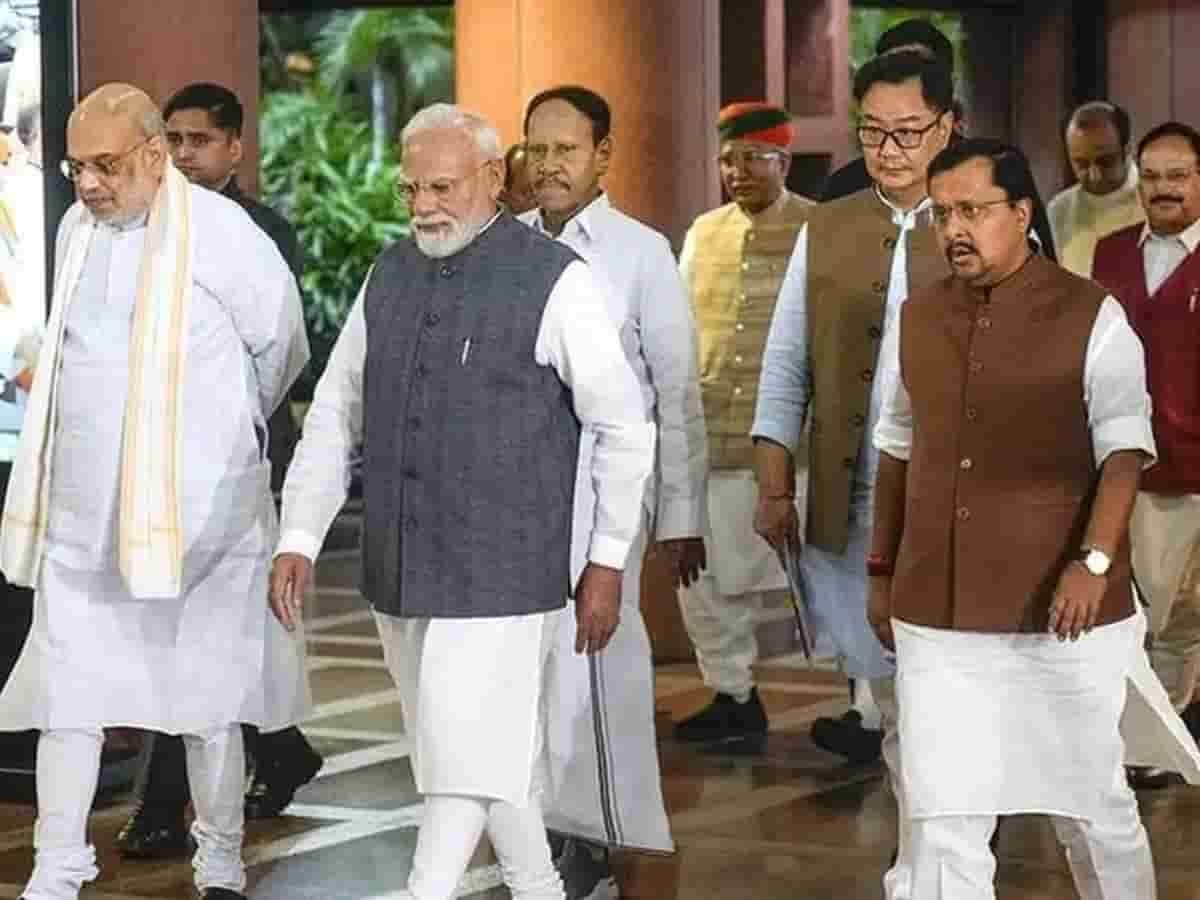
The Narendra Modi-led National Democratic Alliance (NDA) government is moving closer to securing the crucial two-thirds majority threshold in the Lok Sabha, fueling strong indications in New Delhi that the Centre may soon convene a special session of Parliament to reintroduce and pass the high-stakes Delimitation and Women’s Reservation legislation. According to senior government and parliamentary sources cited in national media reports on Thursday, November 12, 2026, floor managers in the ruling coalition are confident of crossing the required constitutional mark—potentially by a margin of 15 to 18 votes—after months of behind-the-scenes outreach to unaligned regional parties and smaller parliamentary groups. In the 543-member Lok Sabha, which currently has three vacant seats, passing a Constitution amendment bill requires the support of at least two-thirds of members present and voting, alongside a majority of the total membership of the House—a benchmark pegged around 361 votes when the full House participates. The push follows an unusual early prorogation of the previous parliamentary session, which opposition leaders allege was timed deliberately to give the ruling alliance room to consolidate numbers before bringing the contentious delimitation framework back to the floor.
What Happened When the Delimitation Bill Was Defeated in April 2026
To understand the urgency behind the government’s renewed floor strategy, political observers point back to the dramatic parliamentary setback in April 2026. During a special sitting on April 16 and 17, Union Law Minister Arjun Ram Meghwal introduced the Constitution (131st Amendment) Bill, 2026, alongside the Delimitation Bill, 2026, and the Union Territories Laws (Amendment) Bill, 2026. Because the government linked the operational rollout of one-third women’s reservation in Parliament and state assemblies directly to the delimitation exercise, the legislative package required a two-thirds supermajority under Article 368. When the Lok Sabha voted on April 17, the amendment secured 298 votes in favour against 230 votes against—falling well short of the two-thirds requirement and resulting in the bill’s defeat on the floor. That outcome marked a rare legislative setback for the NDA in its third term and triggered months of political recalibration ahead of the upcoming winter calendar.
Key Provisions of the Delimitation and 131st Amendment Package
At the heart of the proposed legislation is a sweeping redrawing of India’s electoral map and parliamentary architecture. Under the framework examined by PRS Legislative Research, the Constitution (131st Amendment) Bill proposes raising the maximum constitutional ceiling of Lok Sabha seats from 550 to 850, while keeping the Rajya Sabha’s upper limit unchanged at 250. If implemented with a 50% expansion, total Lok Sabha strength could rise from 543 to roughly 815 seats, shifting the ratio between the Lower and Upper Houses from 2.2:1 to 3.3:1 and raising the permissible size of the Union Council of Ministers from 81 to 122. The accompanying Delimitation Bill establishes a three-member Delimitation Commission chaired by a sitting or former Supreme Court judge, tasked with readjusting Lok Sabha and state assembly constituencies and rotating seats reserved for Scheduled Castes, Scheduled Tribes, and women.
| Legislative / Parliamentary Parameter | Key Verified Details |
| Core Bills in Package | Constitution (131st Amendment) Bill, 2026; Delimitation Bill, 2026; UT Laws (Amendment) Bill, 2026 |
| Lok Sabha Strength & Vacancies | 543 sanctioned seats (3 current vacancies; 540 effective members) |
| Two-Thirds Majority Benchmark | ~361 votes required (with full House voting); Centre projects 15–18 vote cushion |
| April 17, 2026 Vote Tally | 298 in favour, 230 against (defeated for lacking two-thirds majority) |
| Proposed Lok Sabha Ceiling | Increased from 550 to 850 seats (Rajya Sabha unchanged at 250) |
Why Southern States and the Opposition Are Raising Strong Objections
While Union Home Minister Amit Shah had assured lawmakers during the April debate that southern states would not lose out—stating that total Lok Sabha seats across the five southern states would rise from 129 to 195, nudging their share slightly from 23.76% to 23.87%—the opposition remains deeply skeptical. Leader of the Opposition Rahul Gandhi and Congress General Secretary KC Venugopal have accused the Bharatiya Janata Party (BJP) of trying to engineer a unilateral political advantage while hiding behind the Women’s Reservation Act. Critics across Chennai, Bengaluru, Hyderabad, Thiruvananthapuram, and Kolkata argue that population-weighted delimitation penalizes states that successfully stabilized population growth, while Congress leaders have also demanded clarity on whether a nationwide caste census will inform future representation.
What Happens Next in New Delhi Ahead of the Winter Calendar
With floor managers signaling that fence-sitting parties have been brought on board, New Delhi’s political corridors are bracing for an official notification from Rashtrapati Bhavan convening a special parliamentary sitting. For voters and regional parties across Uttar Pradesh, Bihar, Rajasthan, Tamil Nadu, and Karnataka, the outcome of this session will determine not only how quickly women’s reservation moves from statute to reality, but also how India’s democratic representation is reshaped for decades to come.