North India Statesman
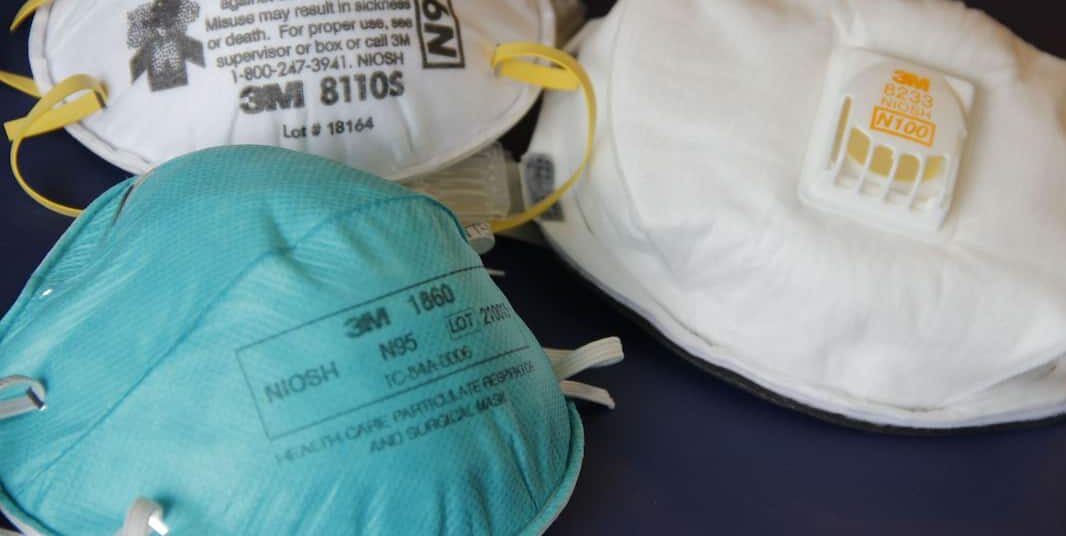
Every winter, as post-Diwali smog and stagnant weather push the Air Quality Index (AQI) into the “Very Poor” and “Severe” brackets across North India—from Delhi-NCR to industrial and urban belts across Uttar Pradesh, including Lucknow, Kanpur, and Unnao—pharmacies and online stores see a sudden rush for anti-pollution masks. Stepping outside without respiratory protection exposes your lungs to microscopic particulate matter (PM2.5 and PM10) that can penetrate deep into the bloodstream. Yet standing in front of a shelf stocked with respirators leaves most buyers puzzled over one critical choice: should you buy a standard N95 mask or pay extra for an N99 respirator? While both ratings look almost identical on packaging, understanding how they filter toxic particles, how hard they make you work to breathe, and how tightly they seal against your skin makes all the difference in real-world protection.
What Do the N95 and N99 Ratings Actually Mean?
Before comparing prices or designs, it helps to decode the technical label stamped on certified respirators. Under international testing standards set by the US National Institute for Occupational Safety and Health (NIOSH), the letter “N” stands for “Not resistant to oil,” meaning the filter media is engineered to trap dry, non-oil-based airborne particles such as road dust, construction debris, crop-burning smoke, vehicular soot, and biological aerosols. The numbers—95 and 99—indicate the minimum percentage of airborne test particles measuring 0.3 microns or larger that the filter material must capture under controlled laboratory conditions. An N95 respirator blocks at least 95 percent of these fine particles, whereas an N99 respirator captures at least 99 percent. Although a four-percentage-point gap sounds minor on paper, it translates into a meaningful difference in particle leakage: out of every 10,000 microscopic pollution particles hitting the mask surface, an N95 filter allows up to 500 through, while an N99 filter lets through no more than 100.
Filtration Efficiency vs. Breathing Resistance: The Real-World Trade-Off
If an N99 mask blocks more fine particles, it might seem like the automatic winner for every commuter, but respiratory physics introduces an unavoidable trade-off. To trap 99 percent of ultra-fine pollutants, N99 masks rely on denser, multi-layered electrostatic filter media with a tighter weave. That extra density creates noticeably higher breathing resistance, meaning your lungs have to pull slightly harder with every inhalation. Healthy adults commuting on two-wheelers or walking through traffic-choked roads where AQI regularly crosses 300 to 400 often adapt to this resistance within a couple of days, especially when using masks equipped with one-way exhalation valves that vent warm, humid air. However, for senior citizens, young children, or individuals living with asthma, chronic obstructive pulmonary disease (COPD), or cardiac conditions, high breathing resistance can trigger fatigue or breathlessness, causing them to pull the mask down—which instantly destroys all protection. For these groups, a lightweight, breathable N95 respirator worn consistently offers far safer protection than an N99 mask worn intermittently.
Why Fit and Facial Seal Matter More Than the Label
Public health guidance from India’s National Centre for Disease Control (NCDC) emphasises that even the highest-rated N99 respirator fails if polluted air leaks through gaps around the bridge of the nose, cheeks, or chin. Air always follows the path of least resistance; if a stiff mask leaves a two-millimetre gap beside your nose, unfiltered PM2.5 particles bypass the filter entirely every time you inhale. Conventional cloth masks, handkerchiefs, scarves, and loose blue surgical masks offer virtually zero defence against severe particulate pollution because they neither seal against the face nor contain electrostatically charged melt-blown polypropylene layers. When shopping for either an N95 or N99 respirator, always prioritise a mouldable metal nose clip, soft inner edge sealing, and dual elastic headbands or adjustable ear loops that keep the mask anchored when you speak or turn your head. Facial hair also breaks the perimeter seal, so clean-shaven skin along the mask border ensures maximum efficiency.
Comparing Popular N95 and N99 Pollution Masks in India
To help you evaluate how leading disposable and reusable respirators differ in design, valve support, and filter construction, the comparison table below breaks down key specifications across trusted N95 and N99 options available in India, including 3M N95 8210 Particulate Respirator Mask, 3M 8511 Particulate Disposable Respirator N95, 3M 9105 VFlex Particulate Respirator, Drger X-plore 1950 N95 respirator mask with exhalation valve, OxiClear N99 Anti-Pollution Mask with Valve, atovio Nova N99 Anti-Pollution Mask, GHAir+ Anti Pollution Mask, and Yugan N99 Anti Pollution Reusable and Washable Face Masks.
One of the most overlooked facts in any pollution buying guide is that standard particulate respirators do not block toxic gases. Urban smog contains hazardous gaseous pollutants such as nitrogen dioxide ($NO_2$), sulphur dioxide ($SO_2$), carbon monoxide ($CO$), and ground-level ozone ($O_3$) emitted by vehicle exhausts and industrial stacks. Pure N95 and N99 fibres only trap solid and liquid aerosols, meaning gas molecules pass straight through. If you commute along heavy highway corridors or smell sharp chemical fumes, look for reusable N99 masks that incorporate an integrated activated carbon layer, which helps adsorb volatile organic compounds (VOCs) and unpleasant exhaust odours. Even then, medical experts stress that masks are only one layer of defence and should be paired with tracking local AQI forecasts, avoiding strenuous outdoor exercise during peak morning and late-evening smog spikes, and running HEPA air purifiers indoors.
Final Verdict: Which Mask Should You Buy?
Choosing between an N95 and an N99 mask comes down to your daily pollution exposure, commute style, and lung comfort. Buy a certified N95 mask if you face moderate-to-poor air quality (AQI 100–300), walk or exercise outdoors, wear glasses that fog easily, or have asthma or breathing sensitivity where low airflow resistance is essential. Step up to a reusable N99 mask with an exhalation valve and activated carbon filter if you commute daily on a bike or scooter through severe smog (AQI 300+), work outdoors near traffic or construction sites, and want maximum protection against ultra-fine PM2.5 particles over an entire winter season.