North India Statesman
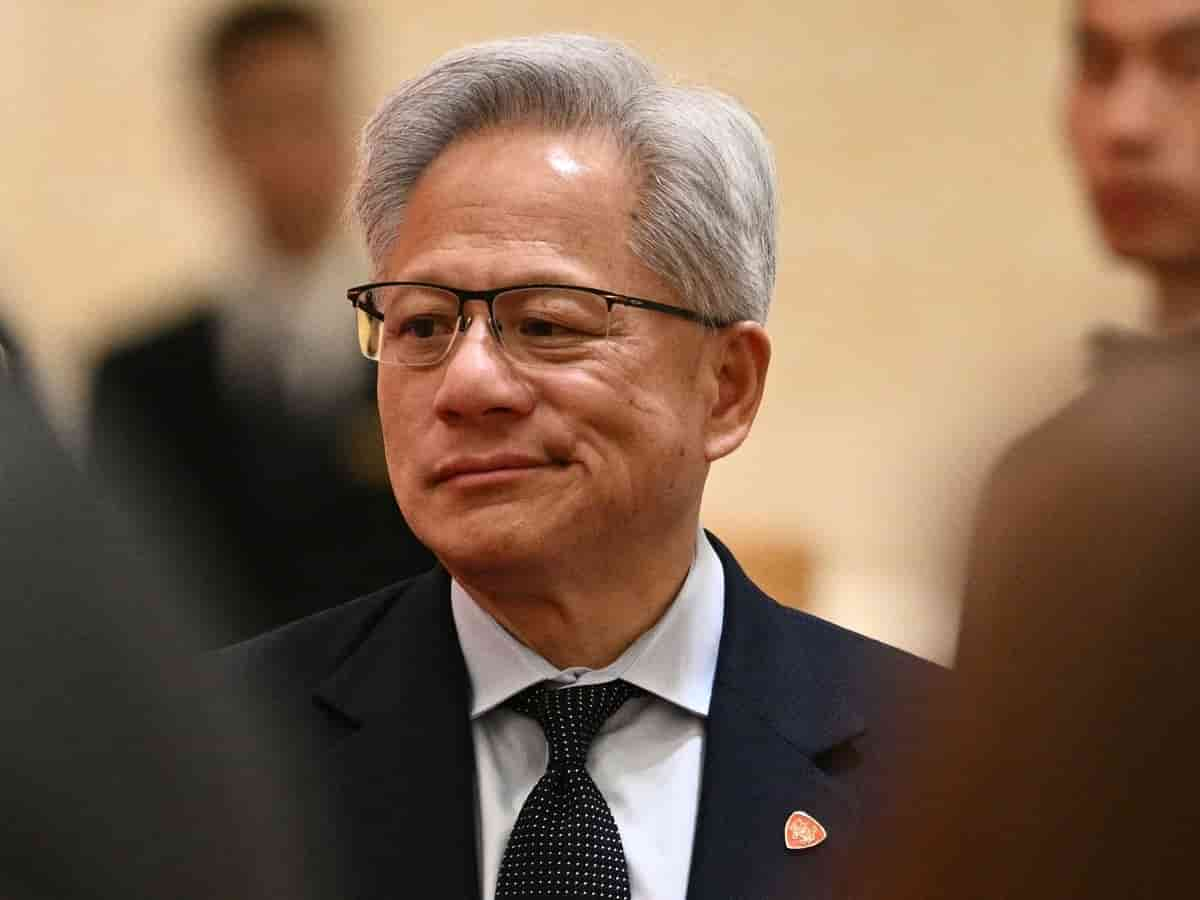
For more than three decades, Jensen Huang was the unmistakable symbol of Silicon Valley’s artificial intelligence revolution—a leather-jacket-wearing founder who turned a struggling graphics chip startup into a $4 trillion powerhouse and drew rockstar crowds from Santa Clara to Bengaluru. Yet by late Wednesday night, November 11, 2026, the relentless energy that defined his 33-year reign had completely evaporated. People inside the room during his final hours at Nvidia describe a leader who looked visibly broken, emotionally drained, and ready to surrender after weeks of denying infidelity, enduring gruelling boardroom interrogations, and watching an escalating scandal wipe over $600 billion off his company’s market valuation. When Nvidia’s board officially announced on Thursday morning, November 12, that the 63-year-old co-founder had resigned immediately as chief executive, president, and director, it marked one of the most dramatic falls from grace in modern corporate history.
How Two Weeks of Revelations Shattered a Tech Titan
The unravelling of Jensen Huang’s leadership unfolded at breathtaking speed over a fourteen-day stretch that left both Wall Street and global tech hubs stunned. The crisis began in late October when reports surfaced linking Huang to Alice Huang—also known as Huang Le, a top executive at Singapore-based data centre firm Megaspeed—whom US intelligence officials suspected of acting on behalf of Chinese intelligence. Initially, Nvidia’s communications team dismissed the association as routine business, and Huang vehemently pushed back against the swirl of rumours. However, as national security scrutiny intensified over whether Megaspeed had helped route restricted AI processors to China, Huang issued an internal letter to employees on November 8 admitting to an extramarital affair with Alice Huang and apologising to his family. Even then, Silicon Valley peers rallied around him and Nvidia’s board expressed confidence in his leadership—until a second bombshell landed on November 11, revealing that Huang had also engaged in an affair with Kimberly Powell, Nvidia’s vice president of healthcare and a direct subordinate.
A Barrage of Questions and an Unconditional Surrender
Behind closed doors at Nvidia’s Santa Clara headquarters, the revelation of a workplace relationship with a direct report—followed quickly by reports of a third alleged liaison with another employee—shattered whatever institutional shield Huang still possessed. For years, Huang had been legendary across the semiconductor industry for micromanaging every detail, from chip architecture to entry-level compensation packages. By Wednesday night, facing an emergency board meeting backed by outside legal counsel and a relentless barrage of questions over governance, disclosure, and national security exposure, his trademark command vanished. According to people familiar with those final hours, Huang repeatedly brushed aside discussions with phrases like “whatever” and “I don’t care,” turning deeply penitent and berating himself in harsh, self-loathing terms. Rather than forcing the directors who had stood beside him for decades to vote him out, Huang offered an unconditional surrender, agreeing to step away completely from the enterprise he built from scratch in 1993.
National Security Probes, Lawsuits, and Washington Fallout
While personal indiscretions triggered his immediate departure, the geopolitical stakes surrounding the scandal ensure that Huang’s troubles are far from over. US federal investigators—including the FBI and the Justice Department under Attorney General Todd Blanche—have been examining whether foreign intelligence operatives exploited personal proximity to gain insight into American semiconductor supply chains, even though Nvidia maintains it has found no evidence that company or national security secrets were compromised. Beijing has flatly rejected the espionage claims as a smear. Meanwhile, retail shareholders in California have already filed lawsuits accusing Nvidia and Huang of misleading investors by failing to disclose risks tied to his relationships, and Senate Banking Chair Tim Scott has summoned Huang to testify before Congress next month. The fallout has even reached the White House, where officials are reportedly weighing the future of Commerce Secretary Howard Lutnick amid renewed scrutiny over US chip export controls.
What Jensen Huang’s Exit Means for Nvidia and India’s AI Ecosystem
In the wake of Huang’s abrupt departure, Nvidia’s board moved swiftly to stabilise investor confidence by appointing longtime Chief Financial Officer Colette Kress as interim CEO and naming board member Harvey C. Jones as the company’s first-ever chairman. Despite an initial sharp sell-off on the Nasdaq—leaving Nvidia shares down roughly 30 percent from their October peak—many Wall Street analysts note that the company’s hardware dominance and software moat remain intact in the near term. Still, the vacuum left by a visionary founder carries deep resonance in markets like India, where Huang frequently partnered with domestic conglomerates, data centre operators, and AI startups to build sovereign computing infrastructure. Without its charismatic chief evangelist at the helm, Nvidia now enters an unfamiliar era—proving that in modern corporate governance, even the architect of a $4 trillion empire cannot outrun accountability.