North India Statesman
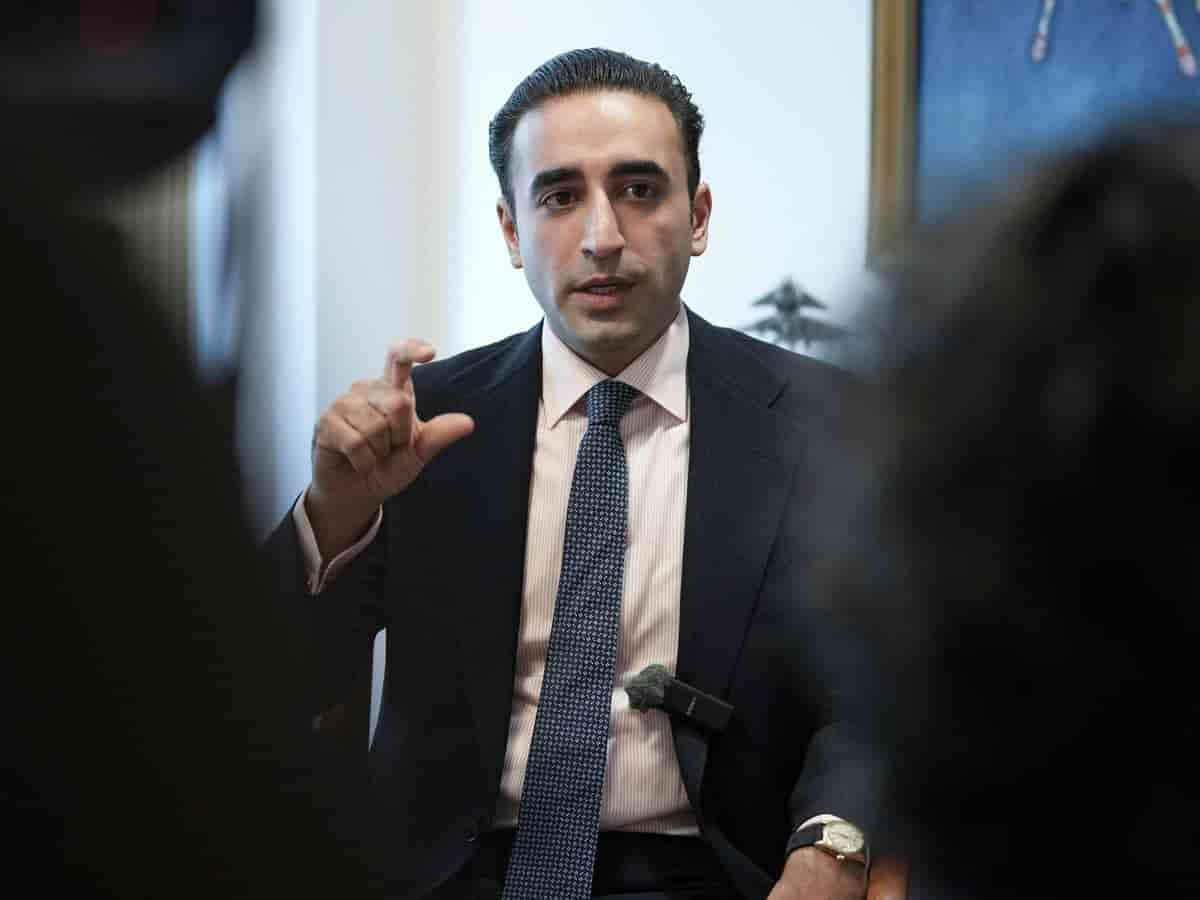
A major political fault line has cracked open inside Pakistan’s ruling coalition after Pakistan Peoples Party (PPP) chairman Bilawal Bhutto-Zardari issued a stark warning to Prime Minister Shehbaz Sharif against any attempt to carve new provinces out of Sindh. Addressing a crowded “Meet the Press” session at the Karachi Press Club on Tuesday, November 17, 2026, the former foreign minister declared that forcibly dividing Sindh or separating Karachi from the province would trigger widespread violence across urban centres. Warning that “blood will flow in Karachi and Hyderabad” if federal authorities try to redraw provincial boundaries through coercion rather than constitutional consensus, Bhutto-Zardari accused key members of the Islamabad administration of deliberately bypassing the President of Pakistan and Sindh’s elected leadership. His fiery intervention comes amid mounting speculation that senior federal ministers and the military establishment are exploring an ambitious administrative restructuring plan to split Pakistan’s four existing provinces into up to 14 smaller units ahead of the March 2027 Senate elections.
What Triggered Bilawal Bhutto-Zardari’s Outburst Against Shehbaz Sharif?
The controversy escalated following a series of public statements by federal cabinet heavyweights—including Interior Minister Mohsin Naqvi, Planning Minister Ahsan Iqbal, and Defence Minister Khawaja Asif—advocating for the creation of new administrative provinces to address governance bottlenecks. Earlier in November, Naqvi floated the idea of holding a public referendum to gauge support for additional provinces, while Ahsan Iqbal openly discussed proposals to divide Punjab into four provinces, Sindh into four, and Khyber Pakhtunkhwa and Balochistan into three each, alongside granting Islamabad separate provincial status. Speaking in Karachi, Bhutto-Zardari expressed outrage that neither Prime Minister Shehbaz Sharif nor any federal minister had consulted him or his father, President Asif Ali Zardari, on a matter touching the core of Pakistan’s federal compact. Emphasising that “brother will kill brother in Sindh” if the province is broken up against the wishes of its people, the PPP chief stressed that while his party does not oppose new provinces in principle, any boundary change must strictly follow the 1973 Constitution and provincial assembly approval.
Why Karachi Is at the Heart of Pakistan’s Provincial Row
For the Pakistan Peoples Party, which has governed Sindh continuously since 2008, proposals to carve Sindh into multiple units strike directly at both ethnic identity and economic survival. Karachi serves as Pakistan’s financial capital, primary seaport, and largest revenue-generating metropolis. Separating Karachi—or dividing Sindh along urban-rural lines—would drastically diminish the provincial government’s fiscal base and strip the PPP of its most vital political stronghold. The Sindh Provincial Assembly has repeatedly passed resolutions rejecting any bifurcation of the province, including a formal resolution adopted as recently as September 2026. Recalling historical flashpoints such as the One Unit scheme and the earlier separation of Karachi as a federal capital, Bhutto-Zardari reminded Islamabad that Sindhi society has historically resisted top-down administrative engineering, noting that it was his grandfather, Zulfikar Ali Bhutto, who restored provincial autonomy under the 1973 Constitution.
Financial Grievances, Imran Khan Remark, and Call for a ‘System Reset’
Beyond the boundary dispute, Bhutto-Zardari used the Karachi press briefing to air deep-seated grievances against the federal government over fiscal federalism and economic distress:
-
Withheld Provincial Funds: The PPP chairman alleged that sixteen years after the 18th Constitutional Amendment, provinces are still being denied their rightful financial share, claiming that roughly Rs 1.7 trillion in petroleum levy revenues owed to the provinces had been withheld by Islamabad.
-
Critique of Federal Priorities: Bhutto-Zardari pointed out the irony that cabinet figures who have never won a direct popular election were pushing to divide Sindh, while genuine demands for administrative creation in regions like South Punjab were being ignored.
-
Call for an All-Parties Conference: Warning that Pakistan’s governance system has not merely faltered but been “deliberately destroyed,” he called for a national round-table conference of all political stakeholders—even referring to incarcerated Pakistan Tehreek-e-Insaf (PTI) founder Imran Khan as a “political prisoner”—to end political vendettas and tackle soaring inflation and unemployment.
Impact on Pakistan’s Coalition Stability and Regional Watch
Although the PPP supports Shehbaz Sharif’s minority coalition government in the National Assembly without holding cabinet portfolios, Bhutto-Zardari’s unusually blunt warning signals that backing from Sindh is conditional on respecting provincial autonomy. Constitutional experts in Islamabad have similarly noted that under Article 239 of Pakistan’s Constitution, creating a new province requires a two-thirds majority in both houses of Parliament as well as a two-thirds majority in the affected provincial assembly—rendering a unilateral federal push or simple referendum legally unviable. As economic pressures, street unrest, and security challenges in Balochistan and Khyber Pakhtunkhwa already strain the state, diplomatic observers across South Asia are closely watching whether Shehbaz Sharif’s administration retreats from the 14-province proposal or risks fracturing its fragile parliamentary coalition.