North India Statesman
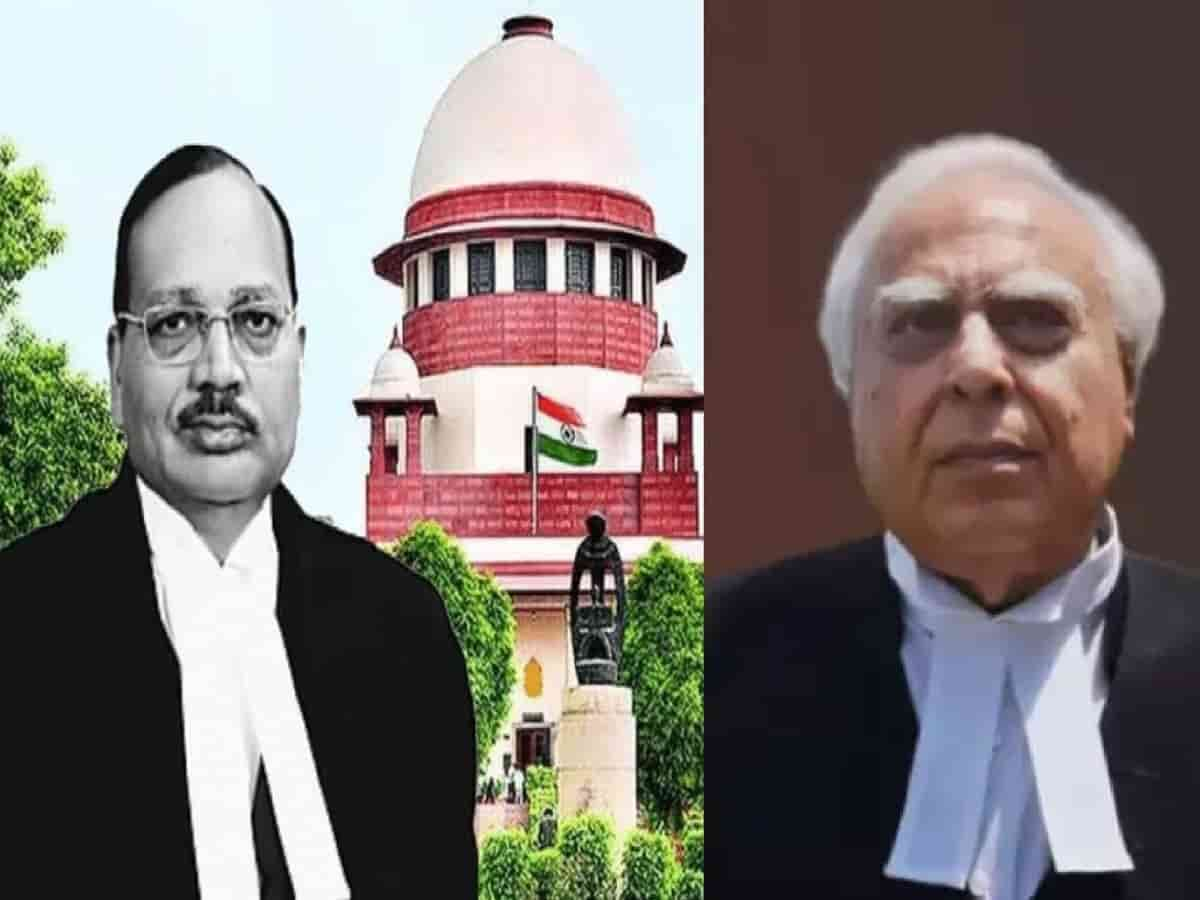
Senior advocate Kapil Sibal issued a dramatic constitutional warning inside the Supreme Court of India on Thursday, November 19, 2026, cautioning a three-judge bench led by Chief Justice of India (CJI) Surya Kant that allowing a breakaway legislative faction to claim control over an original political party would destabilise parliamentary democracy across the country. Appearing on behalf of the Uddhav Thackeray-led Shiv Sena (UBT) faction during rejoinder arguments in the long-running Maharashtra MLA disqualification and party symbol dispute, Sibal contended that the Maharashtra Assembly Speaker and the Election Commission of India (ECI) had committed a grave legal error by conflating a split within a legislature party with a split in the broader organisational political party. Addressing CJI Surya Kant, Justice Joymalya Bagchi, and Justice V. Mohana, Sibal declared emphatically, “If this is allowed to happen, no elected government will survive, My Lords!”. The high-stakes courtroom exchange immediately reverberated across legal and political circles from New Delhi to Mumbai, Thane, Pune, and Nagpur, as the apex court nears the final phase of hearings on a dispute that reshaped Maharashtra politics in 2022.
Why Did Kapil Sibal Issue the Warning to Chief Justice Surya Kant?
Sibal’s sharp intervention came directly in response to submissions made earlier in the week by senior advocates representing Maharashtra Deputy Chief Minister Eknath Shinde’s faction. On Wednesday, November 18, Shinde’s counsel, Dhruv Mehta, had argued before the bench that the MLAs who rebelled against Uddhav Thackeray in June 2022 had not defected from the Shiv Sena, but were instead seeking to restore the party’s original ideological alignment after Thackeray severed ties with the Bharatiya Janata Party (BJP) in November 2019 to form the Maha Vikas Aghadi (MVA) government with the Congress and the Nationalist Congress Party (NCP). Mehta maintained that internal dissent does not amount to defection under the Tenth Schedule of the Constitution, and argued that the Speaker had rightly refused to enforce internal party discipline.
Rebutting that line of argument on Thursday afternoon, Sibal warned the Supreme Court that legitimising such reasoning would hand a permanent blueprint to rebel legislators in every state assembly and Parliament. If a group of MLAs or MPs can break away, claim ideological disagreement with their party leadership, and then rely on their legislative headcount to capture the parent party’s name and election symbol, Sibal argued, no duly elected government anywhere in India would remain safe from engineered toppling.
Key Legal Arguments Presented by Kapil Sibal Under the Tenth Schedule
Structuring his rejoinder around foundational principles of constitutional law and the Tenth Schedule (anti-defection law), Sibal urged the bench to examine three core legal questions regarding the powers of the Assembly Speaker and the scope of judicial review:
-
Limits of the Speaker’s Jurisdiction: Sibal submitted that a Legislative Assembly Speaker has no constitutional authority to adjudicate upon a political party’s internal constitution or organisational hierarchy. He argued that by examining the Shiv Sena’s 1999 constitution to question the validity of its 2018 leadership structure, the Speaker stepped outside the boundaries of Paragraph 6 of the Tenth Schedule.
-
Distinction Between Political Party and Legislature Party: Emphasising established Supreme Court precedent, Sibal stressed that the Tenth Schedule explicitly recognises a “political party” and a “legislature party” as two distinct legal entities. A legislative majority inside the House cannot unilaterally override the organisational wing of the party, nor can a faction sitting in Guwahati appoint a new chief whip without authorisation from the parent political party.
-
Interconnection Between Disqualification and Party Symbol: Sibal argued that the Speaker’s refusal to disqualify the rebel MLAs and the Election Commission’s February 2023 decision awarding the Shiv Sena name and “bow and arrow” symbol to the Shinde group were inextricably linked. He contended that the Election Commission relied heavily on legislative majority while ignoring organisational support, creating a circular logic where un-disqualified rebels claimed the party symbol.
Is the Shiv Sena Disqualification Case Now ‘Academic’? What the Bench Said
A critical flashpoint during Thursday’s hearing centred on whether the expiration of the previous Maharashtra Legislative Assembly’s term has rendered the disqualification petitions moot. During the proceedings, Justice Joymalya Bagchi observed that the opposing side’s contention is that conducting a judicial review after the Assembly term has ended may amount to an “academic exercise,” noting that while the court can examine whether the Speaker’s order was legally sound, it must consider the practical utility of doing so when the tenure of that House is over.
Sibal strongly pushed back against characterising the matter as academic. He told the bench that because the Speaker’s order was delivered while the Assembly was still functioning, the Supreme Court’s constitutional duty is to test whether that decision was fair, reasonable, and compliant with the law. Furthermore, Sibal pointed out that the dispute directly governs the legitimacy of the political party’s identity, election symbol, and past legislative proceedings—meaning that declaring the issue purely academic would leave the petitioner with no legal remedy despite approaching the court in time.
What Happens Next in the Supreme Court Hearing?
The protracted legal battle—arising out of Special Leave Petitions filed by Thackeray faction chief whip Sunil Prabhu and Uddhav Thackeray challenging both the Maharashtra Speaker’s rulings and the ECI’s symbol allotment—has now reached its concluding stages before CJI Surya Kant’s bench. With Sibal’s rejoinder submissions underway, the Supreme Court has scheduled the next hearing in the matter for Wednesday, November 25, 2026. For constitutional experts, political parties, and voters across Maharashtra and India, the apex court’s eventual verdict is expected to set a landmark precedent defining how the Tenth Schedule prevents backdoor splits and safeguards the stability of elected governments.