North India Statesman
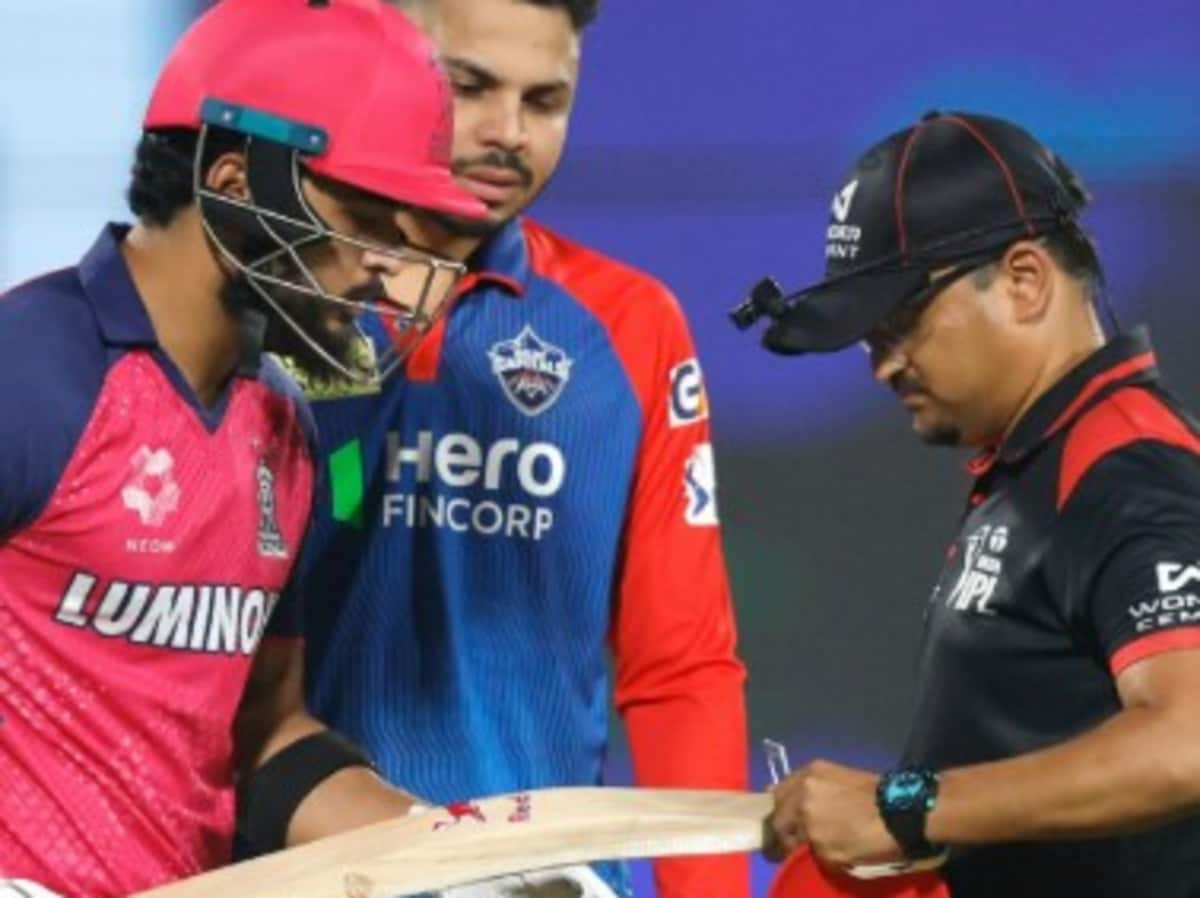
Power-hitters across world cricket are about to face much stricter scrutiny every time they walk out to the middle. Following the high-profile rollout of on-field bat inspections in the Indian Premier League (IPL), the International Cricket Council (ICC) has officially cleared the path to introduce similar “bat gauge” checks across international matches. Recommended by the ICC Cricket Committee—chaired by former India captain Sourav Ganguly—and approved by the Chief Executives Committee during the governing body’s recent meetings in Bali, the new protocol empowers match officials to conduct surprise, real-time inspections of players’ willow. For cricket fans across India—from passionate followers in Mumbai, Delhi, and Kolkata to local cricket circles in Unnao and across Uttar Pradesh—this landmark decision signals a decisive effort by cricket’s lawmakers to restore the traditional balance between bat and ball.
How Will the New ICC Bat Gauge Rule Work on the Field?
Under the upcoming enforcement guidelines, umpires will carry a flat, rectangular measuring instrument—known as a bat gauge—featuring a house-shaped cut-out corresponding to the exact maximum dimensions permitted under cricket laws. Before a batter enters the crease or begins their innings, on-field or fourth umpires can randomly ask them to slide their bat cleanly through the gauge. Crucially, the inspection includes any protective tape, anti-scuff sheets, or toe guards fitted onto the blade. If the willow sticks at any edge or fails to pass smoothly through the frame, the batter will be barred from using it and must immediately request a compliant replacement from the dressing room. Officials have made it clear that there will be zero tolerance—even if an oversized blade is the result of a genuine manufacturing defect rather than deliberate tampering.
What Are the Legal Cricket Bat Dimensions Under MCC Law 5?
While the on-field gauge check is a fresh enforcement mechanism at the international level, the underlying size restrictions have been part of Law 5 of the Marylebone Cricket Club (MCC) Laws of Cricket since October 2017. Under these rules, every legal bat used in international competition must strictly stay within four physical boundaries: overall length must not exceed 38 inches (96.52 cm), the widest part of the blade cannot exceed 4.25 inches (10.8 cm), overall spine depth is capped at 2.64 inches (6.7 cm), and edge thickness must remain within 1.56 inches (4.0 cm). Previously, match officials typically conducted routine bat checks a day prior to a fixture, often inspecting only a sample of bats rather than every single blade inside a player’s kit bag. That procedural gap left room for untested or borderline bats to sneak into live play—a loophole the ICC’s on-field gauge system is specifically designed to close.
Why Is the ICC Cracking Down on Oversized Bats Now?
The primary catalyst behind this regulatory tightening is the rapid, unrelenting surge in boundary-hitting—particularly sixes—in modern white-ball cricket. Statistical trends from recent seasons highlight just how dramatically the game has tilted in favour of batters. In IPL 2026, matches witnessed an astonishing average of 19.27 sixes per game, more than double the 8.88 sixes per match recorded during the tournament’s inaugural edition in 2008. While improved athletic conditioning, specialised power-hitting coaching, flat pitches, and shorter boundary ropes to accommodate commercial signage all play a role, administrators and bowling experts have long suspected that thick-edged willow gives batters an unfair mechanical advantage. Thicker spines and edges transfer greater energy upon impact, turning mistimed top-edges and off-centre hits into effortless maximums.
Lessons From the IPL and New Ball Trials for U19 World Cups
The ICC’s confidence in adopting live bat checks stems directly from the IPL’s successful implementation of the system. During recent IPL fixtures, several prominent cricketers—including Sunil Narine, Ravindra Jadeja, and Riyan Parag—were forced to swap their bats mid-game after their blades failed to clear the umpires’ rectangular gauge on live television. Alongside tightening bat compliance, the Sourav Ganguly-led Cricket Committee is also looking at the other half of the equation: improving ball quality and durability. The panel has recommended trialling alternative white balls in age-group international tournaments, starting with the ICC Under-19 World Cups in 2029 and 2030, while introducing a more competitive procurement and approval framework. Although white Kookaburra balls remain the standard across ICC limited-overs events and bilateral series, officials view these trials as an essential research-and-development step to ensure balls retain hardness and seam movement in high-scoring conditions.
What This Means for Batters and Bowlers Ahead of Upcoming Series
Once the ICC distributes final operational protocols to its elite and international panel umpires, surprise bat gauge checks will become a regular sight across Tests, ODIs, and T20 Internationals. For batters, the rule means double-checking every bat in their kit—especially after applying fresh anti-scuff sheets or extra grip tape—before stepping across the boundary rope. For bowlers, who have spent years defending shrinking boundaries on batting-friendly surfaces, the move offers welcome reassurance that every six cleared over the ropes comes strictly off a regulation blade.