North India Statesman
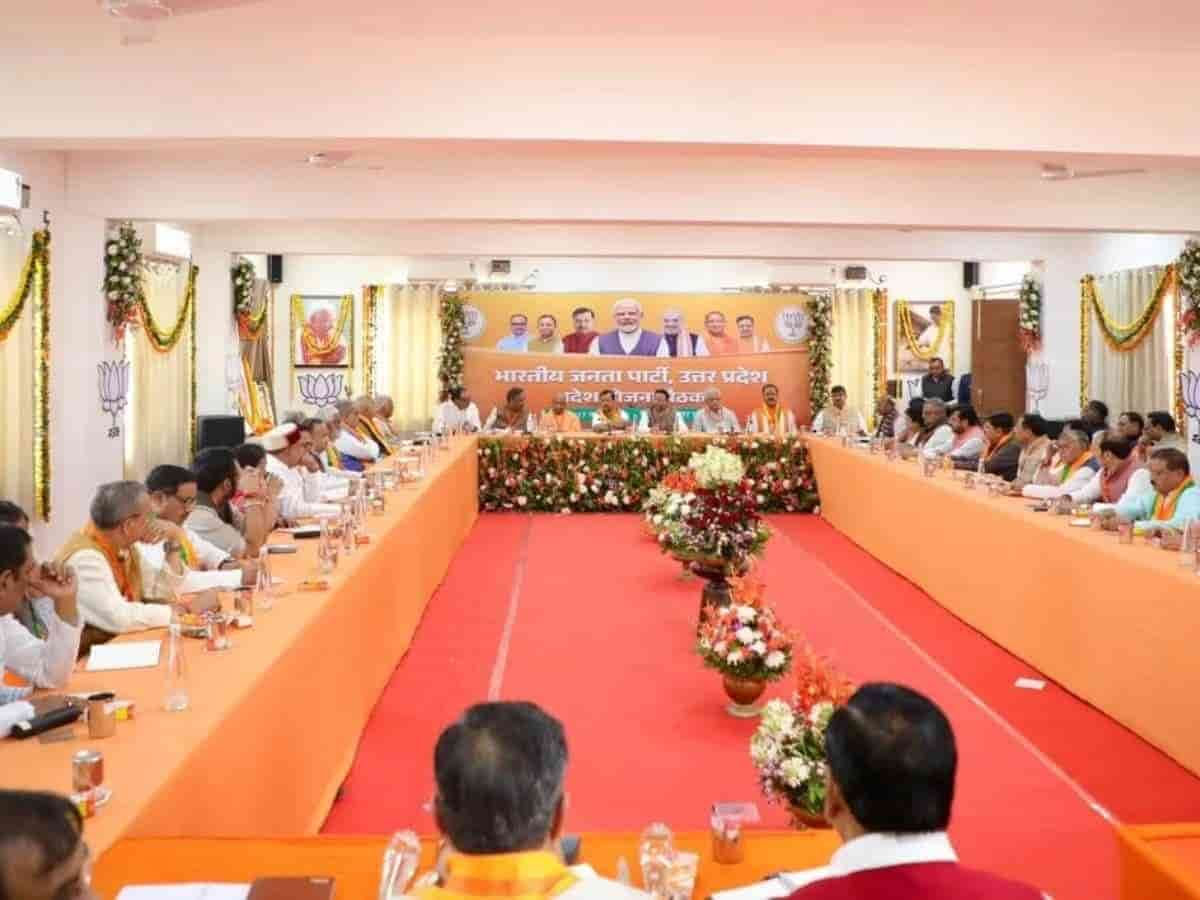
With the 2027 Uttar Pradesh Assembly elections steadily approaching, the Bharatiya Janata Party (BJP) has shifted into full grassroots mobilisation mode across the state. In a decisive move aimed at strengthening direct voter engagement and countering potential anti-incumbency after nearly a decade in power, the party leadership has assigned strict constituency-level outreach targets to its elected representatives. Following a high-level virtual review meeting held on Monday, November 23, 2026, BJP’s Uttar Pradesh in-charge Vinod Tawde directed every party MLA to organise 50 “chaupals” (community meetings) in their respective Assembly segments, while Lok Sabha MPs have been tasked with conducting 10 chaupals each across their parliamentary constituencies. From Lucknow, Varanasi, and Gorakhpur to Kanpur, Unnao, and western UP districts, this intensive statewide campaign is scheduled to run until December 5, 2026, setting the tone for the ruling party’s bid to secure a historic third consecutive term in India’s most populous state.
How BJP Has Divided Chaupal Responsibilities Across UP Constituencies
During the virtual strategy session—which was attended by Uttar Pradesh BJP president Pankaj Chaudhary, state general secretary (organisation) Dharampal Singh, and dozens of lawmakers—the leadership outlined a structured blueprint covering all 403 Assembly seats. While sitting MLAs are required to host 50 village and neighbourhood chaupals within their own segments, Lok Sabha MPs must conduct at least 10 such outreach sessions across the Assembly segments falling under their parliamentary jurisdiction. Crucially, the party has not left out constituencies where it currently lacks an elected MLA or where its organisational footprint appears relatively weak. In seats lost to the Samajwadi Party (SP) and Congress during the 2022 Assembly polls or the 2024 Lok Sabha elections, the BJP has deployed its Members of the Legislative Council (MLCs), Rajya Sabha MPs, and senior organisational office-bearers to lead the chaupal drive and rebuild local voter confidence.
Why Grassroots Chaupals Are Central to Countering Anti-Incumbency
Having governed Uttar Pradesh continuously since 2017, BJP strategists recognize that addressing local grievances and perception gaps at the booth level is vital before formal election campaigning begins. The chaupal initiative builds directly upon the “Jan Chaupal Abhiyaan” recently inaugurated by Chief Minister Yogi Adityanath in Gorakhpur, alongside the party’s broader “Triple S” framework—integrating Sangathan (organisation), Sarkar (government), and Sahyogi Dal (alliance partners). Rather than relying solely on large public rallies, the chaupal format encourages lawmakers to sit directly with rural residents, farmers, women, traders, and youth to gather unfiltered feedback on welfare schemes and resolve pending civic issues on the spot. Party workers and morcha teams are also engaging beneficiaries of flagship initiatives—such as free ration under PM Garib Kalyan Anna Yojana, Jal Jeevan Mission tap water connections, Mukhyamantri Kanya Sumangala Yojana, and Ayushman Bharat—to reinforce the government’s delivery track record.
Voter List Verification and Booth-Level Strengthening Alongside Outreach
Beyond face-to-face community dialogues, Monday’s virtual meeting placed heavy emphasis on electoral roll accuracy. Senior leaders reviewed the ongoing Special Summary Revision (SSR) and Special Intensive Revision (SIR) of voter lists across Uttar Pradesh, instructing MPs and MLAs to ensure that every eligible citizen—particularly first-time young voters and Scheduled Caste households—is properly enrolled while anomalies at the booth level are promptly rectified. Alongside the chaupal drive, the state unit is rolling out complementary grassroots exercises, including painting the lotus symbol at five prominent spots in every polling booth, deploying women vistaraks across all 403 seats, and reaching out to disgruntled party workers and local community influencers such as Gram Pradhans and cooperative society members.
Political Stakes Rise as Opposition Parties Ramp Up UP Preparations
The BJP’s December 5 deadline underscores the intensifying political temperature across Uttar Pradesh well ahead of the 2027 electoral battle. Opposition outfits are simultaneously accelerating their ground presence: the Samajwadi Party has been sharpening its PDA (Pichhda, Dalit, Alpsankhyak) pitch while raising questions around the voter-roll revision exercise, the Congress is gearing up to launch its statewide campaign in early December, and Bahujan Samaj Party (BSP) leaders have resumed constituency tours. By holding MPs and MLAs strictly accountable to verifiable chaupal numbers over the next two weeks, the BJP leadership aims to keep its organisational machinery agile, neutralize local discontent early, and enter the 2027 election year with strong grassroots momentum.