North India Statesman
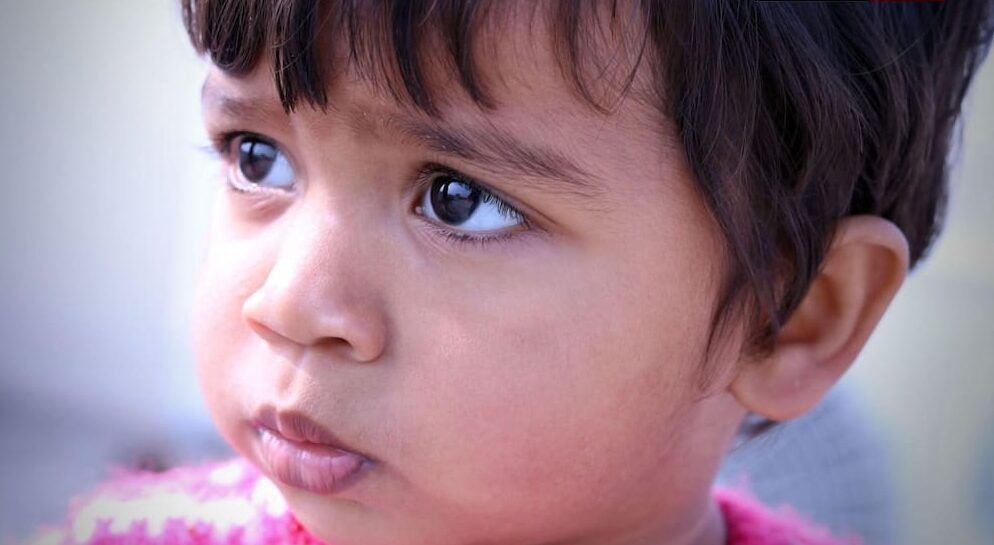
Across Indian households—from Lucknow and Delhi to Mumbai and Chennai—applying kajal (also known as surma or kohl) to a newborn or young child is one of the most deeply cherished cultural traditions. Generations of parents and grandparents have applied dark kohl along children’s eyelids believing it protects them from the “evil eye” (buri nazar), makes their eyes grow larger and brighter, cools the eye surface, and strengthens eyesight. However, modern pediatricians, ophthalmologists, and global health authorities—including the World Health Organization (WHO), the American Academy of Pediatrics (AAP), and the Indian Academy of Pediatrics (IAP)—strongly advise against applying kajal, surma, or kohl inside or along the eyelid margins of infants and children. While the tradition comes from genuine affection and care, medical science shows that placing any cosmetic substance directly into a child’s delicate eyes carries preventable health risks without offering any proven vision or protective benefits.
Why Doctors Warn Against Applying Kajal in Children’s Eyes
Medical experts highlight two major dangers associated with applying kajal to children’s eyes: toxic heavy metal exposure and ocular surface infections. First, laboratory testing worldwide has repeatedly shown that many commercial, loose, and traditional kohl preparations contain high levels of lead and other heavy metals. Because young children absorb lead through their gut and skin much more rapidly than adults—and because their brains and nervous systems are still developing—even minimal chronic exposure can accumulate over months and impair cognitive growth, learning ability, and neurological health. Crucially, labels stating “herbal,” “organic,” “Ayurvedic,” or “chemical-free” do not automatically guarantee zero lead content, as lead is a naturally occurring mineral often present in raw kohl stones and pigments. Second, even if a preparation is completely lead-free, a child’s tear drainage ducts are narrow and still maturing. Applying kajal with a finger or reusable stick introduces bacteria and fine carbon particles onto the sensitive eye surface, triggering watery irritation (often mistaken by parents as “eye cleansing”), blocked tear ducts, conjunctivitis, styes, or painful corneal scratches if the child rubs their eyes.
Busting Common Myths About Kajal and Children’s Eyesight
To make an informed decision, parents need to separate cultural folklore from clinical evidence. Contrary to popular belief, kajal does not make a child’s eyes bigger—eye size and shape are determined entirely by genetics, and dark pigment around the rims merely creates a temporary visual contrast illusion. Similarly, kajal does not sharpen eyesight, cool inflamed eyes, or prevent eye infections; in fact, if a child’s eyes appear red or watery, applying kajal can worsen an underlying infection that requires medical drops. Pediatricians also caution against assuming homemade kajal prepared from burnt almonds, camphor, or ghee lamps is completely sterile. While homemade soot avoids industrial additives, burning organic matter produces carbon particles, and dipping fingers into an open container over several weeks easily transfers microbes into the eye.
What Is the Right and Safe Way to Follow the Tradition?
Respecting family heritage does not mean putting a child’s eyesight or neurological development at risk. Pediatricians recommend simple, safe adjustments that honour Indian cultural sentiments while keeping the eye area completely untouched. If you wish to follow the kaala teeka custom to ward off nazar, never apply kajal on the upper or lower waterlines, eyelashes, or inner corners of the eyes. Instead, place a tiny black dot behind the child’s ear, on the sole of the foot, or high on the forehead near the hairline, well away from the eyes and hands (so infants cannot rub it into their eyes or mouth). Alternatively, parents can tie a traditional black thread (kaala dhaga) or bracelet rather than applying pigment to newborn skin. If your child has already been wearing kajal regularly—especially loose surma or uncertified preparations—simply stop applying it to the eyes, gently clean the lids with sterile lukewarm water, and consult your pediatrician if you notice persistent watering, redness, or swelling.