North India Statesman
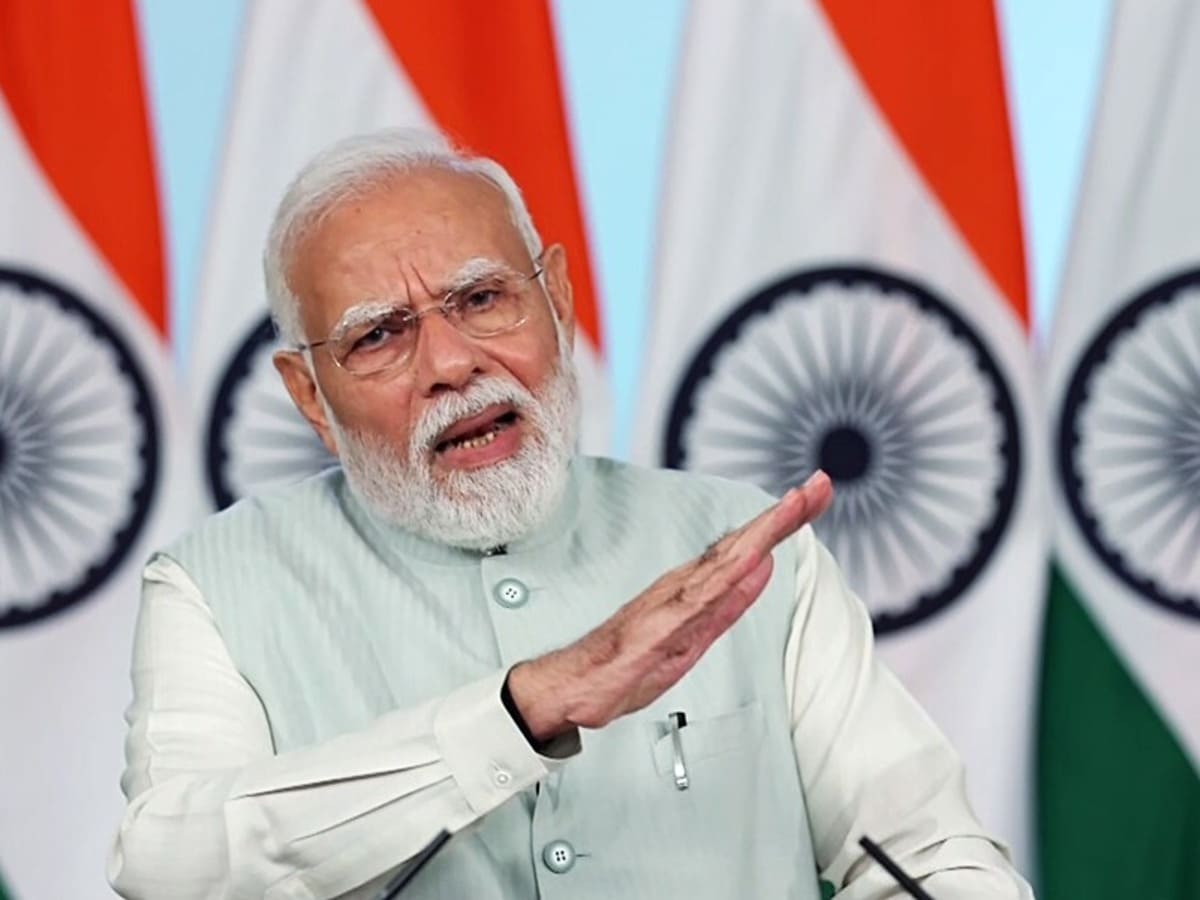
On the 77th anniversary of the adoption of the Indian Constitution on Thursday, November 26, 2026, Prime Minister Narendra Modi triggered a major political flashpoint by accusing the principal opposition party of attempting to curtail reservations meant for Other Backward Classes (OBCs) in order to introduce religion-based quotas for Muslims. In a signed opinion piece published across leading national newspapers and shared on his official website to mark Constitution Day (Samvidhan Divas), the Prime Minister did not name the Indian National Congress directly, yet his critique was aimed squarely at the country’s largest opposition party. According to PM Modi’s article, it is “most appalling” that the leading opposition party seeks to reduce the existing OBC quota share to carve out reservations for Muslims—a framework he stated was firmly rejected by the Constituent Assembly and chief architect Dr. B.R. Ambedkar when drafting India’s founding document in 1949.
Why PM Modi Called the Opposition an ‘Avrodh Paksh’ in His Op-Ed
Beyond the fierce debate over affirmative action and social justice, Prime Minister Modi used his Constitution Day essay to scrutinize the opposition’s parliamentary conduct and legislative track record ahead of the upcoming Winter Session of Parliament in New Delhi. Writing under the title “The Constitution – Our Guiding Force,” PM Modi stated that the primary opposition party has increasingly functioned as an “Avrodh Paksh” (an obstructionist bloc) rather than a constructive “Virodh Paksh” (democratic opposition), arguing that frequent parliamentary disruptions cannot substitute for fulfilling constitutional responsibilities. He specifically pointed to the defeat of the Constitution (131st Amendment) Bill, 2026 in the Lok Sabha earlier in April—a proposed legislation aimed at operationalizing 33% reservation for women in Parliament and state assemblies alongside constituency delimitation. Calling the opposition’s vote against the measure a sign of disregard for constitutional values, the Prime Minister assured India’s Nari Shakti that his government remains committed to delivering women’s legislative representation.
Historical Amendments, Article 356, and Welfare Milestones Highlighted by the Centre
In his reflection on India’s constitutional evolution since November 26, 1949, PM Modi also turned the spotlight on past constitutional amendments and governance decisions under previous Congress-led administrations. According to the Prime Minister’s op-ed, earlier governments weakened democratic checks through measures such as the First Amendment of 1951, the 38th and 39th Amendments, and the 42nd Amendment enacted during the 1975–77 Emergency, while repeatedly invoking Article 356—which he noted a single party used nearly 100 times—to dismiss elected state governments. Contrasting those episodes with the National Democratic Alliance (NDA) government’s tenure since 2014, PM Modi cited the abrogation of Article 370, the celebration of Constitution Day over the past decade to deepen youth awareness, and welfare schemes like PM Awas Yojana, Ujjwala Yojana, and Ayushman Bharat as steps that have strengthened socio-economic justice. He also noted that the elimination of Naxalism in 2026 has enabled tribal communities in remote regions to exercise their constitutional rights safely.
How the Congress and Opposition Countered on Samvidhan Divas Across India
While Prime Minister Modi framed his Constitution Day message around protecting OBC quotas and constitutional institutionalism, the Congress party and opposition leaders mounted a coordinated counter-offensive across New Delhi, Lucknow, and state capitals on November 26. Leading up to and on Constitution Day, Congress leadership—including party president Mallikarjun Kharge, Rahul Gandhi, and general secretary K.C. Venugopal—accused the ruling Bharatiya Janata Party (BJP) of undermining constitutional institutions and democratic safeguards, organizing nationwide “Samvidhan Raksha” programmes to highlight concerns over electoral rolls and the ongoing Special Intensive Revision (SIR) process across multiple states. In Uttar Pradesh’s capital Lucknow, Congress leaders including Barabanki MP Tanuj Punia criticized the local administration for denying permission for a proposed Constitution Day march in an area where ruling party events had previously been permitted, asserting that the Congress remains committed to defending constitutional rights strictly within legal bounds. Meanwhile, on the women’s reservation debate, opposition leaders have maintained that their objection in April was never to women’s empowerment itself, but to linking the 33% quota to a future delimitation exercise that southern and opposition-ruled states fear could alter federal political representation. As political temperatures rise across Uttar Pradesh, New Delhi, and poll-bound states, the clash over OBC reservation, social justice, and constitutional stewardship is poised to dominate the forthcoming Winter Session of Parliament.