North India Statesman
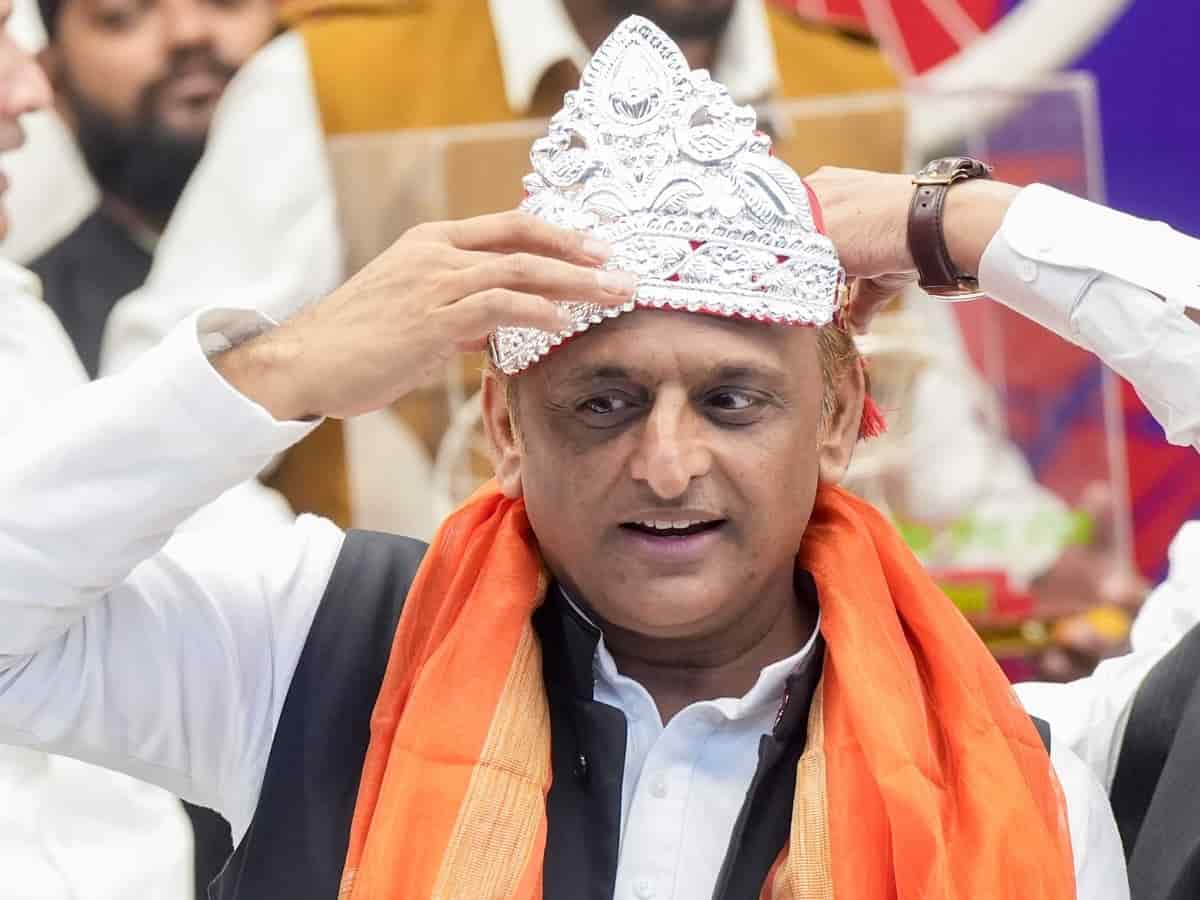
Samajwadi Party (SP) president Akhilesh Yadav is aggressively scaling up his signature social engineering matrix—the PDA (Pichhda, Dalit, Alpasankhyak)—to breach the Bharatiya Janata Party’s (BJP) electoral stronghold across Uttar Pradesh. Moving past the party’s historic reliance strictly on the traditional Muslim-Yadav (M-Y) equation, Yadav’s strategic repositioning directly targets non-Yadav Other Backward Classes (OBCs), marginalized Dalit sub-castes, and rural minorities who have backed the NDA’s welfare and governance narrative over successive election cycles. By reframing regional discourse around caste census representation, job recruitment paper leaks, agrarian distress, and constitutional safeguards, the SP is orchestrating a ground-up consolidation designed to fragment the ruling coalition’s rainbow Hindu vote bank.
The Evolution from M-Y Axis to the Broad-Based PDA Alliance
For decades, the Samajwadi Party’s core electoral arithmetic leaned heavily on the Muslim-Yadav combine, a base that secured past state assemblies but frequently ran into hard electoral ceilings against wider multi-caste alliances. Recognizing the structural limits of this alignment, Akhilesh Yadav recalibrated the party’s public messaging around PDA—anchored on backward communities, Dalits, and minorities.
Rather than treating Dalits and non-Yadav OBCs as peripheral allies, the SP leadership has systematically integrated leaders from Kurmi, Maurya, Kushwaha, Nishad, and Rajbhar communities into organizational decision-making tiers. This recalibration seeks to dismantle the perception of single-caste dominance within the SP, offering a counter-weight to the BJP’s meticulous micro-caste mobilization that has defined UP’s political landscape since 2014.
Fracturing the Non-Yadav OBC and Dalit Stronghold
The decisive battleground in Uttar Pradesh rests in the non-Yadav OBC segment and non-Jatav Dalit demographics, cohorts that proved instrumental in securing double-engine electoral mandates for the BJP. Akhilesh Yadav’s field strategy focuses on exploiting friction points in local governance:
-
Reservation and Caste Census Demand: Pushing for a national caste-based census to rally backward communities under the banner of proportionate representation (Jiski jitni sankhya bhaari, uski utni hissedari).
-
Youth Unrest and Paper Leaks: Mobilizing rural youths facing competitive exam cancellations, delayed recruitment calendars, and contractual employment concerns.
-
Farmer and Livelihood Grievances: Capitalizing on local distress over stray cattle management, input costs, and agricultural mandi reforms.
-
Dalit Outreach and Ambedkarite Convergence: Aligning the socialist legacy of Ram Manohar Lohia with the constitutional principles of Dr. B.R. Ambedkar to appeal to disillusioned Bahujan Samaj Party (BSP) voters looking for a viable anti-incumbent vehicle.
Grassroots Outreach: Padyatras and Cadre Expansion
Rather than relying purely on state-level rallies, the SP has overhauled its grassroots organizational machinery. Party functionaries have initiated block-by-block outreach drives, “Samvidhan Rakshak” programs, and rural sammelans across Purvanchal, Rohilkhand, and the central Awadh belt. Local party workers are instructed to sidestep high-decibel religious controversies and maintain laser focus on inflation, public healthcare delivery, utility tariffs, and local administrative accountability.
By directly pairing local livelihood challenges with the overarching PDA narrative, the party aims to neutralize the BJP’s institutional welfare outreach (Labharthi vote base) with an alternative message centered on socioeconomic equity and institutional dignity.
Roadblocks and Strategic Counter-Measures
Despite early traction, expanding PDA presents intricate tactical challenges for the Samajwadi Party. The BJP’s formidable organizational network, round-the-clock cadre presence, and high-profile leadership under Chief Minister Yogi Adityanath and Prime Minister Narendra Modi continue to command widespread support. Moreover, competing regional players and third-front maneuvers risk splitting anti-incumbent votes in tight multi-cornered contests.
To hold ground, Akhilesh Yadav’s political apparatus must maintain internal harmony between traditional cadre bases and newly co-opted Dalit and backward factions, ensuring that candidate selection reflects authentic grassroots diversity rather than top-down political compromises. Whether PDA can sustainably break the BJP’s demographic coalition will determine the balance of power across Uttar Pradesh’s political landscape.