 North India Statesman
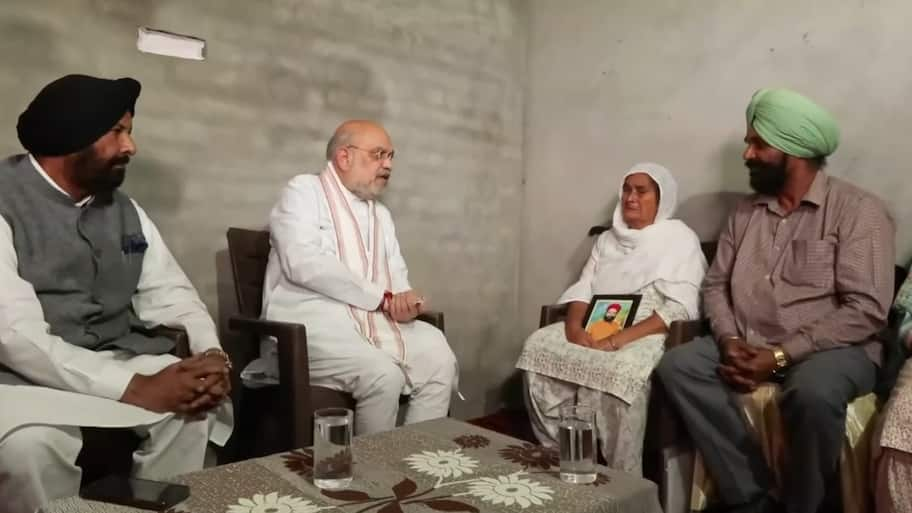
Union Home Minister Amit Shah arrived in Punjab’s border district of Gurdaspur on Tuesday to meet the grieving family members of anti-drug activist Vikramjeet Singh (also known as Bikramjit Singh), who was brutally murdered after vocally resisting illicit drug trafficking networks in Batala. The visit marks the first stop of the Home Minister’s day-long outreach tour across Punjab, directly engaging with families that have suffered devastating losses in the battle against narcotics. Emphasizing central resolve to dismantle cross-border drug corridors, Shah assured the family that those responsible for silencing community voices against contraband syndicates will face relentless prosecution under central and state legal frameworks.
A String of Tragic Losses Puts Drug Crisis in the National Spotlight
The high-profile visit comes amid mounting public anger over recurring violence unleashed by drug peddlers against grassroots reformers. Following his interaction in Gurdaspur, the Home Minister’s itinerary includes traveling to Sangrur to meet the kin of Gulzar Singh, a Dalit resident who tragically ended his life after facing acute harassment for demanding strict action against local narcotic peddlers. Shah is also slated to visit Mansa to comfort the bereaved household of prominent anti-drug crusader Parvinder Singh Jhota, who was shot dead inside a medical store while actively uncovering the illicit sale of synthetic pharma drugs. The gruesome nature of these consecutive incidents has triggered sharp debate over law enforcement efficacy, prompting the Punjab government to recommend a Central Bureau of Investigation (CBI) probe into Jhota’s daylight killing.
Multi-Pronged Strategy to Decimate Cross-Border Drone and Narcotics Routes
Addressing local representatives and law enforcement authorities during the visit, Amit Shah reiterated the central government’s uncompromising “zero-tolerance” policy toward the drug trade. With Punjab sharing an extensive international border with Pakistan, security agencies have been directed to scale up counter-drone grids, border radar sweeps, and anti-smuggling barriers along the Radcliffe line. The Home Minister stressed that the synthetic drug supply chain, which is tearing through rural youth, operates as a broader narco-terror ecosystem designed to destabilize border security. The Centre has promised comprehensive intelligence support via the Narcotics Control Bureau (NCB) and central enforcement arms to assist local police in tracing financial paper trails, seizing assets accrued through illicit drug proceeds, and dismantling cartel infrastructure from the roots.
Symbolic Dussehra ‘Ravan of Chitta’ and the 2029 Eradication Goal
Connecting the ongoing anti-narcotics campaign with cultural symbolism, Amit Shah’s Punjab schedule concludes in Ludhiana, where he is set to participate in a Dussehra ceremony that features the burning of an effigy themed as the “Ravan of Chitta” (the demon of synthetic white heroin). Reaffirming the central commitment to the state, party leaders highlighted the overarching mission to completely eliminate the illicit drug trade from Punjab’s soil by December 31, 2029. By directly meeting affected families on the ground, the central leadership seeks to assure citizens that ordinary people raising their voices against criminal syndicates will not be left vulnerable, signaling an aggressive, coordinated crackdown on the narcotic networks entrenching the border state.


