North India Statesman
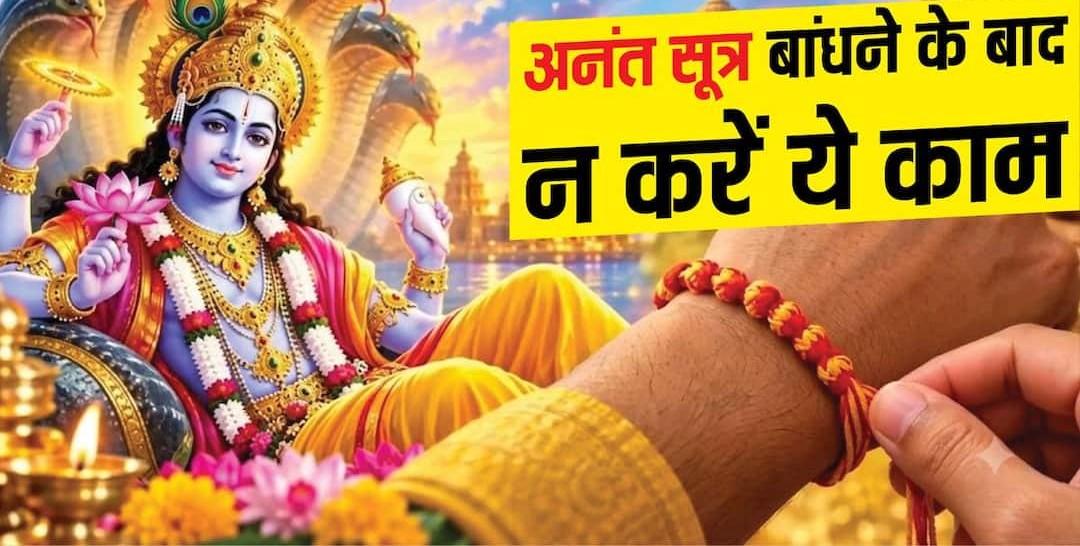
The auspicious festival of Anant Chaturdashi holds immense spiritual significance across India, marking a sacred occasion dedicated to the worship of Lord Vishnu in his eternal, infinite form—Lord Anant. On this holy day, devotees observe rigorous fasts and tie the sacred fourteen-knot Anant Sutra around their wrists to invoke peace, protection, longevity, and boundless wealth. Astrological and Vedic traditions emphasize that while tying this consecrated thread invites the benevolent gaze of Goddess Lakshmi, failing to adhere to scriptural codes of conduct afterward can neutralize its auspicious vibrations and invite hardship. To ensure that divine grace remains intact throughout the year, Vedic scholars highlight specific prohibitions that every devotee must strictly observe.
The Sacred Significance of the Fourteen Knots and Lord Vishnu’s Grace
The Anant Sutra is not merely a ceremonial thread; it is an energized spiritual talisman steeped in ancient mythological lore. Crafted traditionally from cotton or silk and dipped in fragrant turmeric paste, the thread is fashioned with exactly fourteen distinct knots. According to Hindu scriptures, each knot symbolizes one of the fourteen divine cosmic realms governed by Lord Vishnu: Bhuh, Bhuvah, Svah, Mahah, Janah, Tapah, Satyam, Atala, Vitala, Sutala, Talatala, Mahatala, Rasatala, and Patala. By consecrating and tying this sacred cord, the seeker symbolically places all facets of physical, material, and spiritual existence under divine guardianship. Scriptures dictate that men tie the thread on their right wrist, whereas women traditionally tie it on their left wrist following the prescribed shodashopachara rituals and the chanting of the Anant Padmanabha mantras.
Mistake 1: Consuming Tamasic Food and Breaking Ritual Purity
The foremost error devotees often commit immediately after tying the holy cord is lapsing into casual lifestyle habits. Ancient scriptures mandate that the day of Anant Chaturdashi requires pristine physical and mental purity. Once the consecrated Anant Sutra is fastened around the wrist, consuming tamasic items such as meat, fish, eggs, onion, garlic, or alcohol is completely forbidden. Indulging in non-vegetarian fare or intoxicants directly desecrates the sacred sanctity of the energized thread. Vedic texts warn that breaching dietary discipline dispels sattvic energy, causing the thread to lose its protective aura while inviting negative astral influences that trigger domestic disputes and sudden financial drains.
Mistake 2: Disrespecting the Sacred Thread and Careless Removal
Another critical infraction involves treating the holy thread as an ordinary accessory. The Anant Sutra carries energized planetary vibrations designed to shield the wearer across extended periods. Allowing the sacred thread to come into direct contact with unclean substances, unwashed surfaces, or disposal waste invites severe karmic consequences. Many people commit the blunder of abruptly cutting the thread with scissors or untying it impatiently and tossing it into household trash bins. According to traditional belief, discarding the holy thread carelessly deeply displeases Goddess Lakshmi, leading to stagnation in trade, loss of accumulated wealth, and mounting debts. If the thread needs to be removed after the mandatory observational period, it should either be immersed with deep reverence in flowing river water or placed beneath a sacred Peepal or Tulsi tree.
Mistake 3: Engaging in Conflicts, Dishonesty, and Negative Conduct
The essence of worshipping Lord Anant lies in the conquest of ego and negative mental traits. Astrologers caution that engaging in verbal arguments, practicing dishonesty in commercial dealings, insulting family elders, or harboring malicious intent toward others after wearing the thread severely defiles its spiritual sanctity. Because Goddess Lakshmi resides only in environments marked by cleanliness, peace, truthfulness, and harmonious conduct, household strife immediately repels her presence. A devotee who observes the outer ritual of tying the Anant Sutra while continuing unrighteous actions negates the blessings of the fast, turning potential prosperity into prolonged financial instability.
Ideal Ritual Discipline to Retain Divine Prosperity
To reap the fullest spiritual benefits of the Anant Chaturdashi observance, practitioners should preserve calm concentration and devotional focus for the entire day. Chanting the sacred Vishnu Sahasranama or meditating on the infinite cosmic serpent, Shesha, enhances the protective frequency of the Anant Sutra. Ensuring charitable donations of food, clothing, or seasonal fruits to underprivileged individuals further magnifies the auspicious results. By steering clear of dietary transgressions, honoring the holy thread with sustained purity, and upholding ethical conduct, devotees ensure uninterrupted material abundance, harmony, and divine protection in their lives.