North India Statesman
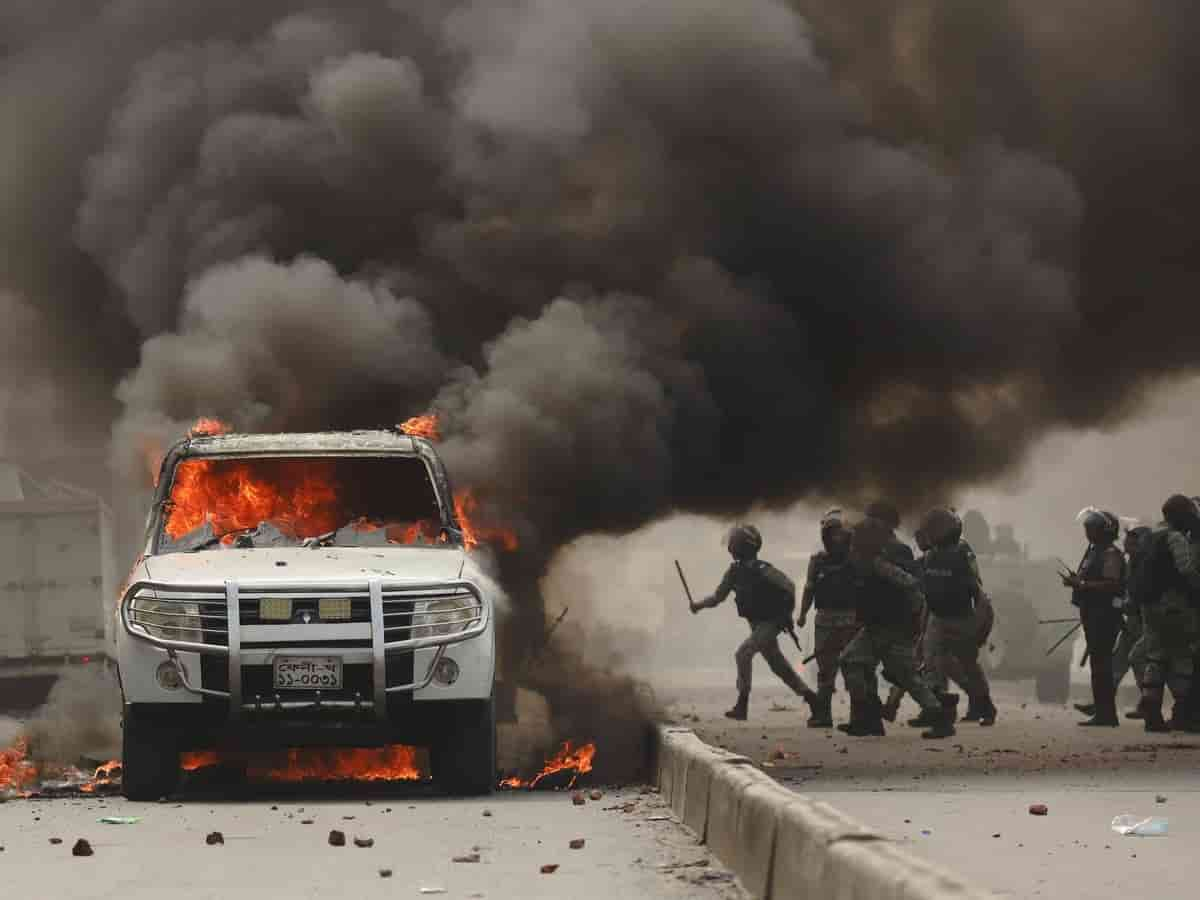 Political tensions across Bangladesh escalated sharply this week after a petrol bomb was hurled at the Sylhet residence of State Minister for Foreign Affairs Humaiun Kobir, coinciding with a fierce verbal offensive from Prime Minister Tarique Rahman against ousted premier Sheikh Hasina. Addressing supporters amid widespread arson and street clashes triggered by the banned Awami League’s push for Hasina’s planned return next month, Rahman launched a veiled attack on New Delhi by accusing the former leader and her allies of orchestrating sabotage from abroad to “keep those masters happy” across the border. While police confirmed that no casualties occurred in the early Friday attack on the minister’s property, the incident—alongside an arson attack on the ancestral home of former interim leader Muhammad Yunus—has raised serious alarm over law and order ahead of December.
Petrol Bomb Targets State Minister Humaiun Kobir’s Sylhet Residence
According to police and local media reports, unidentified assailants threw a petrol bomb at Humaiun Kobir’s home in Sylhet early Friday morning, just a day after attackers had reportedly set fire to clothes outside the same property. Sylhet Metropolitan Police Deputy Commissioner Md Afzal Hossain confirmed that while no injuries or major structural damage were reported, security teams have launched an investigation to track down those responsible. Speaking to reporters in Dhaka hours after the incident, Kobir condemned the wave of arson and vandalism sweeping across districts as “terrorist activities” carried out by members of the Awami League, whose political operations remain prohibited under anti-terror laws. He accused the party of degenerating into a sporadic network that hurls petrol bombs, sets fires, and flees the scene to destabilise public order.
Tarique Rahman Accuses Sheikh Hasina of Trying to Please ‘Masters’ Abroad
As street violence intensified during the Awami League’s week-long agitation and nationwide shutdown on Thursday, Prime Minister Tarique Rahman placed blame squarely on Sheikh Hasina, who has lived in exile in India since being ousted in the August 2024 student-led uprising. Without naming India directly, Rahman told a gathering that a group had fled “across the border” where their “masters” reside and was now conspiring from outside the country to keep those hosts satisfied. Accusing Hasina’s camp of reviving a politics of arson, enforced disappearances, and killings, the Bangladesh Nationalist Party (BNP) leader declared that citizens would no longer tolerate attempts to plunge the nation back into chaos. His remarks underscore the diplomatic friction between Dhaka and New Delhi, as Rahman’s administration continues to demand Hasina’s formal handover under the bilateral extradition treaty following her November 2025 death sentence in absentia for crimes against humanity.
Arson at Muhammad Yunus’s Home and Nationwide Clashes Deepen Crisis
The attack on Kobir’s residence formed part of a broader surge of unrest across at least 10 to 22 districts, including Hasina’s home stronghold of Gopalganj, Narail, Pirojpur, and Chattogram. Late Wednesday night, arsonists set fire to an abandoned ground-floor room at the ancestral home of Nobel laureate and former interim chief advisor Muhammad Yunus in Chattogram’s Panchlaish area before a police patrol quickly doused the flames. Elsewhere, two BNP supporters were killed during clashes in Narail, buses and railway facilities were torched along major corridors such as the Dhaka-Chattogram highway, and dozens of Grameen Bank branches were vandalised or burned. In response, authorities deployed 97 platoons of Border Guard Bangladesh (BGB) across sensitive districts and arrested over 100 suspected Awami League activists in Dhaka—including former ministers Nurul Islam Nahid and Dipu Moni’s associates—as Dhaka braces for further confrontation ahead of Hasina’s declared plan to return in December.