North India Statesman
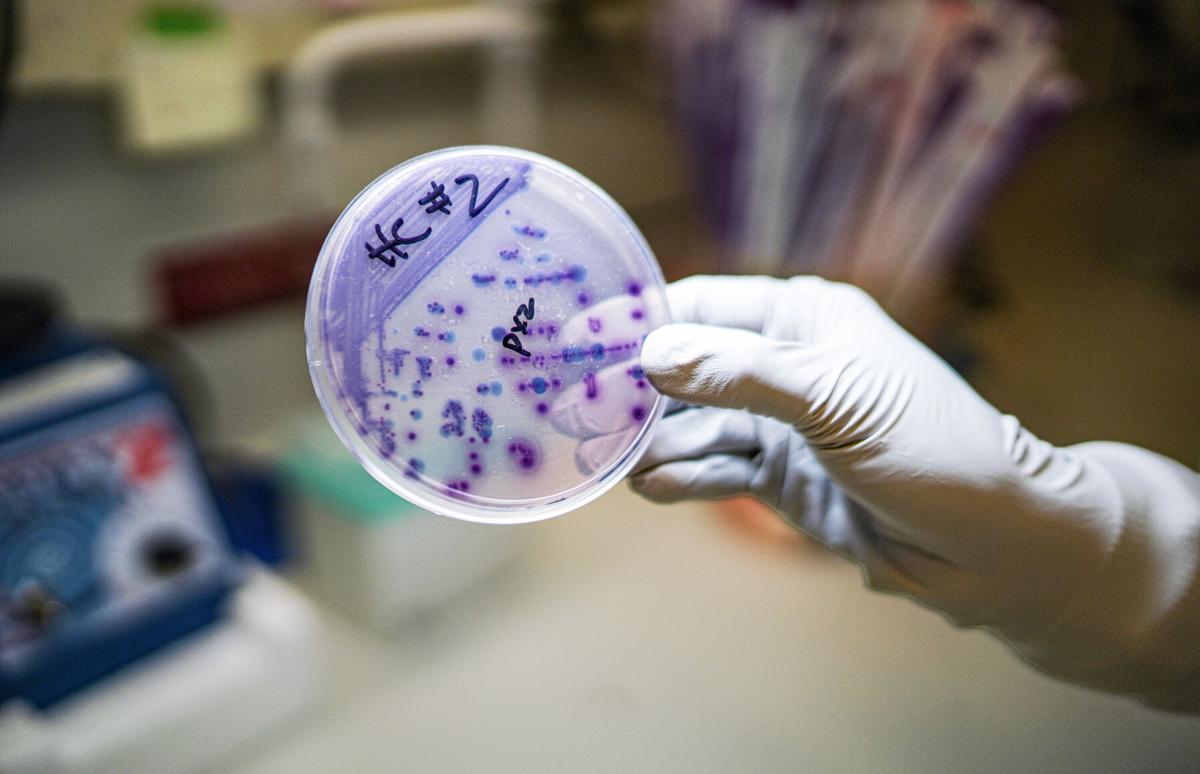
The Black Death remains one of the darkest chapters in human history, wiping out tens of millions across Eurasia in the fourteenth century. While commonly referred to colloquially as a “plague virus,” the lethal pathogen responsible for bubonic, pneumonic, and septicemic plague is actually a Gram-negative bacterium known scientifically as Yersinia pestis. In modern epidemiology, persistent concerns surround how resilient this pathogen is to environmental stress, particularly extreme cold, and whether permafrost thaw or climate shifts could unleash dormant strains. Contrary to popular assumptions that deep freezing neutralizes deadly microorganisms, freezing temperatures often act as a preservative rather than a disinfectant, allowing bacterial specimens to remain viable across decades or centuries under cryogenic conditions.
Freezing Temperatures and the Survival Limits of the Plague Pathogen
In microbiological laboratory settings, Yersinia pestis is routinely preserved in liquid nitrogen storage at minus 196 degrees Celsius or mechanical deep-freezers set to minus 80 degrees Celsius using protective cryopreservatives like glycerol. Outside the laboratory, natural soil environments and frozen animal carcasses in sub-zero climates tell a similar story. When embedded in frozen soil, buried rodent nests, or sub-polar permafrost, Yersinia pestis can endure freezing temperatures down to minus 15 to minus 30 degrees Celsius for extended seasons. The cold slows enzymatic degradation and arrests cellular respiration, effectively placing the bacterium in suspended animation. While repeated freeze-thaw cycles can rupture unshielded bacterial cell walls through ice crystal formation, sustained, unbroken sub-zero temperatures protect its genomic integrity, leaving it capable of reviving once thawed into a warm mammalian host.
The Evolutionary Path and Mutations of Yersinia pestis
Genomic research has tracked the evolutionary timeline of Yersinia pestis, showing that it evolved from the relatively mild ancestral gut bacterium Yersinia pseudotuberculosis merely a few thousand years ago. This evolutionary transition required critical genetic changes rather than endless chaotic shifts. The bacterium acquired two vital virulence plasmids, known as pCD1 and pPCP1, along with a chromosomal pathogenicity island. Key gene acquisitions—notably the pla (plasminogen activator) gene—allowed the organism to spread rapidly through deep mammalian tissues and survive flea gut temperatures. Over centuries, Yersinia pestis diversified into distinct genetic branches: the ancient ancestral 0.ANT lineages, followed by the specific biovars associated with the three great pandemics: Antiqua (Plague of Justinian in 541 CE), Medievalis (the fourteenth-century Black Death), and Orientalis (the third pandemic emerging from Yunnan, China in the nineteenth century).
How Many Times Has the Plague Mutated Across History?
Tracing precise individual mutations requires examining single-nucleotide polymorphisms (SNPs) across ancient DNA isolates. Paleogenomic excavations from medieval mass graves in London, Germany, and Central Asia reveal thousands of micro-mutations separating ancient lineages from contemporary strains. Broadly speaking, scientists categorize the functional evolution of Yersinia pestis into several dozen major phylogenetic branches across five recognized lineages (0, 1, 2, 3, and 4). Interestingly, unlike rapidly evolving RNA viruses like influenza or SARS-CoV-2 that mutate weekly, Yersinia pestis possesses a stable DNA genome with proofreading polymerases. Rather than evolving into fundamentally different diseases, modern clinical isolates in endemic zones—such as the American Southwest, Madagascar, Central Asia, and parts of India—retain nearly identical core lethal mechanisms to fourteenth-century medieval strains, with the primary contemporary mutations focusing on antimicrobial resistance plasmids.
Ecological Reservoirs, Climate Risks, and Modern Treatment
Today, Yersinia pestis maintains stable natural foci in wild rodent populations and their ectoparasitic fleas across multiple continents. Public health surveillance monitors these natural reservoirs, from the rocky plateaus of North America to the steppes of Eurasia. Because the pathogen readily endures freezing ground conditions during harsh continental winters, sub-zero weather does not eliminate endemic focal areas. Fortunately, modern healthcare renders the infection far less catastrophic than in medieval times. Early detection followed by prompt antibiotic administration using streptomycin, gentamicin, doxycycline, or ciprofloxacin provides effective treatment, preventing high-fatality pneumonic progression even when ancient or cold-tolerant strains resurface in natural wildlife habitats.