North India Statesman
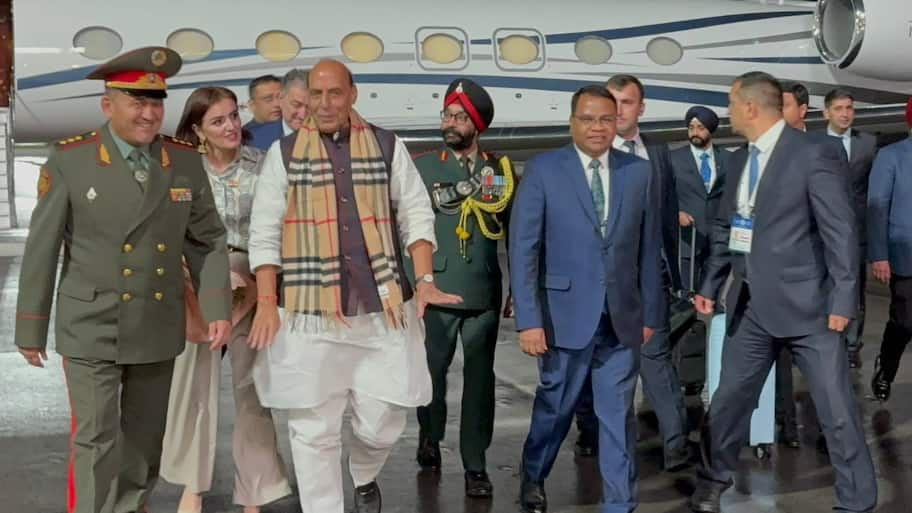
Delivering a resolute and blunt address on regional security, Union Defence Minister Rajnath Singh called upon Shanghai Cooperation Organisation (SCO) member countries to eliminate double standards in countering violent extremism and unite to decisively dismantle the networks that shelter and fund terrorists. Speaking at the 25th meeting of the SCO Council of Heads of Government (CHG) in the Tajik capital of Dushanbe, Singh pointedly underscored that terrorism represents one of the gravest threats to collective peace and sustainable economic growth across Eurasia. The remarks carried significant diplomatic weight as Pakistan’s Deputy Prime Minister and Foreign Minister Ishaq Dar was seated directly across the conference table during the plenary session.
No Place for Safe Havens or Financial Lifelines
Stressing that terrorism cannot be justified under any pretext, Singh urged the Eurasian collective to enforce an uncompromising stance against state and non-state sponsors of cross-border violence. He emphasized that there should be no double standards when tackling violent extremism, adding that nations providing financial conduits, logistical assistance, or safe havens must be held strictly accountable. The Defence Minister pointed out that the destructive fallout of terrorist activities reaches far beyond the tragic loss of innocent civilian lives, directly choking foreign direct investment, derailing bilateral commerce, radicalizing local populations, and depriving young citizens of economic mobility and modern livelihood opportunities.
Sovereign Equality and Consensus Over Unilateral Moves
Beyond the central focus on security, Singh reiterated India’s core principles governing international cooperation, asserting that the SCO must remain operationally efficient while strictly upholding sovereign equality, mutual consensus, and respect for territorial integrity. Backing the formal adoption of the Action Plan for the Multilateral Trade and Economic Cooperation Programme for 2026–2030, he advocated for transparent, resilient supply corridors and open economic partnerships. Singh also commended the institutional steps taken to establish the Universal Centre in Tashkent and the Anti-Drug Centre in Dushanbe as permanent SCO entities, describing them as critical institutional mechanisms to combat trans-border organized crime and narcotics networks.
Diplomatic Engagements on the Sidelines in Dushanbe
Capitalizing on the summit sidelines, the Defence Minister held constructive bilateral meetings with key regional leaders, including Tajikistan Prime Minister Qohir Rasulzoda and Iran’s First Vice President Mohammad Reza Aref. During these discussions, Singh underscored India’s historical and civilizational connections with Central Asia, expressing New Delhi’s readiness to share expertise in digital public infrastructure, startup ecosystems, and capacity building. Reaffirming India’s strategic worldview, Singh stated that while New Delhi remains thoroughly dedicated to peaceful dialogue and regional stability, it maintains an unwavering posture to defend its national sovereignty and security interests against any external challenge.