North India Statesman
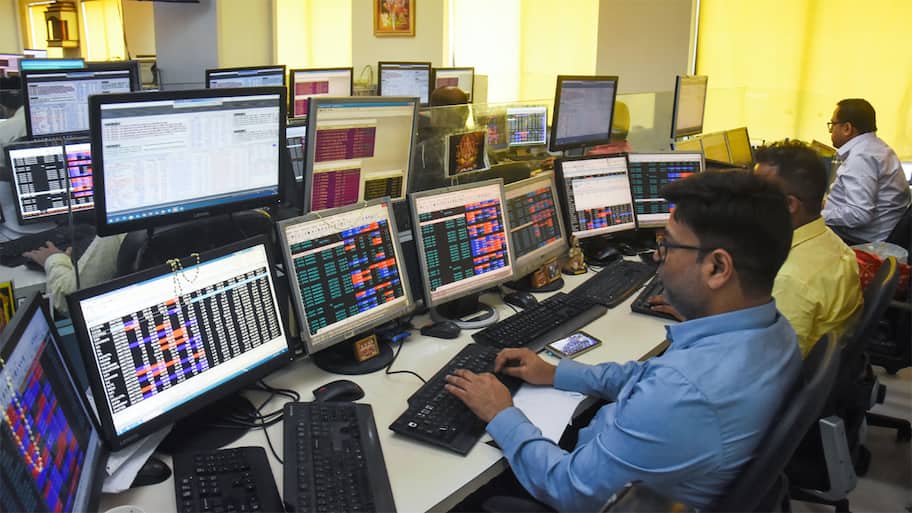
Global capital flows into Indian equities have expanded at a breathtaking pace over the past decade, defying short-term market volatility and global economic headwinds. The absolute value of equity holdings held by Foreign Institutional Investors (FIIs) across India’s stock exchanges has grown nearly 3.6 times since 2012, jumping from $217.3 billion to roughly $783 billion. While foreign outflows routinely trigger alarmist headlines whenever overseas funds pull back, long-term asset data shows an entirely different picture: global institutional confidence in India’s structural economic growth story has reached historic scale.
The Growth Curve: From $217 Billion to Historic Heights
Tracking the historical trajectory of FPI Assets Under Custody (AUC) reveals how international capital has steadily accumulated Indian equity assets. Back in 2012, FII holdings stood at approximately $217.3 billion. Over subsequent market cycles, that figure expanded to $300 billion by 2015 and crossed $550 billion by 2020, before climbing to a peak near $930 billion in late 2024. Despite recent corrections and periodic profit-booking, foreign investors still hold over $566 billion more in absolute equity assets across the National Stock Exchange (NSE) and Bombay Stock Exchange (BSE) than they did twelve years ago.
The Ownership Paradox: Falling Share Amid Rising Absolute Wealth
A critical insight highlighted by institutional market analysts is the widening divergence between absolute dollar holdings and overall ownership percentage. Even as foreign portfolio investments surged 3.6 times in dollar value, FIIs’ percentage ownership in total Indian market capitalization fell to multi-year lows—declining from around 30% in 2015 and 20% in 2020 to roughly 15.1% to 17% in recent cycles. This phenomenon does not indicate a retreat by global fund managers, but rather that domestic market participants are expanding their footprint at an even faster velocity than foreign capital.
Domestic Investors Build an Unshakeable Cushion
The structural force behind this market realignment is the rapid financialisation of Indian household savings. Traditionally concentrated in physical real estate and gold, domestic savings have decisively shifted toward mutual funds, systematic investment plans (SIPs), direct equity trading, and pension allocations. With Domestic Institutional Investors (DIIs) and retail investors pouring thousands of crores into domestic equities every month, Dalal Street no longer depends solely on overseas cues. Domestic liquidity now provides a solid floor beneath stock prices, absorbing foreign selling pressure and stabilizing benchmark indices during global geopolitical shocks.
Factoring in Currency Depreciation and Dollar Valuations
Market strategists also point out that foreign holding values are heavily influenced by exchange rate movements. While headline dollar values reflect periodic dips following foreign outflows, a notable portion of that decline stems from currency translation and rupee movements against the US dollar rather than outright share sales. With India’s domestic equity penetration still well below mature developed economies, institutional strategists anticipate domestic liquidity will continue to grow rapidly, creating an increasingly self-reliant equity ecosystem that simultaneously attracts deeper long-term foreign capital.