North India Statesman
[ad_1]
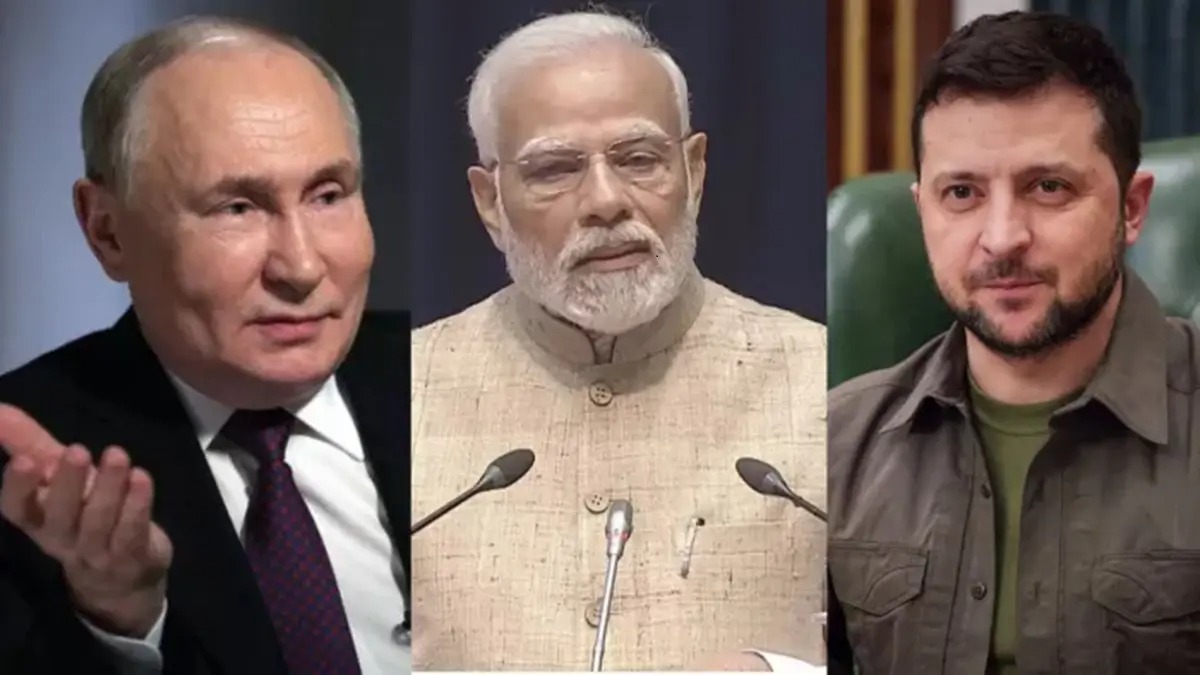
Russia Ukraine War : Shriram Chaulia. The eyes of the world are on Narendra Modi, the first Indian Prime Minister to visit Ukraine, the focal point of current global geopolitics. The Indian Prime Minister has arrived in Ukraine at a time when the Russia-Ukraine war that has been going on since 2022 has become an arena of intervention and competition between several powers, this conflict is related to Russia's historical ambitions, its insecurity and Ukraine's sovereignty and territorial integrity.
Since European countries and the US have provided military and financial aid to Ukraine in this war, this conflict has become a problem of global stability and balance of power. From this point of view, there are many expectations about the role of emerging world power India.
There is tremendous pressure from the West on India to openly condemn Russia for its invasion of Ukraine and to reduce military and energy trade with Russia, but the Modi government has not taken any tough stand in national interests.
At the same time, India continued to deepen its strategic partnership with the US and the EU and provided humanitarian assistance to Ukraine and continued regular meetings and interactions with its leaders.
Explaining this dual policy, Prime Minister Modi has made it clear that India was engaged in maintaining equal distance from all countries for decades. But now it is on the path of equal closeness with all countries.
That is, breaking the old chain of non-alignment, India is today walking on the path of multilateralism, which is the identity of an emerging superpower. This multilateralism is indicated by Modi's visit to Ukraine. Note that he has also visited Russia recently.
Over the past two years, several biased resolutions have been introduced at the UN on the Russia-Ukraine war, and India has largely chosen to remain neutral on it. In July 2024, India refused to support a one-sided resolution at the UN General Assembly that urged Russia to immediately end its aggression against Ukraine.
Notably, there were 59 countries other than India that chose to remain neutral. India also did not sign the communiqué of the peace summit to be held in Switzerland in June 2024, making clear its stand that only those options that are acceptable to both sides can bring lasting peace.
Critics taunted India on the grounds that it is actually on the side of Russia and is only pretending to be neutral, but in the complex situation created by this war, India's stand is gradually proving to be rational and wise.
Multilateralism is a constructive state and through it India is pursuing mutual interests with all parties of the divided world and has come into a position to play a positive role in international politics.
As the Russia-Ukraine war became a stalemate, Western powers repeatedly urged Modi to use his friendship with Russian President Vladimir Putin to convince him to end aggression in Ukraine and find a negotiated solution. Fatigue is natural after a long battle. Today, many Western countries, including the US, are looking for a way out of this quagmire. The question is: can India take the lead in this search?
A few months ago, during the India-Russia summit in Moscow, when many innocent people were killed in the Russian attack in Ukraine, the Indian Prime Minister had clearly told Russian President Putin that 'this is not the era of war.' Modi clearly told Putin, 'Peace talks do not succeed amidst bombs, guns and bullets and the conflict cannot be resolved. It cannot be found on the battlefield.
India's role is not limited to just words. Jaishankar clarified that others have used us to send messages on various aspects of this war, India has contributed to 'resolving some views and concerns' between Turkey and Russia on the construction of the Black Sea grain corridor and with the UN Secretary General. Worked on this issue in 2022
This year India made a positive contribution to Ukraine's concerns over the safety of the sensitive Zaporozhye power plant by sending a message to Russia and the International Atomic Energy Agency.
Indian diplomacy has encouraged small-scale initiatives that can help save lives and protect infrastructure. Indeed, only in this way can a solid foundation for long-term peace be laid.
India has also played the role of a spokesperson for the majority of the world's population by advocating for the rights of the affected developing countries whose food and energy security has been severely disrupted by the Russia-Ukraine war.
As far as direct mediation between the two sides is concerned, there have been several initiatives by other countries, which have been unsuccessful. Turkey, Saudi Arabia, Brazil, China, a group of African countries and Pope Francis, the head of the Roman Catholic Church, have offered various peace proposals, conferences and ceasefire ideas, but none have worked.
In fact, mediation is useless unless Russia and Ukraine themselves agree and see their benefit in staying on the battlefield. India can become a peacemaker at the right time.' Till then there is no harm in being an instrument and messenger of peace. The Modi government's diplomacy based on national interests on the Russia-Ukraine issue is balanced and appropriate and we should be proud of it.