North India Statesman
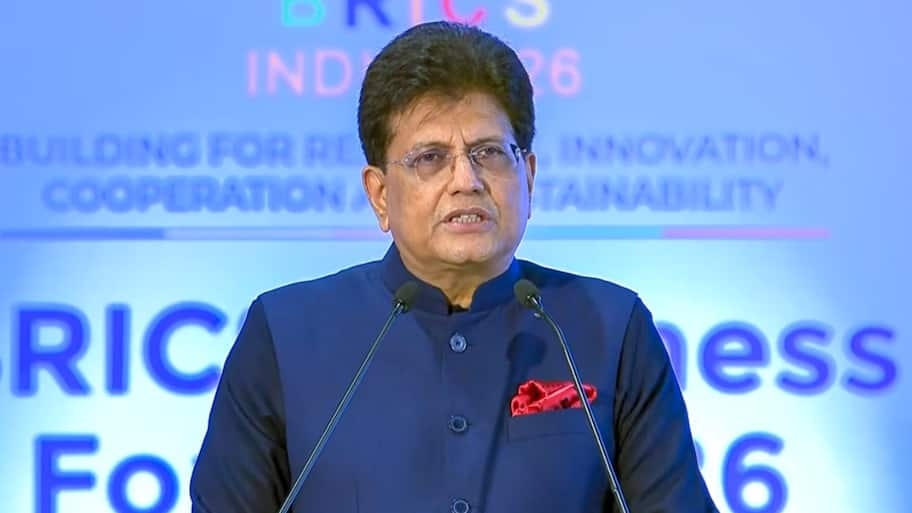
The comprehensive Free Trade Agreement (FTA) between India and New Zealand will officially enter into force on October 20, 2026, coinciding with the festival of Vijayadashami (Dussehra), Union Minister for Commerce and Industry Piyush Goyal announced. Hailing the historic milestone on social media platform X as a “Vijay for both nations,” the Union Minister emphasized that the pact will pave the way for a deeper, more resilient economic partnership. The bilateral agreement grants duty-free entry for 100% of Indian exports to the New Zealand market from the day of rollout, removing peak import duties of up to 10% on major domestic products.
The announcement arrives following overwhelming bipartisan ratification in New Zealand’s Parliament, where lawmakers approved the legislation by a decisive 93–26 vote. Diplomatic notes confirming domestic legal processes were formally exchanged in Wellington between India’s High Commissioner Muanpuii Saiawi and New Zealand’s Minister for Trade and Investment Todd McClay, setting the clock ticking for full operational implementation.
Zero-Duty Advantage Across Key Manufacturing and Export Sectors
Initially signed in New Delhi on April 27, the trade pact provides Indian merchandise with an immediate competitive edge over regional rivals in the New Zealand market:
-
Textiles, Apparel, and Footwear: Ready-made garments, leather goods, and footwear will enter New Zealand duty-free, offering substantial support to labor-intensive production centers.
-
Gems, Handlooms, and Handicrafts: Traditional craft clusters, carpet weavers, ceramics manufacturers, and jewelry exporters gain zero-duty access.
-
Engineering Goods and Automotive: Industrial machinery, auto components, and generic pharmaceuticals will access Wellington’s supply chains without tariff friction.
-
Raw Material Concessions: In return, India will grant tariff concessions or preferential market entry to approximately 95% of New Zealand shipments, including industrial wood logs, high-grade sheep wool, coking coal, sheep meat, and raw leather hides.
Sensitive Agrarian Safeguards and Technology Partnerships
To protect the livelihoods of domestic farmers and rural cooperatives, Minister Goyal confirmed that sensitive agricultural sectors have been strictly ring-fenced. The agreement completely excludes tariff relaxations on dairy items (milk, butter, cheese), along with onions, chickpeas, peas, corn, almonds, artificial honey, and sugar.
Instead of exposing local producers to direct import shocks, the trade pact institutes a collaborative agricultural productivity partnership. This initiative leverages New Zealand’s advanced farming and apiculture technologies alongside India’s vast production scale, establishing dedicated centers of excellence for high-yield cultivation of apples, kiwifruit, and manuka honey.
$20 Billion Investment Commitment and Talent Mobility Framework
Beyond merchandise trade, the agreement establishes a strong investment and services corridor. New Zealand has committed to facilitating $20 billion in direct investments into India over the next 15 years, directing institutional capital toward advanced manufacturing, clean energy, startups, deep-tech research, and infrastructure. To facilitate these inflows, the Commerce Ministry is creating a specialized “India-New Zealand Investment Desk” to support incoming ventures.
The pact also introduces expanded mobility frameworks for students and professionals. It provides an annual quota of 5,000 Temporary Employment Entry visas for qualified Indian specialists across high-demand service domains, alongside simplified post-study work avenues for Indian students graduating from New Zealand universities.
With bilateral trade in goods and services standing at $1.1 billion in FY2025–26, both governments have laid out a target to double two-way commerce to NZ$7 billion (approximately ₹35,000 crore) by 2030, marking the Dussehra rollout as a defining moment in Indo-Pacific commercial relations.