North India Statesman
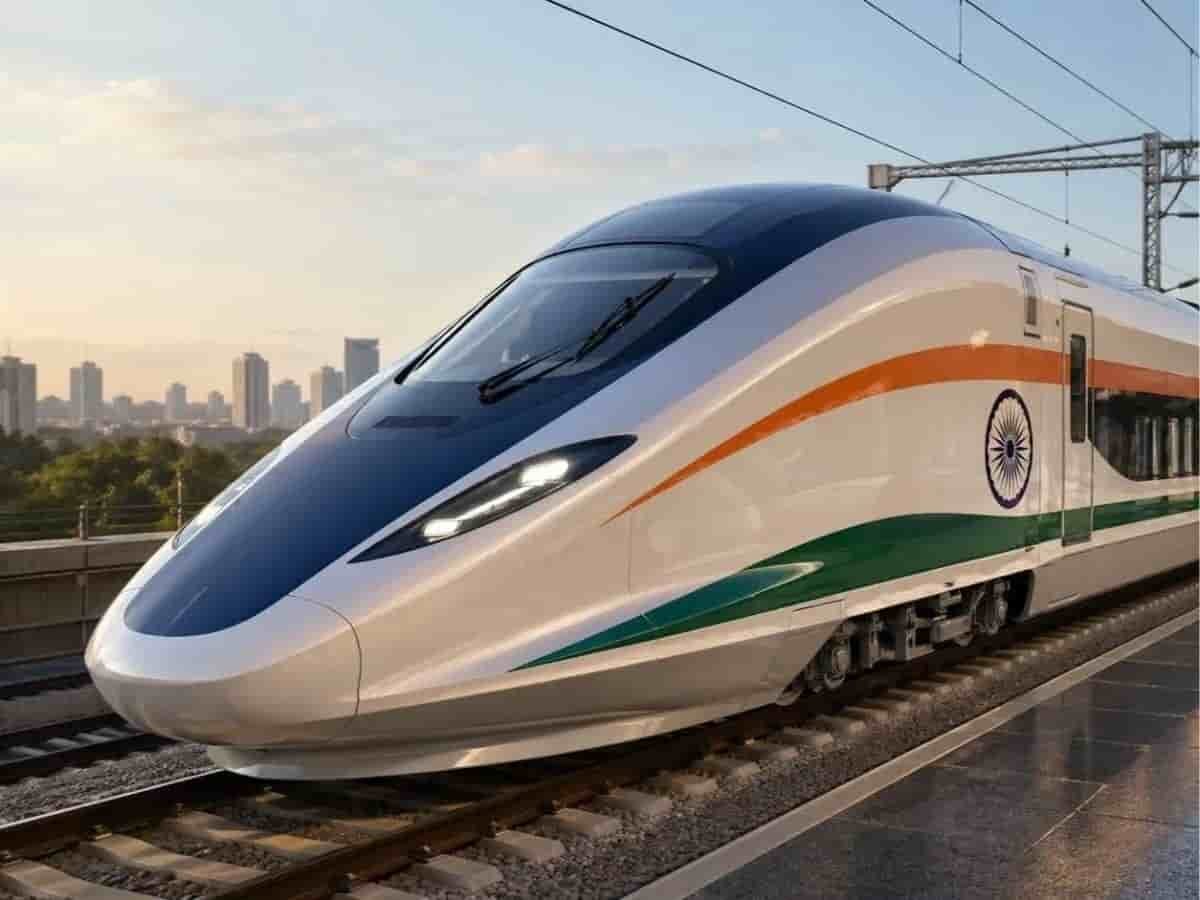
India’s ambition to operate high-speed rail on indigenous engineering has achieved a decisive technical breakthrough. The country’s first indigenously designed and built bullet trainset, designated as the B28, has successfully cleared a major safety milestone—the vehicle body shell structural assessment, universally known in railway engineering as the “squeeze test”. Conducted at Bharat Earth Movers Limited’s (BEML) specialized manufacturing facility in Bengaluru, the test subjects the rail car’s shell to extreme compressive loads to evaluate crashworthiness, passenger survival cell integrity, and structural rigidity at extreme velocities. With the structural integrity confirmed, assembly work on the country’s first two high-speed prototype rakes is moving at rapid momentum under the ‘Make in India’ banner.
Speed Specifications and Coach Architecture
The B28 is engineered from the ground up to redefine passenger rail transit across the subcontinent. It has been designed for a maximum test speed of 280 kmph and an everyday commercial operating speed of 249 kmph. Measuring approximately 202 meters in total length, the standard rake consists of an eight-car configuration featuring four motorized cars and four trailer cars driven by a 25 kV AC distributed traction system. The passenger capacity accommodates around 557 travelers across seven standard-class coaches with a 3×2 seating layout and one luxurious executive-class coach with a spacious 2×2 arrangement. The engineering design also includes automatic modular coupling provisions, allowing two eight-car trainsets to link seamlessly into a 16-car mega-train during high-demand festival windows.
Modern Interiors and Passenger Comfort Amenities
Designed around anthropometric data tailored to Indian passengers, the B28’s cabin interior prioritizes ergonomic comfort and journey efficiency. Passengers will experience wide panoramic windows at every seating row, soft-glow ambient LED lighting, ergonomic reclining seats with generous legroom, individual charging sockets for laptops and mobile devices, overhead baggage racks, and dedicated floor luggage bays for oversized suitcases. To guarantee seamless onboard hygiene, coaches are fitted with modern bio-digester vacuum toilets that minimize effluent. The cabin environment is maintained by dual high-capacity HVAC units per coach, which regulate temperature, humidity, and micro-particle air filtration through positive-pressure sealing.
Aerodynamic Engineering and Noise Suppression
Operating at high speeds through coastal plains and enclosed tunnels requires advanced aerodynamic optimization. The B28’s nose cone and exterior shell profile were sculpted using Computational Fluid Dynamics (CFD) simulations to significantly reduce aerodynamic drag, minimize crosswind turbulence, and mitigate sonic boom effects when entering tunnels. In addition, engineers have installed noise-damping acoustic insulation inside the carbody and flooring, complemented by specialized under-chassis skirts, bogie covers, and aerodynamic fairings to ensure that the passenger cabin remains remarkably quiet even when traveling at full speed. The train also incorporates regenerative braking systems, converting kinetic deceleration directly back into electrical energy for the grid.
Inclusive Features for Divyangjan Passengers
Accessibility serves as a core pillar of the B28’s interior blueprint. The train’s flooring is engineered to align directly with elevated platform levels, paired with automatic retractable steps that slide out to eliminate the horizontal boarding gap for smooth, step-free access. Broad vestibules and wide coach doors facilitate unhindered wheelchair movement, leading to designated seating zones and specialized accessible restrooms for passengers with reduced mobility (Divyangjan). All vital informational displays, seat numbers, and emergency buttons feature embossed Braille signage, while audio-visual passenger information displays in English, Hindi, and regional languages keep travelers informed. Passengers can also access an onboard Wi-Fi infotainment portal and emergency talk-back units to connect directly with the train crew.
The Launch Route and Rollout Timeline
The B28 bullet train will make its commercial debut on the high-profile 508-km Mumbai–Ahmedabad High Speed Rail (MAHSR) corridor. Indian Railways and the National High Speed Rail Corporation Limited (NHSRCL) have chalked out a phased operational roadmap. High-speed trial runs of the B28 are scheduled to begin on the 100-km Surat–Vapi viaduct section in Gujarat by May–June 2027, with initial commercial passenger services slated to open on this stretch by August 2027. The entire 352-km Gujarat section is targeted for operational completion by December 2027, leading to the full corridor’s completion through Maharashtra to Mumbai by December 2030.