North India Statesman
[ad_1]
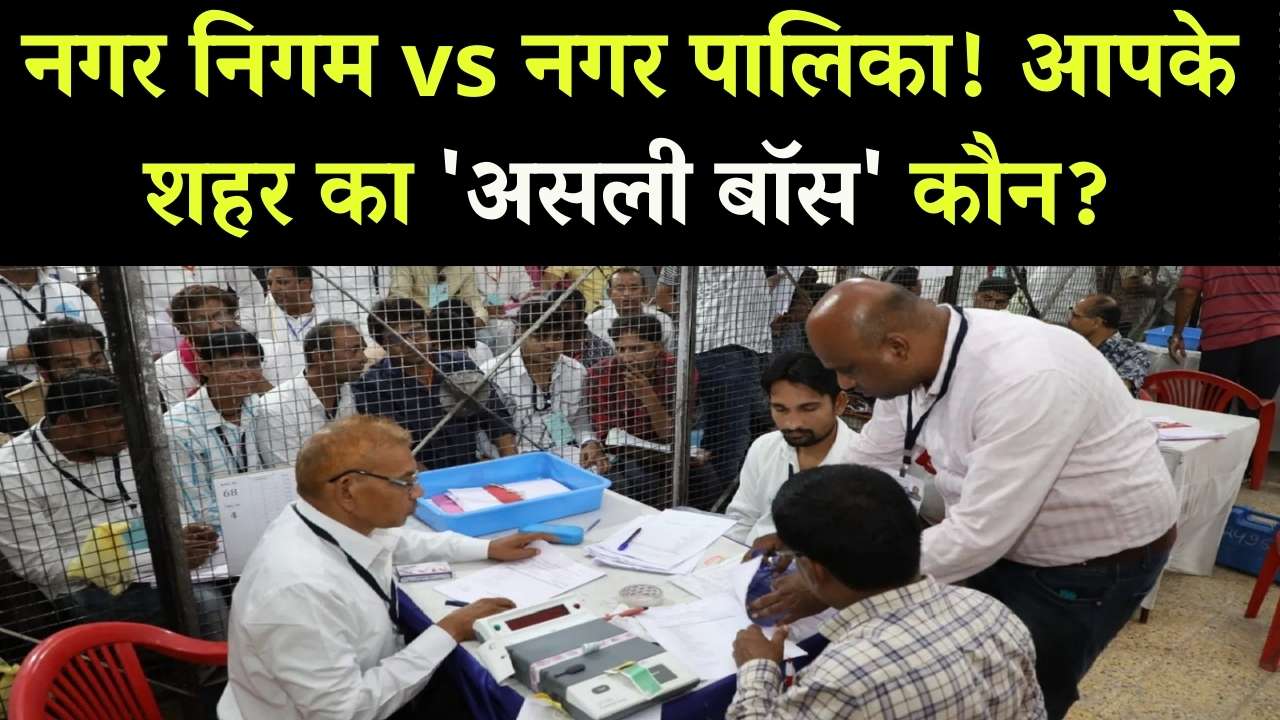
After the civic elections held in Maharashtra, once again there is a stir in the political circles. In a metropolis like Mumbai, there is competition among parties for the post of Mayor. In such a situation, this question is bound to arise in the mind of the common man that what are Municipal Corporation and Municipality, and what is the difference between these two? Come, let us solve this confusion of yours in very simple words.
These governments are closest to your home
First of all, understand that both of these are ‘local governments’. Their work is directly related to your everyday life, like providing clean water to your house, cleaning roads, repairing broken streets, and maintaining parks. Unlike the state and central government, their entire focus is only on the development of their city or town. Depending on the population and area of the city, it is decided whether a Municipal Corporation or a Municipality will function there.
Municipal Corporation: ‘Big Boss’ of metropolitan cities
Municipal corporations rule those large and densely populated cities where millions of people live.
- Identification: It is made in those cities whose population is more than 5 lakh. All big cities like Delhi, Mumbai, Bengaluru, Pune, Lucknow fall in this category.
- structure: A municipal corporation is divided into many small parts, which are called ‘wards’. The people of each ward elect their representative, who is called Councillor.
- chief: Its political head is the ‘Mayor’ or ‘Mayor’, who is either elected by the councilors from among themselves or, in some cities, directly elected by the public. At the same time, the reins of administrative work are in the hands of an IAS officer, who is called ‘Municipal Commissioner’.
- Work and Earning: They have huge powers and huge budget. They run big development schemes in the city like flyovers, big hospitals, and universities. Their sources of income are property tax, water bills, hoardings and parking charges.
Municipality: ‘Government’ of medium cities
Municipalities are created for medium-sized cities and towns that are on their way to becoming metropolitan cities.
- Identification: This happens in those towns or cities whose population is between 1 lakh and 5 lakh.
- structure: Here also there is ward system and councilor elections, but its size is smaller than that of the corporation.
- chief: Its head is called ‘Chairperson’, who is elected by the councilors or directly by the public. Here there is no powerful administrative post like Municipal Commissioner, in its place an Executive Officer looks after the work.
- Work and Earning: Their work mainly involves cleanliness of the city, arrangement of street lights, keeping records of births and deaths and construction of small roads. Their budget and jurisdiction is limited as compared to the Municipal Corporation.
The biggest differences at a glance
| Base | Municipal Corporation | Municipality |
| population | more than 5 lakhs | 1 lakh to 5 lakh |
| political chief | Mayor | Chairperson |
| administrative head | Municipal Commissioner (IAS Officer) | Executive Officer (EO) |
| budget and power | too big and too powerful | relatively small and limited authority |
| work area | Big projects, city planning | Infrastructure, cleaning, maintenance |
So the next time you go to vote in your city’s civic elections, remember that your vote decides the direction of not just one councillor, but the entire development of your city.