North India Statesman
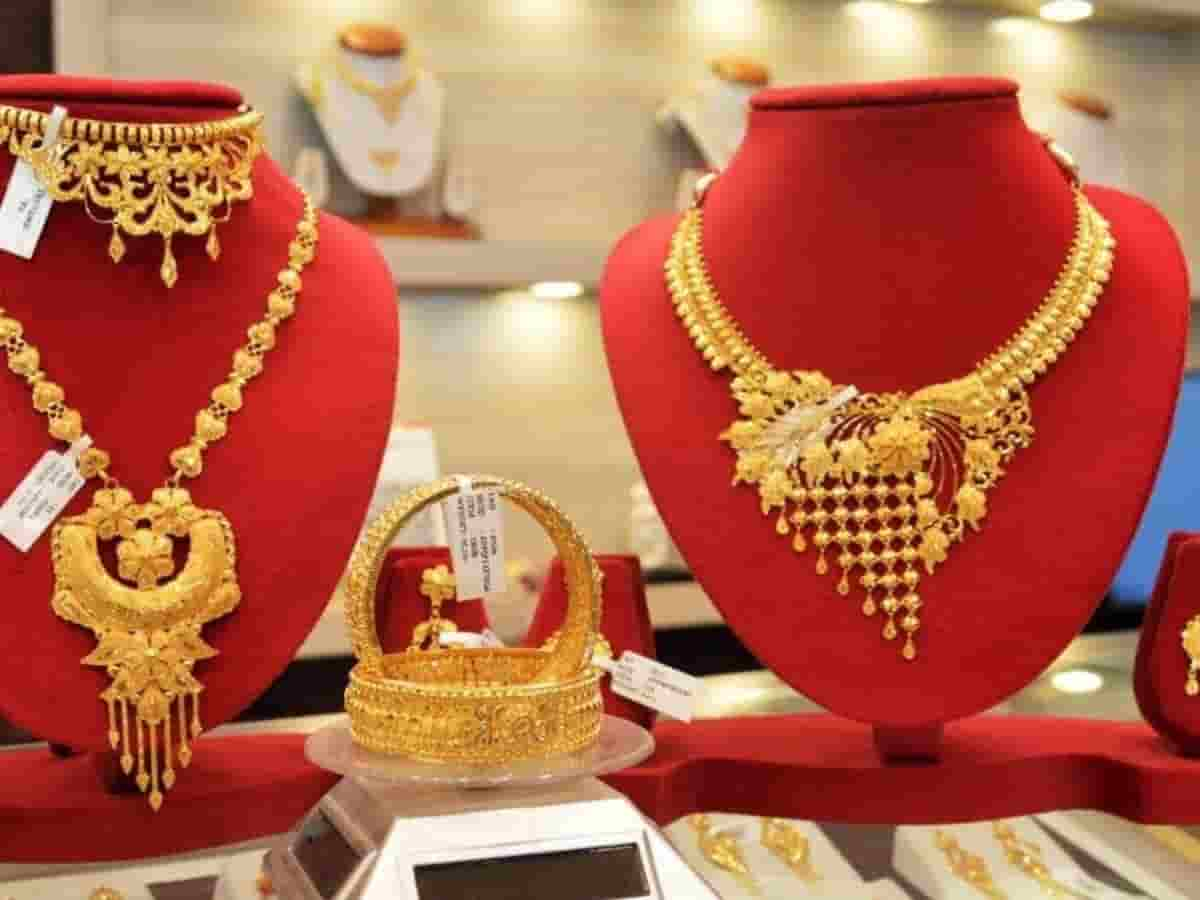
Investors holding shares of India’s leading jewellery retailers faced a turbulent session on Friday, November 20, 2026, as a steep sell-off in domestic and international gold prices triggered panic across Dalal Street. Shares of major listed jewellery companies tumbled by up to 7% intraday, wiping out billions of rupees in market capitalization even as benchmark indices like the Nifty 50 and BSE Sensex managed to navigate broader global cues. The immediate catalyst was a dramatic breakdown on the Multi Commodity Exchange (MCX), where December gold futures slipped decisively below the psychologically crucial ₹1.25 lakh mark to hit an intraday low of ₹1,21,424 per 10 grams. With domestic 24-karat physical gold rates sliding over 30% from their January 2026 peak, market participants rapidly repriced near-term earnings expectations for bullion-linked businesses. For retail shareholders watching red screens across Mumbai, New Delhi, Bengaluru, Chennai, and Kolkata, the sharp downturn raises an urgent question: is this a temporary overreaction before India’s peak wedding season, or the start of deeper margin pain?
Which Jewellery Stocks Suffered the Steepest Losses on Dalal Street?
Selling pressure was widespread across the gems and jewellery sector during Friday’s session, though individual counters reacted differently depending on their balance-sheet strength and hedging policies. Kalyan Jewellers India bore the sharpest brunt of the market’s anxiety, sliding nearly 7% intraday to hover around the ₹617.50 to ₹621 zone. The correction extends a five-session losing streak that has pulled the stock down roughly 11% from its recent swing highs near ₹725–₹730. Regional heavyweight P N Gadgil Jewellers also came under heavy pressure, shedding 4.52% to trade near ₹550.65, while PC Jeweller dropped nearly 4% to 5% around ₹13.95–₹14.06 amid high trading volumes. Sector bellwether Titan Company, which owns the flagship Tanishq brand, showed comparatively measured resilience but still declined 2.63% to ₹4,576.20 on the National Stock Exchange. South India-focused Thangamayil Jewellery slipped 2.58% to ₹3,876.20, whereas Senco Gold proved to be the most defensive name in the pack, dipping only 0.5% to 2% near ₹318–₹320 after recently reporting strong festive quarter momentum. Alongside retailers, gold-loan non-banking financial companies such as Muthoot Finance and Manappuram Finance also witnessed cautious selling as traders assessed collateral value buffers.
Why Does a Sharp Fall in Gold Prices Trigger Panic in Jewellery Stocks?
At first glance, cheaper gold sounds like great news for jewellery showrooms because lower retail prices encourage middle-class families to buy heavier ornaments. However, equity markets react immediately to three near-term operational risks whenever bullion prices crash abruptly. First is the fear of inventory valuation losses. Jewellery retailers must maintain massive physical stock of gold ornaments across hundreds of showrooms nationwide to meet walk-in demand. When gold drops by over ₹13,300 per 10 grams within a single month—and falls more than ₹5,000 on MCX futures in a single morning—investors worry that unhedged inventory acquired at higher prices could compress gross margins. Second is the impact on making charges and revenue growth. Many organized jewellers calculate making charges as a percentage of the underlying gold value; consequently, a 15% to 30% drop in gold rates reduces both top-line revenue per gram and absolute making-charge realization unless compensated by a surge in tonnage volumes. Third is short-term consumer hesitation. Whenever headlines flash daily price drops, wedding shoppers often delay showroom visits for a few days to see if rates fall further, temporarily slowing store footfalls.
How Protected Are Organized Jewellers Against Bullion Volatility?
Financial analysts and commodity strategists emphasize that retail investors should avoid painting all jewellery stocks with the same brush during a bullion rout. Organized national chains like Titan Company, Kalyan Jewellers, and Senco Gold operate sophisticated treasury and inventory hedging mechanisms. Through Gold Metal Loans (GML) sourced from bullion banks and matching derivative contracts on commodity exchanges, market leaders hedge roughly 80% to 100% of their gold inventory. Under this structure, any mark-to-market loss on physical showroom stock is offset by gains on short hedge positions, keeping operating margins remarkably steady regardless of whether gold trades at ₹1.45 lakh or ₹1.22 lakh per 10 grams. In contrast, smaller regional players or companies with lower hedging ratios remain far more vulnerable to sudden price swings. Furthermore, Friday’s correction coincides with Devuthani Ekadashi on November 20, 2026, which officially kicks off India’s high-demand winter wedding calendar. With 22-karat jewellery-grade gold cooling to roughly ₹1,15,100 per 10 grams—down ₹12,200 since November 1—household affordability has improved dramatically across tier-1 and tier-2 cities. Once bullion prices stabilize over the next few sessions, pent-up bridal demand is expected to translate into strong volume growth for organized players in the December quarter.
What Should Jewellery Stock Investors Do Next?
Market experts advise shareholders against making emotional, panic-driven exits at the bottom of a commodity-led sell-off. On the technical front, MCX December gold is currently testing a critical support band between ₹1,21,500 and ₹1,22,800 per 10 grams, with its Relative Strength Index (RSI) sitting deep in oversold territory near 18. Similarly, leading stocks like Kalyan Jewellers are retesting key daily chart support zones around ₹610–₹620, with stronger structural support placed near ₹585. For existing long-term investors holding fundamentally sound, well-hedged market leaders with strong same-store sales growth and expanding franchise networks, holding through the near-term volatility remains the most prudent strategy. Meanwhile, prospective buyers looking to enter the sector should avoid deploying lump-sum capital on a single red day, as international bullion remains sensitive to US Federal Reserve rate expectations and Treasury yield movements. Instead, accumulating top-tier organized jewellery stocks in two or three staggered tranches once MCX gold establishes a clear base will allow investors to capture attractive valuations ahead of the wedding-season earnings boost.