North India Statesman
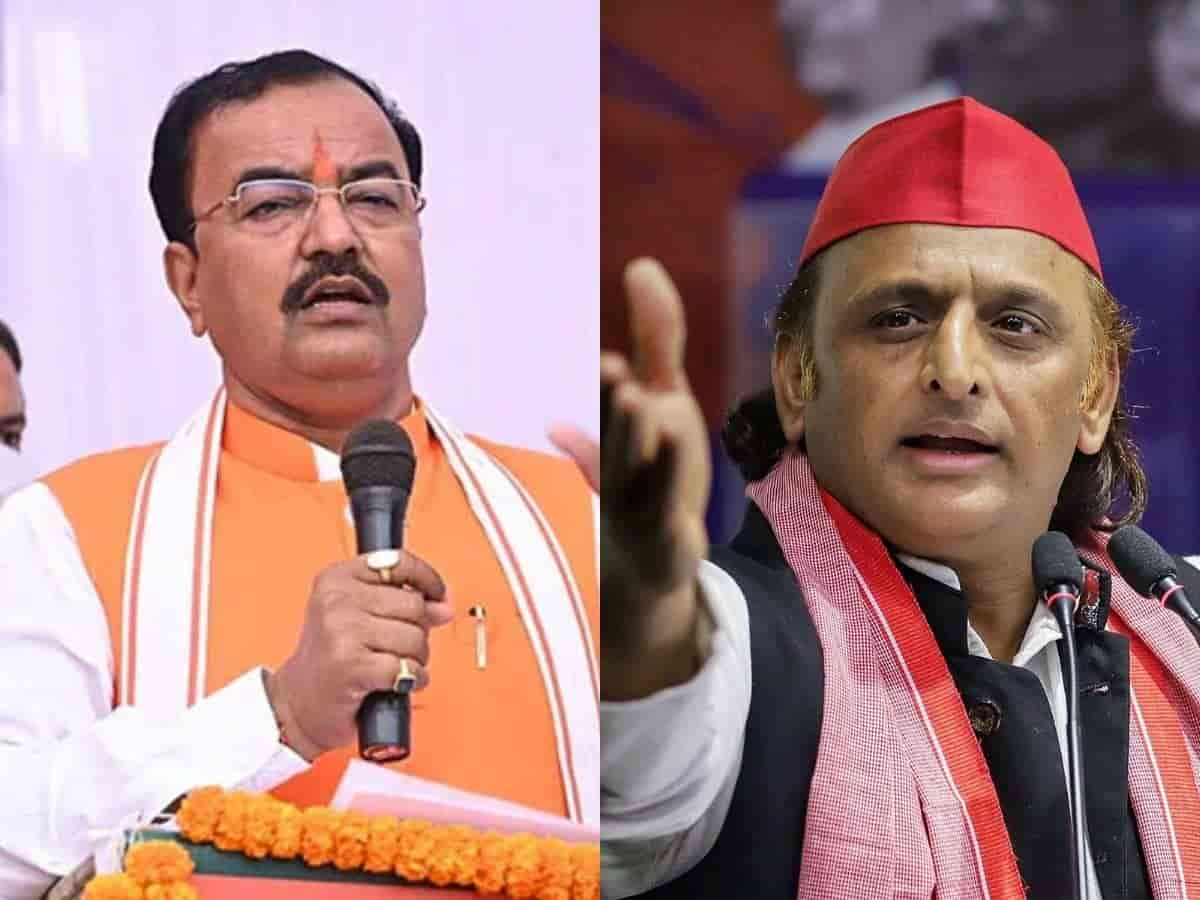
Political temperatures across Uttar Pradesh have surged sharply following a striking public invitation issued from the temple city of Mathura, where senior Bharatiya Janata Party leaders gathered to chart their roadmap for the 2027 Assembly elections. Speaking on the sidelines of the BJP’s two-day Chintan Shivir at the Pandit Deendayal Upadhyaya Gau-Vigyan Anusandhan Evam Prashikshan Kendra in Parkham village, Deputy Chief Minister Keshav Prasad Maurya extended an open offer to Samajwadi Party president Akhilesh Yadav to participate in Kar Seva for the construction of a grand temple at Shri Krishna Janmabhoomi. Maurya’s remarks, delivered in the heart of Braj Bhoomi just months ahead of high-stakes state polls, signal that the Shri Krishna Janmabhoomi issue is being positioned as a central ideological pillar of the ruling party’s upcoming electoral campaign. With Akhilesh Yadav recently signalling plans to visit Ayodhya, Maurya’s challenge directly tests the opposition leader’s cultural outreach while sharpening the political narrative across western and central Uttar Pradesh.
What Keshav Prasad Maurya Said in Mathura About Kar Seva
Addressing reporters in Mathura, Keshav Prasad Maurya drew a direct parallel between the Ram Temple movement in Ayodhya and future aspirations surrounding Lord Krishna’s birthplace. Emphasising that a grand temple at Shri Krishna Janmabhoomi will be constructed either through judicial processes or mutual dialogue, the Deputy Chief Minister turned his attention squarely toward the Samajwadi Party chief. Maurya stated that if Akhilesh Yadav genuinely considers himself a true devotee of Lord Krishna, he is welcome to step forward and join the Kar Seva in Mathura, adding that he would personally accompany Yadav in the effort to build a grand shrine. The timing of the statement carries considerable political weight, coming immediately after reports of Akhilesh Yadav’s scheduled visit to the Ram Temple in Ayodhya. By inviting Yadav to Mathura, Maurya sought to place the Samajwadi Party leadership in a delicate political position—either accept the cultural challenge or risk alienating socially conservative voters across the Braj and Rohilkhand belts.
Why Mathura and Shri Krishna Janmabhoomi Matter Ahead of 2027 Polls
For political observers tracking Uttar Pradesh, choosing Mathura as the venue for the BJP’s high-level strategy conclave was far from coincidental. Located in western Uttar Pradesh, Mathura holds immense spiritual significance for millions of devotees across India and serves as a symbolic anchor for cultural nationalism in state politics. During his interaction with the media, Maurya asserted that the Shri Krishna Janmabhoomi issue will remain a foremost agenda item in the 2027 Uttar Pradesh Assembly elections. Political analysts note that while the BJP continues to highlight infrastructure growth, expressway connectivity, and welfare schemes under its double-engine governance model, invoking Mathura reinforces ideological cohesion among its core voter base. At the same time, the Mathura conclave—attended by a 54-member state leadership team alongside senior national office-bearers—focused intensely on booth-level mobilisation, resolving local organisational friction, and fine-tuning social coalitions ahead of the electoral battle.
Maurya Sharpens Attack on Samajwadi Party Over Law and Order and PDA
Beyond the Kar Seva invitation, Keshav Prasad Maurya launched a multi-pronged political offensive against the Samajwadi Party’s governance record and its much-publicised PDA (Pichhda, Dalit, Alpsankhyak) outreach. Claiming that Uttar Pradesh has undergone a decisive transformation since 2017, Maurya contrasted the current law-and-order environment with the 2012–2017 Samajwadi Party tenure, alleging that voters would never allow a return to street crime, riots, or mafia dominance. He further escalated his criticism over remarks made during a recent Samajwadi Party Dalit convention, accusing senior SP leaders of insulting the Dalit community and demanding an apology from Akhilesh Yadav. Maurya argued that the opposition’s political arithmetic—frequently referred to by him as “Mungerilal’s daydreams”—would collapse in 2027, asserting confidently that the BJP commands 60 per cent of the electoral vote share while the remaining 40 per cent stands fragmented among opposition contenders.
Political Implications for Akhilesh Yadav and Opposition Strategy
The Deputy Chief Minister’s remarks come at a moment when Akhilesh Yadav has been carefully calibrating his public messaging to expand the Samajwadi Party’s footprint beyond its traditional support base. Having secured strong parliamentary momentum in recent national polls, Yadav has sought to pair social justice mobilisation with selective cultural outreach, including temple visits and soft-Hindutva symbolism. However, BJP strategists are clearly working to counter that narrative by framing the opposition’s past record against major temple movements. By explicitly linking Akhilesh Yadav’s proposed Ayodhya visit with an invitation to participate in Mathura Kar Seva, Maurya has attempted to seize the rhetorical initiative. How the Samajwadi Party responds—whether by dismissing the invitation as electoral diversion or by reframing the debate around employment, agrarian distress, and inflation—will shape political discourse across Uttar Pradesh in the coming months.
Road to 2027: Battle Lines Drawn in Uttar Pradesh Politics
As the two-day Chintan Shivir in Mathura concludes with organisational blueprints for panna pramukhs, shakti kendras, and grassroots outreach, it is evident that Uttar Pradesh has entered full-scale pre-election mode. Keshav Prasad Maurya’s invitation from the sacred soil of Mathura blends ideological assertion with sharp electoral combativeness, setting the tone for a fiercely contested 2027 Assembly race. With the ruling BJP aiming for a historic third consecutive term in Lucknow and the Samajwadi Party determined to mount a formidable challenge, the interplay between cultural symbolism, caste arithmetic, and governance delivery is poised to dominate every political conversation from Braj to Purvanchal.