North India Statesman
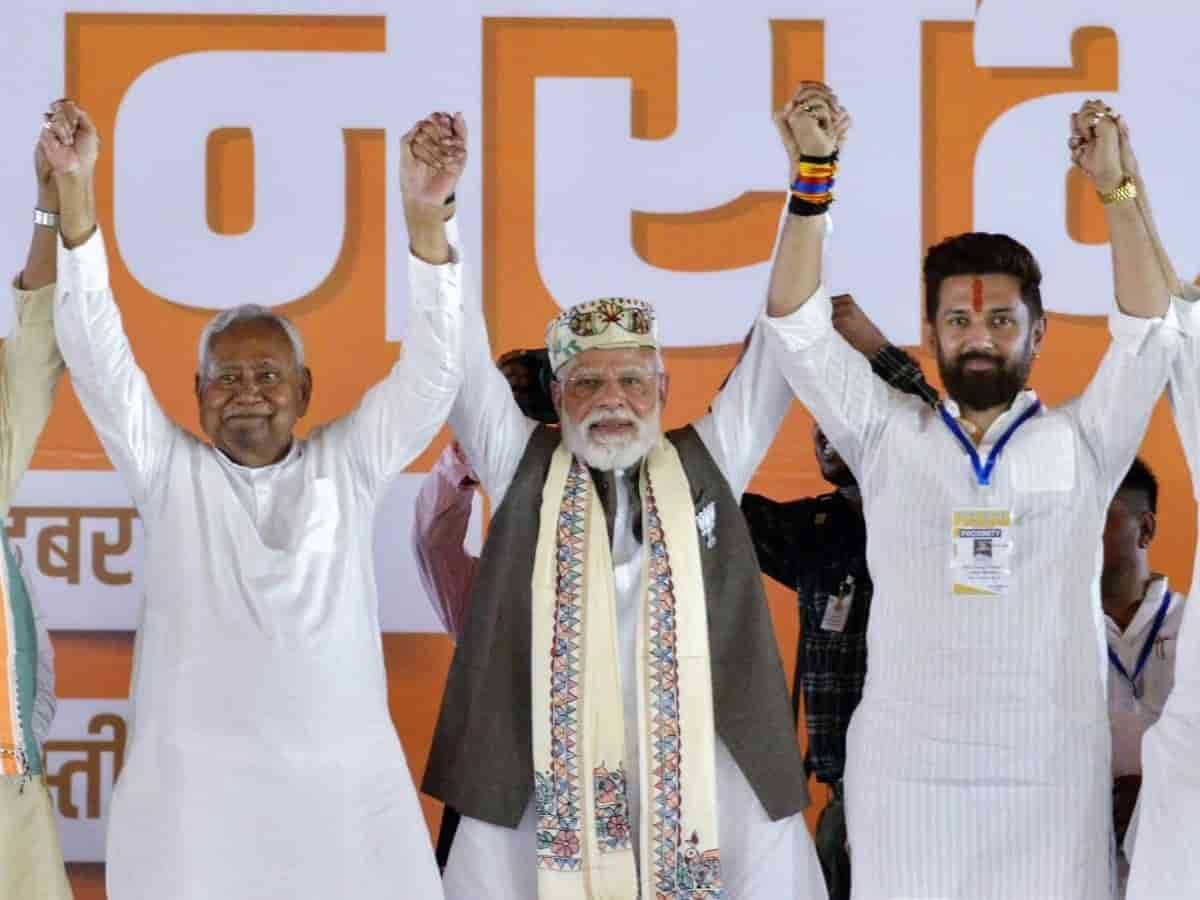
The political chessboard in Uttar Pradesh is witnessing rapid realignments as the National Democratic Alliance prepares to onboard new regional partners, a maneuver calculated to build an impenetrable caste coalition across key electoral belts. For the opposition INDIA bloc, anchored by the Samajwadi Party and the Indian National Congress, the entry of a fresh partner into the ruling camp directly challenges the hard-fought social arithmetic that powered their recent electoral resurgence. With the BJP expanding its umbrella to co-opt smaller, influential sub-caste outfits, the spotlight shifts squarely onto Akhilesh Yadav and Rahul Gandhi, testing whether their strategic partnership can absorb the counter-polarization or succumb to severe internal seat-bargaining frictions.
Strategic Impact: How an Expanding NDA Squeezes the SP-Congress Alliance
-
Fragmentation of the PDA Coalition
-
The Samajwadi Party’s PDA (Pichhda, Dalit, Alpsankhyak) framework relies on uniting non-dominant backward classes, marginalized communities, and minorities.
-
By drafting targeted regional parties—particularly those representing non-Yadav OBC sub-castes, Most Backward Classes (MBCs), or specialized agrarian groups—the NDA seeks to carve out vital community votes from the SP’s social base, preventing monolithic anti-incumbency consolidation.
-
-
Heightened Pressure on Seat-Sharing Negotiations
-
Whenever the NDA expands, it tightens the electoral margin in multiple three-cornered and four-cornered contests.
-
This leaves the SP and Congress with almost zero margin for error in constituency distribution. The Congress high command will inevitably seek a more assertive footprint in regions where caste balances shift, while Akhilesh Yadav’s camp will resist ceding winning seats to avoid diluting its core organizational leverage.
-
-
Regional Containment Tactics
-
If the incoming ally commands pockets in Purvanchal (Eastern UP) or the central agrarian belt, it directly challenges the SP’s recent inroads in those territories.
-
A fortified NDA presence forces the opposition to recalibrate candidate profiles seat by seat, escalating local ticket disputes and fueling cadre discontent among aspiring ticket-seekers in both SP and Congress units.
-
Key Fault Lines: Where Akhilesh and Rahul Could Face Frictional Pulls
| Strategic Friction Point | Samajwadi Party’s Stance | Congress’s Stance |
| Seat Allocation Ratio | Argues that SP is the primary regional powerhouse and must contest the overwhelming bulk of seats to guarantee victory. | Seeks a respectable double-digit tally to revive its state cadre, citing national brand appeal. |
| Candidate Selection Autonomy | Insists on fielding candidates with proven grassroots, caste-specific winnability. | Prefers traditional constituencies and seeks parity in candidate clearance across bellwether seats. |
| Core Campaign Narrative | Heavy emphasis on localized caste census demands, local reservation representation, and state administrative failures. | Focuses on broader national themes, constitutional defense, national economic disparities, and institutional transparency. |
The Counter-Play: Can the SP-Congress Axis Neutralize the Threat?
Despite looming operational tensions, both Akhilesh Yadav and Rahul Gandhi operate under strong reciprocal incentives to preserve their alliance:
-
Mutual Dependency: Akhilesh Yadav recognizes that Congress’s presence solidifies minority support and provides upper-caste urban acceptance, while Rahul Gandhi requires the SP’s formidable ground apparatus to translate national messaging into ballot momentum.
-
Consolidation of Anti-BJP Vote: A fracture between SP and Congress would trigger catastrophic vote-splitting, giving a multi-party NDA an open run across bipolar battlegrounds.
-
Aggressive Counter-Alliances: Rather than remaining purely reactive, the SP leadership is also exploring strategic tie-ups with independent Dalit outfits, civil rights fronts, and smaller local parties to create a direct counterweight to the NDA’s coalition engineering.
The expansion of the NDA does not automatically rupture the Akhilesh-Rahul partnership, but it drastically reduces their room for internal experimentation. It converts routine seat negotiations into high-stakes negotiations where every conceded seat must mathematically justify its capacity to beat a broadened NDA social coalition.