North India Statesman
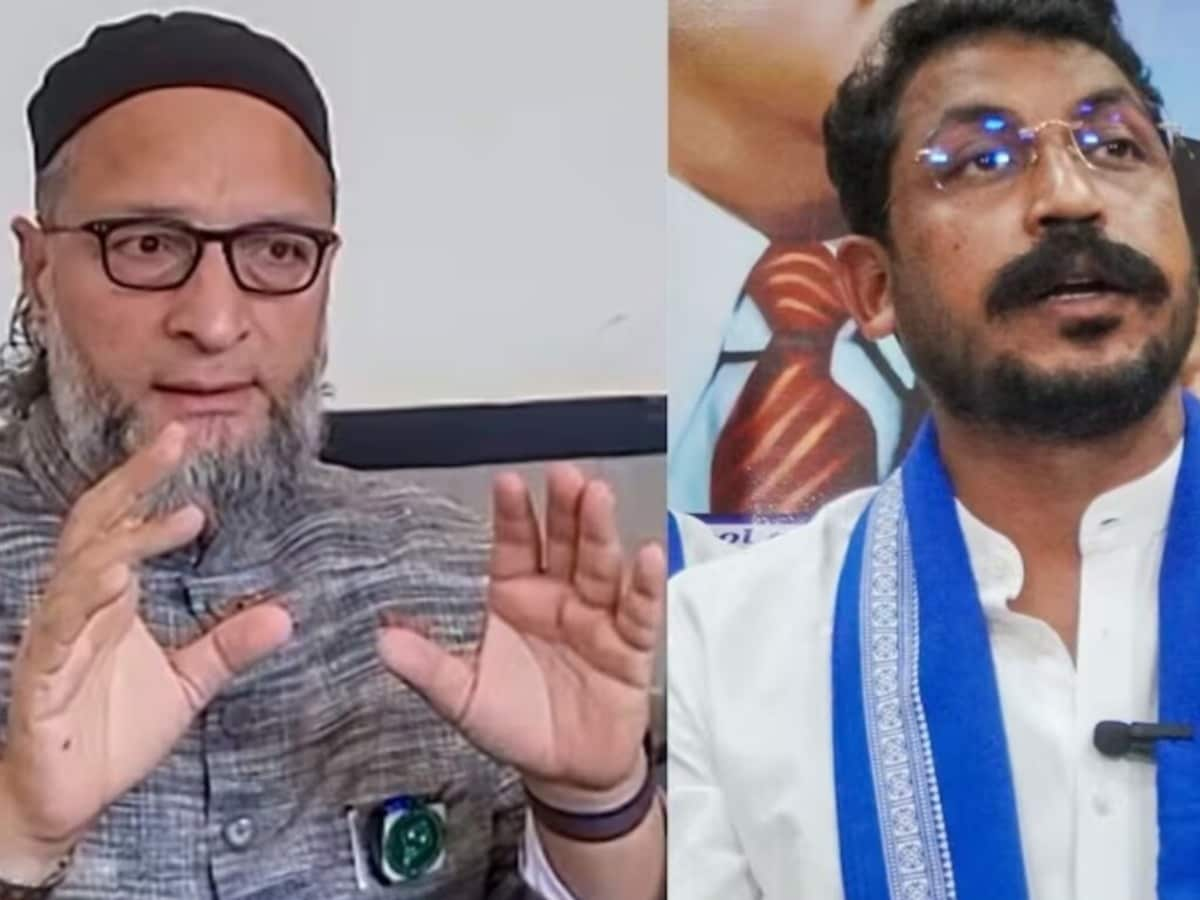
Ahead of the 2027 Uttar Pradesh Assembly elections, a major political realignment has taken shape in Lucknow that threatens to upend traditional caste and community calculations across Western Uttar Pradesh. On Thursday, November 12, 2026, All India Majlis-e-Ittehadul Muslimeen (AIMIM) president Asaduddin Owaisi and Azad Samaj Party (Kanshi Ram) chief Chandrashekhar Azad formally joined hands to launch a third front named Samajik Parivartan Morcha (SPM). Announcing that the new coalition will contest all 403 Assembly seats in the state, Owaisi declared Nagina MP Chandrashekhar Azad as the alliance’s chief ministerial face. While the front aims to project a statewide alternative to both the ruling Bharatiya Janata Party (BJP) and the Samajwadi Party-Congress alliance, political analysts across Lucknow, Meerut, and Saharanpur agree that its sharpest electoral impact will be felt in the densely populated districts of Western Uttar Pradesh.
The 40 Percent Formula: Why Dalit-Muslim Unity Matters in West UP
At the heart of the Owaisi-Chandrashekhar partnership lies a clear demographic calculation. Across Uttar Pradesh, Muslims account for roughly 19 to 20 percent of the population, while Scheduled Castes (Dalits) make up around 21 percent—creating a combined social bloc of nearly 40 percent of the state’s electorate. In Western Uttar Pradesh, that concentration is even higher and far more decisive. Across key belts such as Saharanpur, Shamli, Muzaffarnagar, Bijnor, Moradabad, Sambhal, Rampur, Amroha, and Meerut, Muslim voters frequently constitute between 30 percent and 50 percent of the electorate, while Jatav and non-Jatav Dalits form another 18 to 25 percent. Statewide, there are 14 Muslim-majority or high-concentration districts accounting for 75 Assembly seats, alongside 84 Scheduled Caste reserved constituencies. By pairing Owaisi’s assertive minority outreach with Azad’s grassroots Bhim Army network—which already demonstrated its pulling power when Azad won the Nagina Lok Sabha seat in Bijnor—the Samajik Parivartan Morcha is attempting to stitch together the classic Kanshi Ram-era Bahujan and minority coalition on its own terms.
How the New Third Front Impacts Akhilesh Yadav’s PDA Strategy
For Samajwadi Party chief Akhilesh Yadav, whose PDA (Pichhda, Dalit, Alpsankhyak) formula helped the INDIA bloc make major gains in the 2024 Lok Sabha polls, the emergence of the Samajik Parivartan Morcha presents a direct strategic headache. In the 2022 UP Assembly elections, the BJP won 38 of the 75 seats located in districts with over 30 percent Muslim population, while the Samajwadi Party captured 30 seats and the Rashtriya Lok Dal (RLD) took six. Back then, AIMIM contested 95 seats independently and polled roughly 0.49 percent of the statewide vote, while the Azad Samaj Party contested 111 seats for 0.77 percent—neither winning a seat, yet siphoning off crucial margins in tight multi-cornered contests. Together on a single platform in 2027, Owaisi and Azad offer a credible rallying point for younger Muslim and Dalit voters who feel sidelined in ticket distribution by mainstream parties. Even a 3 to 5 percent consolidation of Muslim and Jatav votes behind SPM candidates in constituencies like Deoband, Kairana, Kundarki, Sambhal, Rampur, or Meerut South could split the anti-BJP vote and dramatically alter winning margins.
What the Alliance Means for Mayawati’s BSP and the Ruling BJP
The ripple effects of the Lucknow announcement extend equally to Mayawati’s Bahujan Samaj Party (BSP) and the BJP-RLD National Democratic Alliance. For the BSP—which has announced plans to contest the 2027 elections solo—Chandrashekhar Azad’s elevation as a chief ministerial face directly challenges Mayawati’s traditional monopoly over the Jatav Dalit vote in Western UP. If younger Dalit cadres gravitate toward Azad’s energetic street-level mobilisation, the BSP risks further erosion in its historic western bastion. Conversely, Congress and Samajwadi Party leaders have already labelled the Samajik Parivartan Morcha a “vote-cutter” that could inadvertently benefit the BJP by dividing opposition votes in triangular or four-cornered races. Owaisi and Azad have forcefully rejected that charge, arguing instead that minorities and Dalits can no longer be treated as captive vote banks and even inviting secular parties to back Azad’s leadership if they truly wish to stop a third consecutive BJP government.
Key Districts and Battlegrounds to Watch Ahead of 2027
With both leaders set to kick off their joint statewide campaign with a major public rally on November 26, 2026, political observers are closely tracking three critical sub-regions in Western Uttar Pradesh. The first is the Saharanpur-Bijnor-Muzaffarnagar belt, Chandrashekhar Azad’s home turf, where Bhim Army cadres have deep booth-level presence alongside large Muslim populations. The second is the Rohilkhand corridor—covering Moradabad, Sambhal, Rampur, and Amroha—where AIMIM has steadily built municipal and local body networks over recent years. The third is the Meerut-Bulandshahr-Aligarh zone, where tight urban and semi-urban contests have historically been decided by razor-thin margins. Whether the Samajik Parivartan Morcha turns into a seat-winning force or acts primarily as a decisive balancer in West UP will depend on how effectively Owaisi and Azad transfer their respective community votes to each other’s candidates on polling day.