North India Statesman
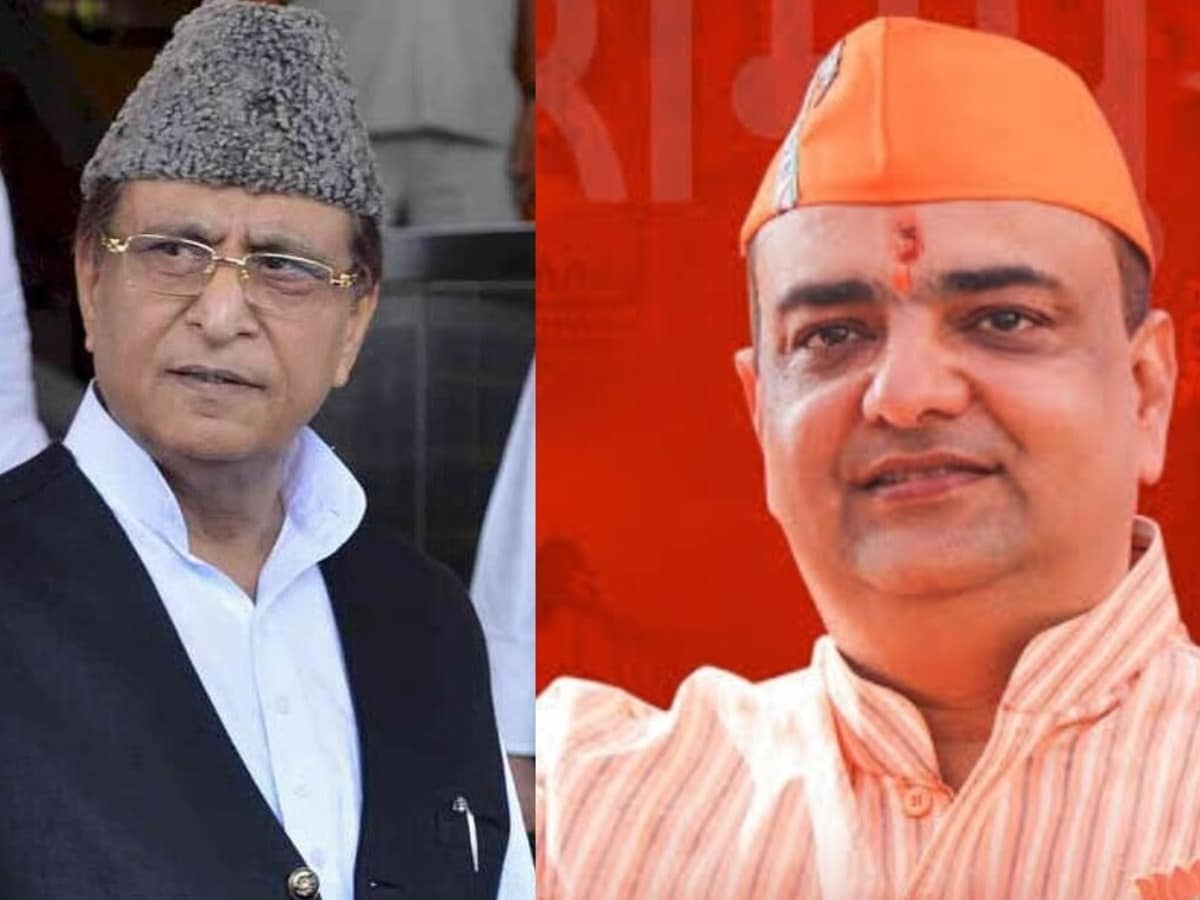
For nearly four decades, Assembly constituency number 37—Rampur Sadar in Uttar Pradesh’s Rohilkhand region—was synonymous with a single political name: Samajwadi Party (SP) veteran Mohammad Azam Khan. In a constituency of roughly 3.88 lakh electors where Muslim voters constitute a decisive majority, winning Rampur without Azam Khan’s backing was long viewed across political circles as virtually impossible. Yet in a watershed December 2022 by-election triggered by Khan’s judicial disqualification, Bharatiya Janata Party (BJP) leader Akash Saxena shattered that forty-year political monopoly, becoming the first Hindu legislator ever elected from Rampur Sadar since Independence. Now, with the next Uttar Pradesh Legislative Assembly elections expected in February–March 2027, Rampur has once again moved to the centre of state politics. As Azam Khan undergoes Enforcement Directorate (ED) custodial interrogation in connection with the Jauhar University money-laundering probe and new regional alliances test opposition unity in Western Uttar Pradesh, strategists in Lucknow, Moradabad, and Rampur are weighing a pivotal question: can the BJP defend its historic breach in 2027, or will the Samajwadi Party reclaim its traditional bastion?
How BJP’s Akash Saxena Breached Azam Khan’s 40-Year Citadel
To understand the electoral arithmetic shaping 2027, political observers point to the stark contrast between the general Assembly election of March 2022 and the by-election held nine months later. In the regular state election in March 2022, when voter turnout stood at 56.65 percent, Azam Khan retained Rampur Sadar by a commanding margin of 55,141 votes. However, in October 2022, a Rampur court convicted Khan and sentenced him to three years in prison in a 2019 hate speech case—a legal battle initiated on a complaint filed by Akash Saxena, son of former BJP MLA and Uttar Pradesh Cabinet Minister Shiv Bahadur Saxena. Following Khan’s disqualification from the Assembly, the December 2022 bypoll saw the Samajwadi Party field Khan’s close confidant Mohammad Asim Raja against the BJP’s Akash Saxena. Amid a sharply depressed voter turnout of 33.94 percent—and opposition allegations of administrative pressure—Saxena secured 80,964 votes against Asim Raja’s 47,262, winning by 33,702 votes and planting the BJP flag in Rampur Sadar for the first time.
Azam Khan’s Legal Battles and the Samajwadi Party’s Candidate Dilemma
As parties prepare their ground organisation ahead of early 2027, the biggest uncertainty hanging over the Samajwadi Party camp is leadership and candidate selection on the ground. On October 31, 2026, after spending nearly eleven months in custody, Azam Khan briefly walked out of Rampur district jail only to be arrested minutes later by the Enforcement Directorate under the Prevention of Money Laundering Act (PMLA). On November 12, 2026, a special court granted the central agency four days of custodial remand through November 16 to question Khan in Delhi and Lucknow over alleged financial irregularities involving roughly ₹426 crore linked to the Maulana Mohammad Ali Jauhar Trust and Mohammad Ali Jauhar University. Because statutory disqualifications and ongoing legal proceedings prevent Khan from contesting directly, Samajwadi Party insiders in Lucknow indicate that the party will have to balance emotional loyalty to the Khan family—such as fielding his wife, former MP and ex-MLA Dr. Tazeen Fatma, or a trusted local nominee—against the need for an active, full-time campaigner capable of mobilising booths across both urban Rampur and surrounding rural pockets.
Why Voter Turnout and District-Wide Math Will Decide 2027
For the Samajwadi Party, the central lesson from recent electoral cycles in Rampur is that general elections produce markedly different dynamics than low-turnout by-elections. While the ruling National Democratic Alliance (NDA) currently holds four of the five Assembly seats in Rampur district—with the BJP representing Rampur Sadar, Bilaspur, and Milak, and ally Apna Dal (Sonelal) holding Suar—the SP retains the neighbouring Chamraua constituency. Furthermore, Samajwadi Party leaders point to the 2024 Lok Sabha election, in which SP candidate Mohibbullah Nadvi won the Rampur parliamentary seat, as evidence that when general-election participation returns closer to the 55–60 percent mark, minority and backward-class consolidation heavily favours the opposition. Conversely, BJP strategists in Rohilkhand contend that Akash Saxena’s tenure since December 2022 has allowed the party to build direct grassroots networks, highlight state welfare schemes, and fracture the traditional fear of the BJP that once kept minority voters solidly behind Azam Khan.
Third-Front Factors and Local Alliances in Rohilkhand
Beyond the direct BJP-versus-SP contest, the 2027 outcome in Rampur will also hinge on whether smaller parties or independent regional fronts divide the anti-incumbency vote. Historically, local rivalries between the Azam Khan camp and the erstwhile Rampur Nawab family—led by Nawab Kazim Ali Khan and Begum Noor Bano—have periodically influenced minority voting behaviour in close contests. At the same time, the emergence of new Dalit-Muslim political formations in Western Uttar Pradesh, including the recently announced alliance between AIMIM chief Asaduddin Owaisi and Azad Samaj Party leader Chandrashekhar Azad, threatens to introduce a triangular dynamic in high-minority-concentration seats across Rohilkhand. If a third-front candidate captures even a modest share of Muslim or Scheduled Caste votes in Rampur Sadar, it could narrow the Samajwadi Party’s margin of error and bolster Akash Saxena’s bid for a second term. Ultimately, when Rampur’s nearly four lakh voters head to the polls in early 2027, the contest will test whether the BJP’s 2022 breakthrough marked a permanent structural shift in Uttar Pradesh politics or a temporary pause in Azam Khan’s decades-long hold over his home turf.