North India Statesman
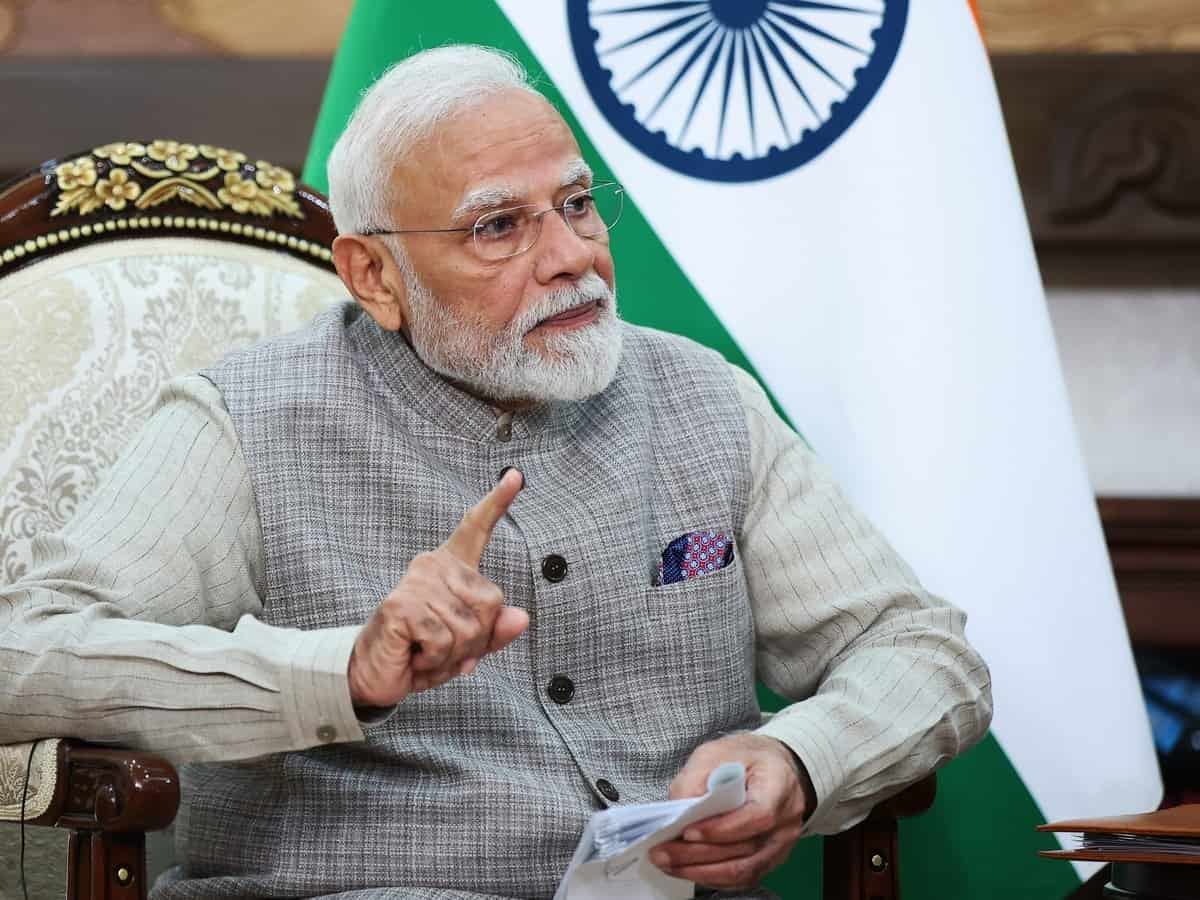
Prime Minister Narendra Modi departs for Manila, Philippines, on Monday, November 16, 2026, for a high-stakes diplomatic visit centered on the 23rd ASEAN-India Summit and the 21st East Asia Summit (EAS). Undertaking the trip at the invitation of Philippine President Ferdinand R. Marcos Jr.—whose country holds the 2026 ASEAN Chair under the theme “Navigating the Future”—PM Modi will join an extraordinary gathering of global heavyweights in Southeast Asia. Alongside leaders of the 11-member Association of Southeast Asian Nations (ASEAN), the Manila meetings bring together United States President Donald Trump, Brazilian President Luiz Inácio Lula da Silva, Canadian Prime Minister Mark Carney, Japanese Prime Minister Sanae Takaichi, and Australian Prime Minister Anthony Albanese. For foreign policy watchers across New Delhi, Mumbai, Bengaluru, and Lucknow, the summit arrives at a pivotal moment as global supply chains, maritime security in the Indo-Pacific, and escalating tariff tensions reshape international diplomacy.
PM Modi’s Core Agenda at the ASEAN-India and East Asia Summits
According to the Ministry of External Affairs (MEA), Prime Minister Modi’s main multilateral engagements will take place on Tuesday, November 17, 2026, at the Philippine International Convention Center in Metro Manila. At the 23rd ASEAN-India Summit, PM Modi and Southeast Asian leaders will conduct a comprehensive review of the ASEAN-India Comprehensive Strategic Partnership, focusing on implementing the ASEAN-India Plan of Action (2026–2030). With 2026 designated as the ASEAN-India Year of Maritime Cooperation, New Delhi is pushing for deeper naval coordination, blue economy partnerships, digital public infrastructure sharing, resilient supply chains, and trade facilitation across the 11-nation bloc—which comprises Brunei, Cambodia, Indonesia, Laos, Malaysia, Myanmar, the Philippines, Singapore, Thailand, Timor-Leste, and Vietnam. The summit will also lay the groundwork for 2027, when India and ASEAN commemorate 35 years of Dialogue Relations and five years of their Comprehensive Strategic Partnership.
Strategic Indo-Pacific Security and Quad Talks on the Sidelines
Immediately following the ASEAN-India deliberations, PM Modi will participate in the 21st East Asia Summit (EAS)—the premier leaders-led forum bringing ASEAN together with eight key dialogue partners: India, the United States, China, Japan, South Korea, Australia, New Zealand, and Russia. MEA Secretary (East) Rudrendra Tandon emphasized ahead of the visit that ASEAN remains a central pillar of India’s Act East Policy and a vital engine for regional stability. Beyond the formal plenary sessions, PM Modi is expected to hold a series of bilateral meetings with President Marcos Jr. and other visiting heads of state, and is also slated to join the leaders of the United States, Japan, and Australia for a high-level Quad Leaders’ Summit on the margins of the Manila meetings, reinforcing maritime domain awareness and free navigation in the Indo-Pacific.
Why Donald Trump, Lula da Silva, and Global Leaders Are in Manila
The 49th ASEAN Summit in Manila has drawn intense global scrutiny due to the presence of major leaders navigating a turbulent geopolitical and economic landscape. US President Donald Trump is scheduled to arrive on Tuesday, November 17, for a dedicated ASEAN-US Special Summit, with Southeast Asian governments eager to address Washington’s sweeping tariff policies and supply-chain initiatives. Brazilian President Luiz Inácio Lula da Silva—attending as a guest of the summit chair after arriving in Manila ahead of the main sessions—has already made trade diversification a central talking point, urging developing economies to expand South-South commerce rather than yielding to tariff pressures. Meanwhile, Canadian Prime Minister Mark Carney joined President Marcos Jr. in endorsing a framework toward a bilateral free trade agreement by 2027, while Chinese Premier Li Qiang and Russian Foreign Minister Sergey Lavrov represent Beijing and Moscow in regional dialogues.
Regional Flashpoints and India’s Diplomatic Balancing Act
As leaders convene in Manila, three major geopolitical challenges dominate hallway negotiations: the ongoing Middle East crisis, maritime tensions in the South China Sea—where ASEAN foreign ministers have been working to finalize a long-pending Code of Conduct—and the protracted political and humanitarian crisis in Myanmar. Explaining India’s approach toward Myanmar, MEA officials noted that New Delhi strongly backs ASEAN-led peace initiatives while advocating sustained, patient diplomatic engagement rather than isolation. By balancing bilateral defence and maritime partnerships—particularly with host nation the Philippines—alongside inclusive multilateral trade and connectivity goals, PM Modi’s Manila visit underscores India’s role as a steady, trusted bridge across the Indo-Pacific amid growing global economic uncertainty.