North India Statesman
As the five-day festival of lights unfolds across the country—from the ghats of Varanasi and Ayodhya to bustling community centers in Bengaluru and Mumbai—devotees often encounter a familiar dilemma on festival calendars: when exactly should Naraka Chaturdashi, Roop Chaudas, and Hanuman Jayanti be observed? Because Vedic panchang calculations dictate specific ceremonies by matching lunar tithis to either Arunodaya (pre-dawn twilight) or Pradosh/Nishita Kaal (dusk and midnight), the rituals for Kartik Krishna Chaturdashi span an important transition window. For 2026, the Chaturdashi tithi commences on the morning of Saturday, November 7, and concludes on the morning of Sunday, November 8. Understanding this chronological divide provides clarity on when to light protective lamps, when to revere Lord Hanuman and Goddess Kali, and when to undertake the purifying Abhyanga Snan.
Why Naraka Chaturdashi Honors Lord Krishna’s Victory
The primary foundation of Naraka Chaturdashi traces back to the celestial battle between Lord Krishna and the tyrannical demon king Narakasura of Pragjyotishpura. Intoxicated by invincibility boons, Narakasura had terrorized the three realms, plundered celestial treasures, and imprisoned 16,100 noble maidens. Answering the prayers of the devas, Lord Krishna, accompanied by his consort Satyabhama, marched into battle and vanquished the demon on Kartik Krishna Chaturdashi. Before drawing his final breath, Narakasura realized the gravity of his deeds and requested a boon from the Lord: that the anniversary of his liberation from earthly sins be celebrated with illumination and joy, freeing all who celebrate on this day from the perils of lower hellish realms (Naraka). Thus, lighting deepams and performing Krishna puja on this tithi symbolizes the triumph of divine righteousness over dark oppressive forces.
The Beauty and Health Secret Behind Roop Chaudas
While Naraka Chaturdashi marks a military and cosmic triumph, the same day is widely celebrated across northern and western India as Roop Chaudas or Roop Chaturdashi. Mythological traditions record that after slaying Narakasura, Lord Krishna was smeared with battle dust and blood; upon his triumphant return to Dwarka before daybreak, women cleansed and anointed his body with fragrant sesame oils and herbal pastes (ubtan). The purifying bath restored his radiant divine complexion (roop).
Another ancient narrative in Vedic lore tells of King Hiranyagarbha, who renounced his throne to undergo rigorous penance in the wilderness. Over decades of intense asceticism, severe neglect rendered his physical body diseased, emaciated, and discolored. Distressed by his physical suffering, he approached Devarshi Narada for guidance. Sage Narada instructed the king to observe Kartik Krishna Chaturdashi by applying a cleansing ubtan formulated with sacred herbs, wild leaves like apamarga (chichadi), and cold-pressed oil, followed by an immersion bath before sunrise. Adhering to the counsel restored the king to health, physical vitality, and natural radiance. To this day, practicing the Abhyanga Snan before dawn on Roop Chaudas remains an essential ritual to wash away impurities, awaken sluggish winter metabolism, and invite domestic prosperity.
The Dual Celebration of Hanuman Jayanti: North vs. South Traditions
Devotees unfamiliar with regional festival calendars are often surprised to see Hanuman Jayanti listed on Choti Diwali. While the dominant pan-India observance of Hanuman Janmotsav takes place on Chaitra Purnima during the spring harvest season, classical traditions across southern India, as well as celebrated Vaishnavite centers in northern India—such as Ayodhya’s ancient Hanuman Garhi—commemorate Lord Hanuman’s emergence on Kartik Krishna Chaturdashi. Textual traditions cite that Anjaneya took birth under the Swati nakshatra at the cusp of dawn on this tithi. Because Lord Hanuman serves as the supreme dispeller of fear, malevolent spirits, and malefic planetary afflictions, seeking his blessings with vermilion (sindoor chola), jasmine oil, and Hanuman Chalisa recitations on the eve of Diwali shields households with spiritual armor ahead of Lakshmi Puja.
Nighttime Guardians: Kali Chaudas, Yam Deepdaan, and Bhoot Chaturdashi
As evening falls on Chaturdashi, the atmosphere shifts toward esoteric protection and ancestral reverence. In states like Gujarat, Maharashtra, and parts of Rajasthan, the night of Chaturdashi is observed as Kali Chaudas. Tantric and domestic seekers perform midnight prayers to Goddess Mahakali to eradicate negative vibrations, ill-will, and chronic anxieties.
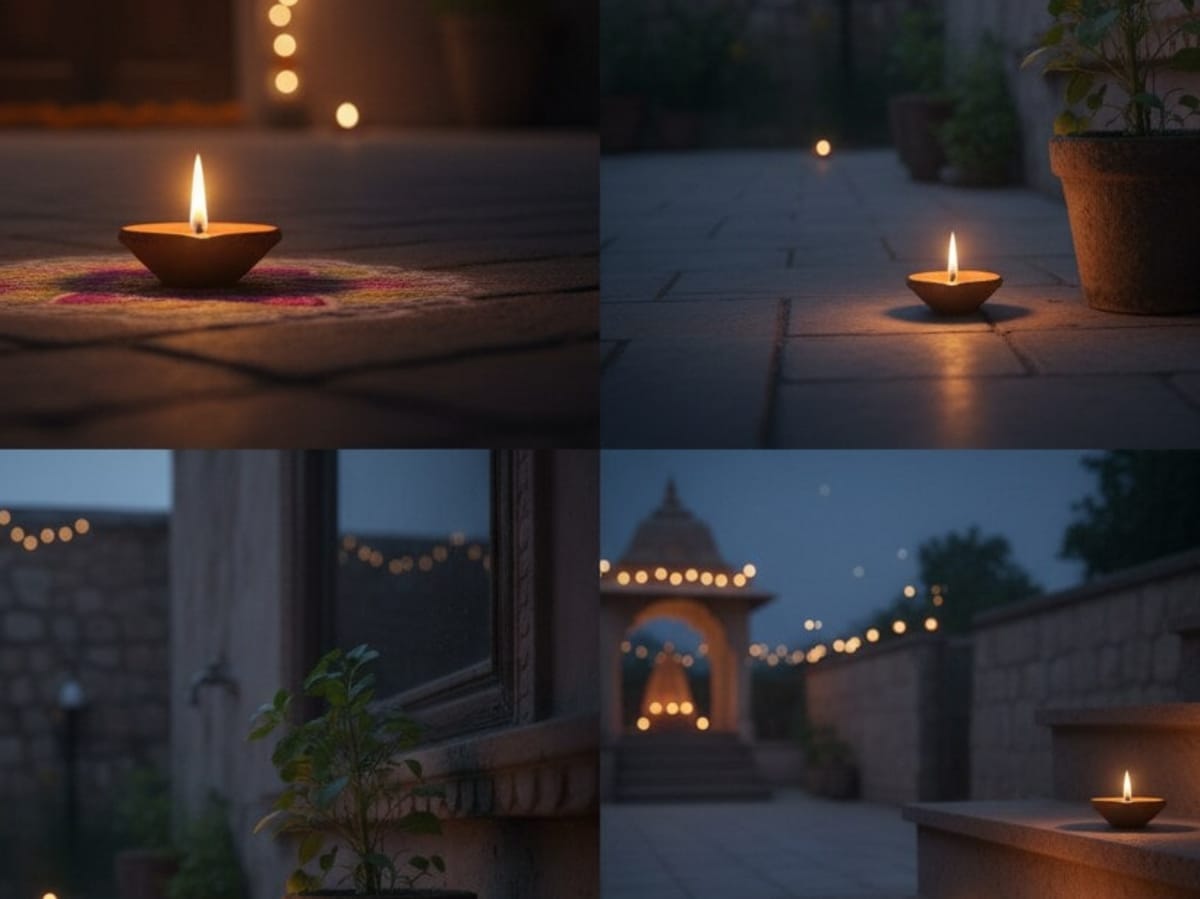
Simultaneously, families across Uttar Pradesh, Bihar, and the central plains perform the mandatory ritual of Yam Deepdaan. A large, four-wick clay diya filled with mustard oil is lit and placed outside the residence facing south, the cardinal direction of Lord Yamraj, alongside prayers seeking protection against untimely death (Apamrityu Haranam). Further east in West Bengal, the observance takes the form of Bhoot Chaturdashi. Families illuminate fourteen earthen lamps across doorsteps and dark corners to guide fourteen generations of ancestors on their heavenly journey, while consuming fourteen varieties of traditional leafy greens (Choddo Shaak) to boost internal immunity as winter arrives.
Muhurat Windows and Step-by-Step Worship Protocol
Because the Kartik Krishna Chaturdashi tithi begins around mid-morning on Saturday, November 7, and remains active through the morning of Sunday, November 8, religious scholars prescribe a practical, bifurcated schedule:
-
Saturday Evening, November 7 (Pradosh & Nishita Kaal): Conduct Yam Deepdaan at dusk facing south, perform special night pujas for Lord Hanuman, and execute Kali Chaudas prayers to eliminate negative energy.
-
Sunday Morning, November 8 (Arunodaya Muhurat): The auspicious Abhyanga Snan window opens between 05:41 AM and 06:38 AM before sunrise. Devotees should apply sesame oil and herbal ubtan made of gram flour, turmeric, and sandalwood, bathe in water infused with neem or apamarga leaves, and offer fresh Arghya to the rising Sun God.
-
Sunday Evening, November 8: With Amavasya stepping in right after Chaturdashi ends at 11:27 AM, the grand Diwali Lakshmi-Ganesh Puja follows during Pradosh Kaal on Sunday evening.