North India Statesman
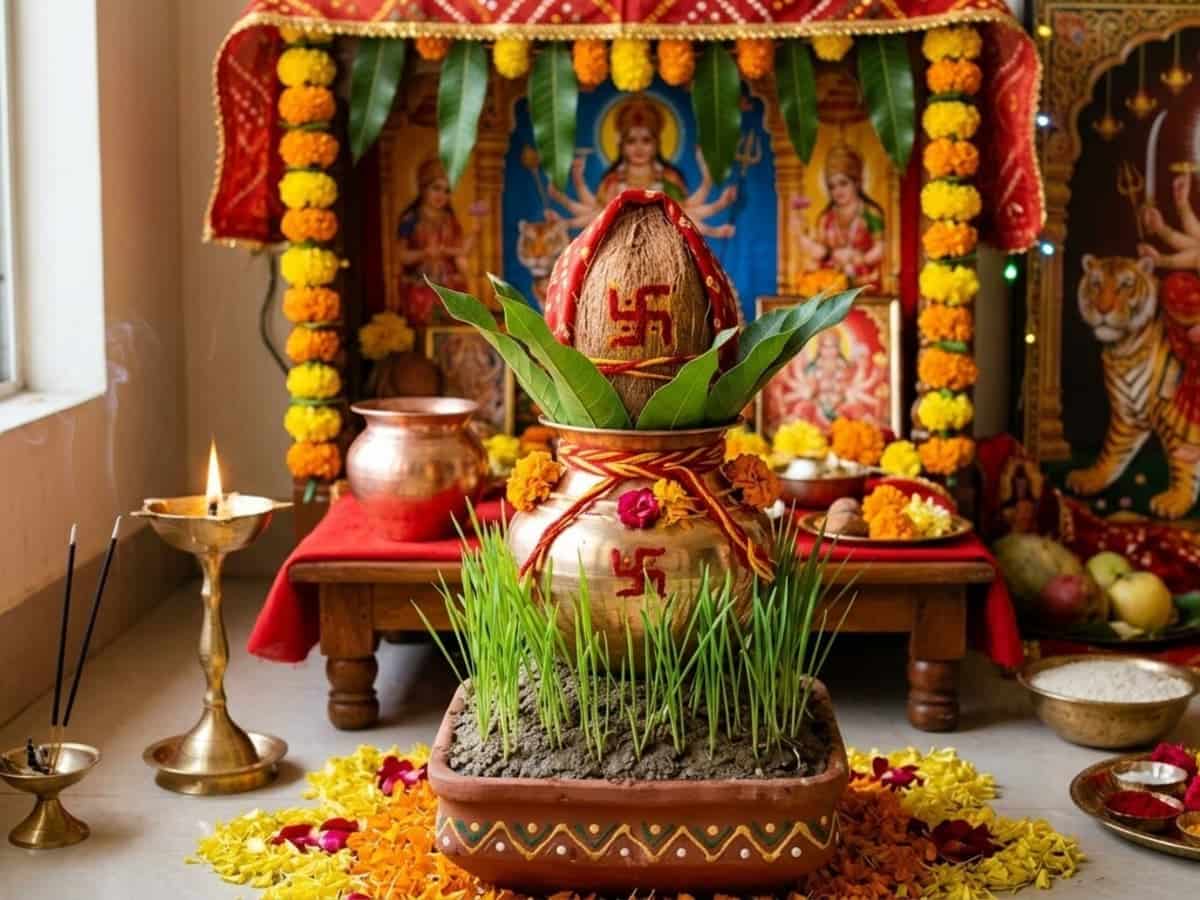
The nine-day festival of divine feminine power commences on Sunday, October 11, 2026, marking the arrival of Maa Durga across households and temples nationwide. From the sanctified ghats of Varanasi to bustling puja pandals in Delhi, Mumbai, and Kolkata, devotees are gearing up for the sacred ritual of Ghatasthapana. Vedic panchang scholars note that setting up the holy pot during an auspicious planetary window acts as an energetic conduit, bringing health, spiritual vitality, and prosperity to the family. Installing the Kalash at the correct astronomical tithi anchors divine vibrations within the home for the entire nine-day festival, making exact timing essential for practitioners of Sanatana Dharma.
Morning Kalash Sthapana and Abhijit Muhurta Timings
Vedic astrologers strictly advise completing Ghatasthapana during the initial third of the Pratipada tithi or within the universally beneficial Abhijit Muhurta. For Sunday, October 11, the primary morning Shubh Muhurta opens shortly after sunrise, spanning from 06:21 AM to 10:14 AM, providing an uninterrupted three-hour window suitable for traditional morning prayers. For devotees unable to complete the rituals during early morning hours due to family schedules, the midday Abhijit Muhurta offers an equally potent alternative. Occurring between 11:45 AM and 12:32 PM, this midday alignment requires no complex planetary adjustments and naturally neutralizes minor astrological flaws, making it ideal for invoking Maa Shailputri.
Essential Samagri and Preparation for the Sacred Setup
Executing the invocation demands pure satvik materials assembled meticulously before the rituals commence. Devotees require a clean clay, copper, or silver pot (Kalash), clean clay or broad earthen bowl for sowing barley, unhusked barley seeds (jau), holy Ganga water, raw unbroken rice grains (akshat), supari, fresh mango or betel leaves, a raw coconut wrapped in red cloth (chunri) tied with sacred red mauli thread, along with turmeric, kumkum, and fresh yellow or red flowers. Selecting an undisturbed northeast (Ishanya) corner of the prayer room ensures that natural magnetic and spiritual currents remain concentrated around the divine seat throughout the festival.
Step-by-Step Ghatasthapana Vidhi for Devotees
Begin by preparing a square base of clean earth or sand in a flat clay dish, sprinkling fresh water and embedding the barley seeds uniformly into the topsoil. Cleanse the Kalash with Ganga jal, fill it with pure water, and place within it a coin, supari, raw turmeric, and scented flower petals. Arrange five or seven fresh mango leaves symmetrically along the neck of the pot, resting the red cloth-draped coconut firmly atop the leaves facing the devotee. As you establish the Kalash upon the seeded earth plate, chant the invocation mantra “Om Hreem Dum Durgayai Namah” or the traditional Vedic Ganpati and Navarna mantras to welcome the divine presence into your living space.
Daily Observances and Nurturing the Akhand Jyot
Following the installation of the Kalash, many households light an Akhand Jyot (uninterrupted holy flame) that remains illuminated night and day until Vijaya Dashami. Ensuring the brass or clay diya is shielded from wind and replenished regularly with pure cow ghee or sesame oil signifies the perpetual presence of light overcoming darkness. Water the barley bed lightly each morning during daily aarti and pushpanjali. The rapid, lush green germination of these barley shoots across the subsequent nine days is traditionally revered across northern and western India as an auspicious omen of agricultural bounty, household joy, and maternal divine grace.