North India Statesman
[ad_1]
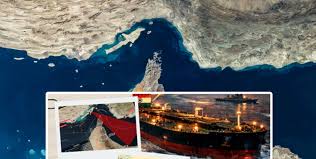
News India Live, Digital Desk: The global energy supply is currently going through its most delicate and dangerous phase. Due to the war between America, Israel and Iran, the world’s most important trade waterway ‘Strait of Hormuz’ has come to a standstill for the last one month. This blockade has increased the heartbeats of the entire world. Leading energy and shipping experts are warning that the world is on the brink of a devastating energy crisis that could surpass even the historic oil disaster of the 1970s. From International Energy Agency (IEA) chief Fatih Birol to former Maersk director Lars Jensen believe that the impact of this world war is going to be more catastrophic than the Russia-Ukraine war and the aftershocks of the 70s.
What was that dreadful oil crisis of the 1970s? If we turn the pages of history, the world had suffered two major energy shocks in the 1970s. The first blow came in October 1973, when during the ‘Yom Kippur War’ (Arab-Israeli War) the Arab countries of OPEC imposed an oil embargo on the US and other Western countries supporting Israel. Crude oil prices increased four times overnight, there was chaos at petrol pumps and western countries fell into recession. The second blow came in the form of the Iranian Revolution of 1979. Due to stoppage of oil production in Iran, panic buying started in the market and prices doubled again. According to Dr. Tiernan Heaney, a researcher at Queen’s University Belfast, unbridled inflation at that time had broken the back of the economy of many countries. Unemployment was at its peak and in 1974 even the British government collapsed. However, Dr. Carol Nakhle, chief executive of Cristol Energy, believes the crisis was the result of deliberate political decisions.
March 2026: Blockade of Hormuz and the current crisis The situation today, i.e. in March 2026, looks more explosive than history. The narrow Strait of Hormuz is completely closed to commercial ships after the US and Israel’s blockade against Iran. Let us tell you that about 20 percent of the world’s crude oil passes through this narrow sea route. Due to its closure, the supply chain of oil, gas and other essential commodities from Gulf countries has been completely broken. US President Donald Trump is trying hard to restore supplies. He has requested the allied countries to send warships to protect the merchant ships and has also given a strict warning to Iran of military action. Lars Jensen, head of Vespucci Maritime, warns that the oil that was produced a month ago is now on the verge of extinction. He says that even if the Strait of Hormuz opens tomorrow, the world will have to pay huge energy costs for the next 6 to 12 months.
Will this crisis prove worse than the one in the 1970s? Experts’ opinions are divided on this question. Dr. Nakhle and Dr. Heaney believe that today’s world is less dependent on oil and that we have emergency reserves that can help absorb this shock. But, Natixis CIB Chief Economist Alicia Garcia Herrero’s figures are scary. According to him, in the crisis of 1970, there was a decline of only 5-7 percent in global supply, whereas today 20 percent of the world supply has come to a standstill. This is not only a crisis of crude oil but also of natural gas and refined products. Herrero has clearly warned that if this conflict is not stopped immediately, then there is bound to be rampant inflation and deep economic recession around the world, especially in import-dependent Asian countries like India.