North India Statesman
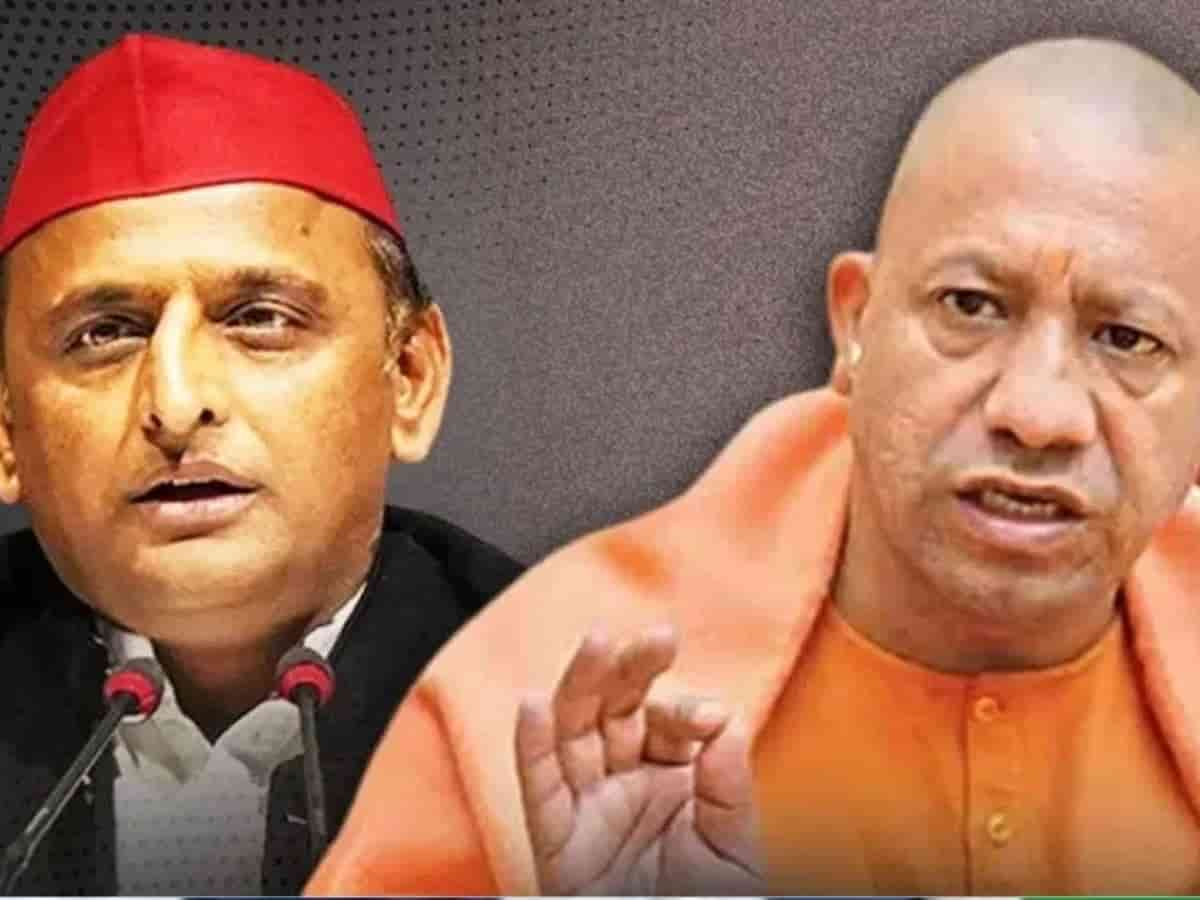
High-octane campaigning for the crucial biennial elections to 11 Uttar Pradesh Legislative Council (MLC) seats concluded on Wednesday evening, setting the stage for a fiercely contested electoral showdown between the ruling Bharatiya Janata Party (BJP) and the principal opposition Samajwadi Party (SP). Regarded by political observers as a decisive semi-final and a direct litmus test ahead of broader electoral battles, the elections encompass five Graduate and six Teacher constituencies spread across all 75 districts of Uttar Pradesh. Voting is scheduled to take place on Friday, October 23, through traditional ballot papers, followed by the counting of votes and official declaration of results on October 27.
Battle of Prestige: Heavyweights Mobilize Ahead of Crucial Test
The high stakes of this contest have turned what is traditionally an indirect, council-level election into a full-scale political campaign. More than a dozen cabinet ministers from the Yogi Adityanath government and upwards of 100 members of parliament (MPs) and legislative assembly members (MLAs) from both the BJP and SP have been actively deployed on the ground to campaign across various sectors. In the previous cycle for these 11 seats, the Samajwadi Party secured six victories while the BJP clinched five. With an eye on scaling its seat share into double digits, the ruling party has launched an aggressive, multi-pronged campaign led directly by Chief Minister Yogi Adityanath, who addressed public rallies across strategic hubs including Gorakhpur, Varanasi, Mirzapur, Agra, and Ghaziabad.
On the opposing front, Samajwadi Party president Akhilesh Yadav adopted a concentrated organizational approach. Rather than leading mass rallies, the SP chief systematically delegated responsibilities to party MPs, MLAs, district presidents, metropolitan unit heads, and dedicated grassroots worker networks to ensure door-to-door voter mobilization in every targeted district.
Why the 11 MLC Seats Serve as a Crucial Political Barometer
Political analysts point to three primary reasons why this council election holds extraordinary significance for the political trajectory of Uttar Pradesh. First, polling will be conducted using traditional paper ballots rather than Electronic Voting Machines (EVMs). A decisive win for the BJP would serve as a rebuttal to opposition narratives surrounding EVM integrity, whereas a strong showing by the Samajwadi Party would allow the opposition to claim that paper ballots reflect genuine grassroots sentiment.
Second, the electoral college is composed entirely of certified teachers and registered graduates. Because this electorate represents the educated, professional, and opinion-shaping demographic of society, their collective preference provides deep insights into the prevailing sentiment regarding government governance, education policy, and youth employment. Third, the geographical footprint of these 11 constituencies spans the entire state from Western Uttar Pradesh to Purvanchal and Bundelkhand, touching every single district and offering an authentic, state-wide pulse check.
Graduate Constituencies: Breakdown of the Five Crucial Seats
The five Graduate constituencies going to the polls cover major academic and commercial urban belts across the state:
-
Lucknow Division Graduate Constituency: Comprises nine districts, namely Lucknow, Hardoi, Lakhimpur Kheri, Raebareli, Sitapur, Unnao, Barabanki, Pratapgarh, and Sultanpur.
-
Varanasi Division Graduate Constituency: Encompasses eight districts, including Varanasi, Chandauli, Ghazipur, Jaunpur, Mirzapur, Sonbhadra, Bhadohi (Sant Ravidas Nagar), and Ballia.
-
Agra Division Graduate Constituency: Spans 12 districts, covering Agra, Aligarh, Etah, Firozabad, Mainpuri, Mathura, Hathras, Kasganj, Etawah, Farrukhabad, Kannauj, and Auraiya.
-
Meerut Division Graduate Constituency: Covers nine key western districts, including Meerut, Ghaziabad, Gautam Buddha Nagar (Noida), Bulandshahr, Hapur, Baghpat, Muzaffarnagar, Saharanpur, and Shamli.
-
Allahabad-Jhansi Division Graduate Constituency: Integrates 10 districts spanning Bundelkhand and the Prayagraj region, including Prayagraj, Kaushambi, Fatehpur, Banda, Chitrakoot, Hamirpur, Mahoba, Jhansi, Jalaun, and Lalitpur.
Teacher Constituencies: Intense Contests Across Six Key Segments
The six Teacher constituencies witness a fiercely contested multi-cornered fight involving teachers’ associations, independent candidates, and party-backed nominees:
-
Lucknow Division Teacher Constituency: Encompasses voters across Lucknow, Hardoi, Lakhimpur Kheri, Raebareli, Sitapur, Unnao, Barabanki, Pratapgarh, and Sultanpur.
-
Varanasi Division Teacher Constituency: Accounts for eligible teaching professionals across Varanasi, Chandauli, Ghazipur, Jaunpur, Mirzapur, Sonbhadra, Bhadohi, and Ballia.
-
Agra Division Teacher Constituency: Features electors spread over 12 districts, including Agra, Aligarh, Etah, Firozabad, Mainpuri, Mathura, Hathras, Kasganj, Etawah, Farrukhabad, Kannauj, and Auraiya.
-
Meerut Division Teacher Constituency: Spans western hubs including Meerut, Ghaziabad, Gautam Buddha Nagar, Bulandshahr, Hapur, Baghpat, Muzaffarnagar, Saharanpur, and Shamli.
-
Bareilly-Moradabad Division Teacher Constituency: Takes in nine Rohilkhand districts, covering Bareilly, Badaun, Shahjahanpur, Pilibhit, Moradabad, Amroha, Bijnor, Rampur, and Sambhal.
-
Gorakhpur-Faizabad Division Teacher Constituency: Holds the largest regional footprint with 17 districts, comprising Gorakhpur, Maharajganj, Deoria, Kushinagar, Basti, Siddharthnagar, Sant Kabir Nagar, Ayodhya (Faizabad), Ambedkar Nagar, Gonda, Balrampur, Bahraich, Shravasti, Azamgarh, Mau, Amethi, and portions of Sultanpur.
Final Countdown to Polling Day
With public campaigning now formally closed, door-to-door outreach and booth-level coordination have taken center stage. The Election Commission and local district administrations across Uttar Pradesh have finalized polling stations, issued strict security directives prohibiting electronic gadgets inside voting enclosures, and prepared ballot boxes for the October 23 exercise. As political machines from both camps hold their breath, the outcome on October 27 will offer undeniable clarity on which party commands the trust of Uttar Pradesh’s educated intellectual class.