North India Statesman
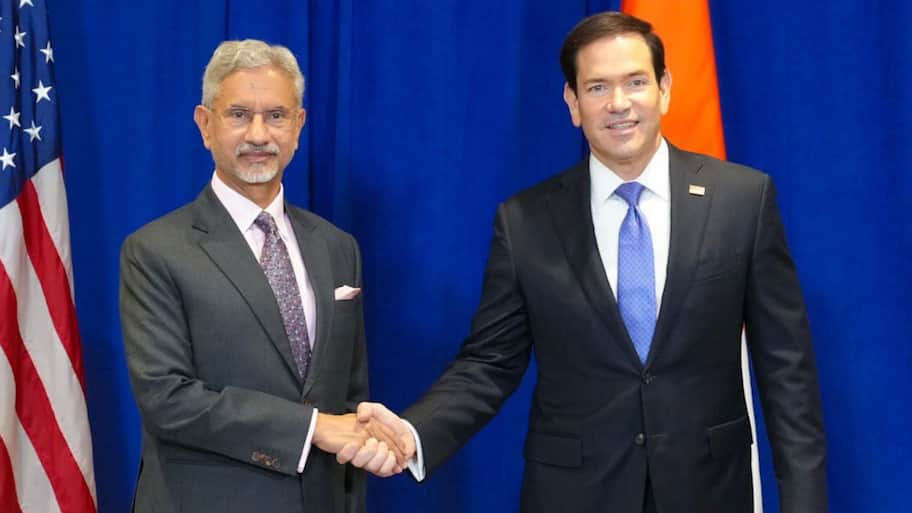
In a major diplomatic and economic breakthrough between Washington and New Delhi, United States Secretary of State Marco Rubio announced that the US and India are “very close” to concluding a landmark bilateral trade agreement. Speaking to reporters while concluding diplomatic consultations in Uzbekistan before boarding his flight to India, Rubio confirmed that intensive bilateral negotiations have entered their final contours, signaling that both administrations are actively resolving complex trade, tariff, and geopolitical trade-offs. The optimistic pronouncement sets an upbeat stage for Rubio’s high-stakes bilateral meeting with External Affairs Minister S. Jaishankar in Mumbai on Tuesday, October 20, where final draft alignments across energy, market access, and industrial supply chains will top the agenda.
‘Geography Is Real’: Rubio Balances Russian Oil Waivers With Strategic Alliance
Addressing the broader context of Washington’s strategic calculus, Rubio openly linked progress on the bilateral trade framework with the Trump administration’s recent decisions on national security waivers and international energy sanctions. Emphasizing practical realities over dogmatic postures, Rubio noted that energy security cannot be decoupled from physical geography. “Every country has a complex set of factors that it has to take into account. Geography is real. For some countries, it’s very difficult to acquire energy from alternative sources. That’s not an excuse, but all of that has to be balanced when making foreign policy,” Rubio stated, explaining the 60-day pause on secondary sanctions for Russian crude imports. Underscoring India’s standing as an indispensable partner, the top American diplomat highlighted that navigating shared strategic interests requires pragmatism rather than disruptive friction.
Legal Scrutiny And First Tranche Contours: What The Deal Entails
The positive momentum reflected by Rubio aligns directly with recent assessments from New Delhi’s trade establishment. Union Commerce and Industry Minister Piyush Goyal previously indicated that the first tranche of the bilateral agreement has reached advanced closure and is undergoing rigorous legal vetting before formal operationalization. The trade architecture aims to grant Indian exports competitive parity in American markets while addressing Washington’s long-standing calls for calibrated tariff reductions across industrial manufactured goods, medical technologies, and specialized agricultural imports. By securing a structured phased rollout, the pact aims to break past prior negotiation plateaus and anchor commercial cooperation within legally binding trade corridors.
Mumbai And Jamnagar On The Radar: High-Stakes Agenda In Commercial Hubs
Rubio’s itinerary underscores the commercial and strategic weight of the dialogue. Beyond political deliberations with Jaishankar in Mumbai, Rubio is slated to visit Jamnagar in Gujarat later in the week—home to the world’s largest refining and petrochemical complex. The visit carries immense economic significance, as both nations look to align crude sourcing, alternative feedstock processing, and resilient supply chains against the backdrop of volatile shipping lanes in the Middle East. Discussions between the Indian external affairs apparatus and the visiting US delegation will also cover deep-tech co-development, semiconductor supply-chain pacts, critical minerals exploration, and co-production frameworks in advanced defense hardware.
Cementing An Economic Anchor In The Indo-Pacific
A successfully executed trade accord would mark a transformative milestone in India-US relations, providing institutional certainty at a time when global commerce faces heightened tariff walls and supply-chain fragmentation. By moving from protracted negotiation rounds to actionable trade commitments, New Delhi and Washington are looking to turn their shared geopolitical convergence in the Indo-Pacific into an enduring economic powerhouse. With final legal drafts nearing completion, the upcoming discussions in Mumbai are poised to deliver the decisive momentum needed to seal the long-anticipated bilateral agreement.