North India Statesman
[ad_1]
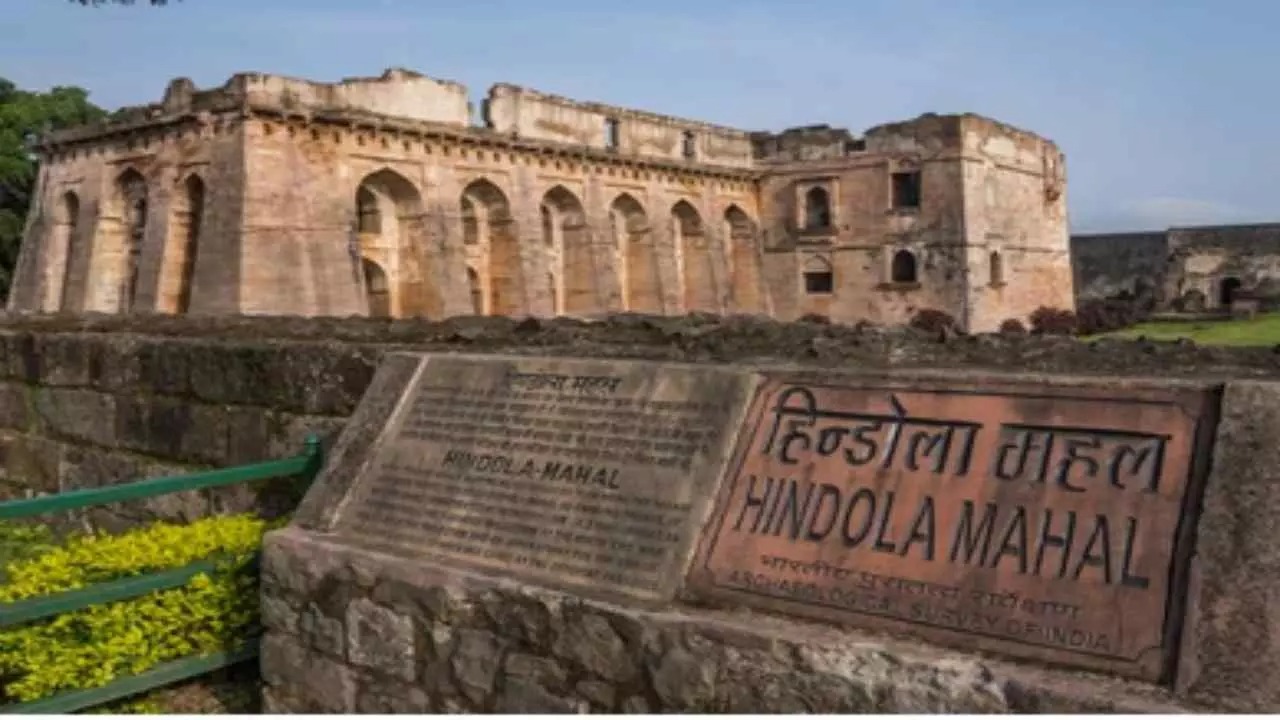
The Hindola Palace located in Mandu city of Madhya Pradesh remains a center of attraction for tourists due to its unique architecture and historical importance. It is also known as ‘Jhula Mahal’, mainly due to its middle part which appears to be tilted like a swing. This historic building was built in the 15th century during the reign of Gias-ud-Din Azz Shah Khilji of the Malwa Sultanate.
Unique architecture and its effect:
The architecture of the Hindola Palace is an excellent example of the Indo-Islamic style. The central hall of the palace, whose roof rests on four pillars, is made in such a way that it appears to be tilted to about 12 degrees from the middle part. This inclination makes visitors as if they are sitting on a huge swing. However, it is not a mechanical swing, rather it is amazing in the foundation and manner of building the building, which gives it a unique look. This inclination presents a panoramic view and gives it a unique identity in Indian archeology.
Historical secrets and importance:
It is not clear for which specific purpose this palace was built. Some historians consider it a resting place for the entertainment or comfort of the Sultan, while others believe it was a special place for the court or royal meetings. Its ‘swing’ form gives it a mysterious aura, and it maintains a distinct identity among other scenic spots in Mandu. Over time, this structure has become a witness to the rich past of Mandu.
Tourism and Conservation:
Today, Hindola Palace is one of the major attractions of Mandu where tourists from India and abroad come. People come from far and wide to close its medieval architecture and unique design closely. It is being protected by the Archaeological Survey of India (ASI), so that its historicity and the grandeur of architecture can also be safe for future generations.