North India Statesman
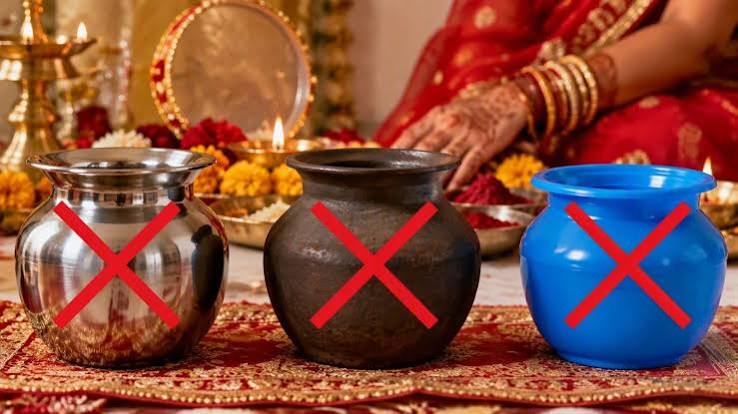
As married women across India gear up for the auspicious festival of Karwa Chauth 2026, spiritual preparations are in full swing in households from Delhi-NCR to Uttar Pradesh. Amidst purchasing new attire, jewelry, and puja samagri, a crucial traditional rule is gaining immense attention among elders and temple priests: avoiding the use of a steel karwa during the evening rituals. While modern convenience often prompts people to pick steel utensils, Vedic scriptures and experienced astrologers strictly prohibit steel karwas, warning that it can invite domestic conflict and emotional turbulence in the household.
The Sacred Significance Of Clay And Brass Over Steel
According to traditional Hindu rituals and ancient Puja Vidhi, the Karwa (the spherical vessel used to offer water to the moon) symbolizes planet Mars (Mangal) and the Earth element. Ancient scriptures dictate that puja items should ideally be made of natural, pure elements (Panchamahabhuta), with clay (Mitthi) and brass (Peetal) being the most auspicious. Steel, being a processed industrial metal containing iron and nickel, is considered inauspicious for sacred rituals because it lacks the divine earth-energy required to harmonize planetary vibrations and marital bonds.
Why Using Steel Can Trigger Discord And Financial Instability
Astrological experts explain that using synthetic or modern metals like steel during sacred fasts breaks the flow of positive cosmic energy (Sattvic vibrations). The moon represents peace, emotional calm, and marital affection. Offering water from a steel container is believed to agitate Mars and Saturn energies, which can manifest as unnecessary ego clashes, frequent arguments between husband and wife, and general unrest within the family. To preserve peace, prosperity, and lifelong devotion, married women are strongly advised to switch to traditional unbaked or baked clay (Mitti ka Karwa) or brass vessels.
Essential Karwa Chauth Puja Guidelines For 2026
To ensure an error-free and spiritually fulfilling fast, practitioners recommend keeping a few key traditions in mind:
-
Always choose an unpainted or traditionally decorated clay karwa filled with clean water, milk, and dry fruits.
-
Ensure the spout of the karwa (known as Nal or Tot ) is intact, as broken or cracked vessels bring negative omens.
-
Perform the evening arghya facing towards the moon while chanting traditional mantras, accompanied by the elder women of the family narrating the Karwa Chauth Vrat Katha.