North India Statesman
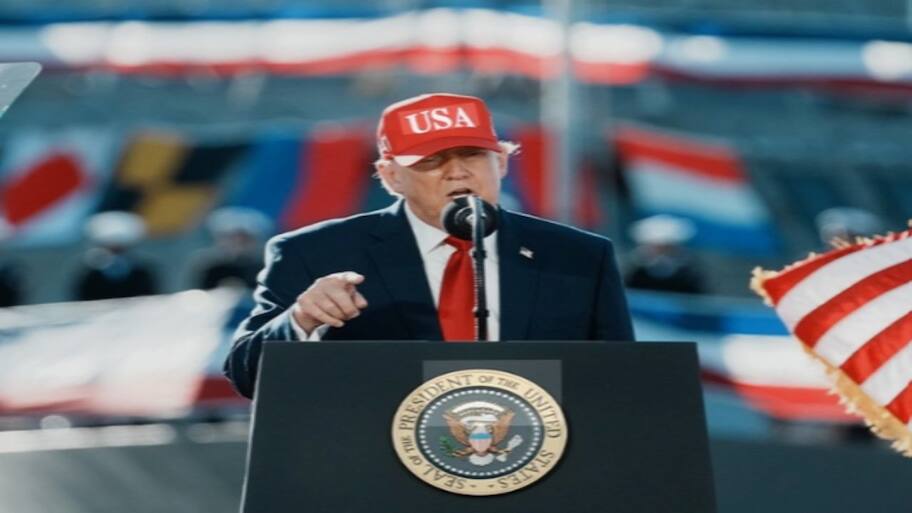
‘Wall of Steel’: Trump Defends Total Maritime Cordon Around Iran
Addressing shipyard workers and naval defense executives, Trump dismissed international characterizations of the naval operation as an ordinary blockade, describing it instead as unprecedented maritime dominance. “When I see the wall of steel, which is what it is, that we’ve done, they call it a blockade, I call it the wall of steel,” Trump said. He claimed that “zero” unauthorized commercial vessels are entering Iranian ports without explicit clearance from American forces, declaring: “In other words, the Hormuz Strait belongs to the United States Navy and the United States of America. That’s where it belongs, and that’s where it is right now”. He further warned that non-compliant vessels attempting to break through the blockade would face lethal consequences, cautioning that if a non-cleared ship attempts to bypass patrols, “we just sink the ship”.
Claims Over Iran’s ‘Decimated’ Capabilities and Nuclear Deterrence
Beyond the choke point itself, Trump delivered a blunt assessment of Tehran’s standing, asserting that Iran’s conventional military apparatus has been severely degraded under coordinated economic sanctions and sustained naval pressure. “We’re doing extremely well in the Islamic Republic of Iran, very well. They have no military. It’s shot; the whole place is shot,” he told the crowd. Framing the conflict as entering a decisive endgame, Trump remarked: “They’re not so much the bully anymore, but we have to finish up. And it’s only a question of which way do we want to do it, the nice way or the not-so-nice way? And pretty soon you’ll find out”. He added that forward-deployed US naval carrier groups have established a “fait accompli” in permanently denying Tehran the pathway to developing a deliverable nuclear weapon.
International Outcry and Concerns Over Freedom of Navigation
The unilateral claim over one of the world’s most critical transit passages has stirred sharp debate across international diplomatic and maritime legal circles. Classical international maritime law—governed under the United Nations Convention on the Law of the Sea (UNCLOS)—recognizes the Strait of Hormuz as an international strait connecting the Persian Gulf with the Gulf of Oman, where commercial ships operate under transit passage rights through Iranian and Omani territorial waters. International shipping organizations, including the International Maritime Organization (IMO), have repeatedly expressed deep concern regarding the safety of thousands of stranded civilian seafarers and warned against the erosion of global freedom of navigation. While Washington insists the operation is targeted exclusively at drying up Iranian crude revenues and countering weapons proliferation, global energy markets remain on edge over the prospect of direct kinetic clashes in the narrow 21-mile waterway.