North India Statesman
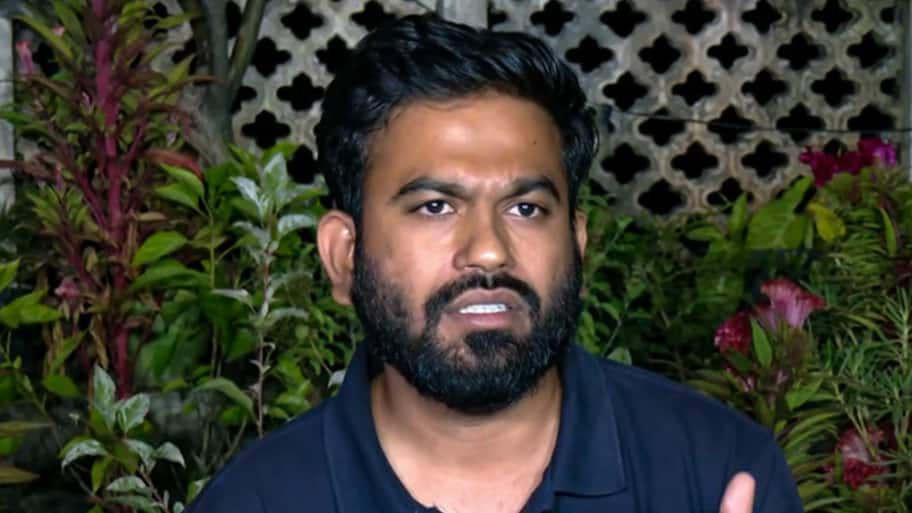
Cockroach Janta Party (CJP) founder Abhijeet Dipke has mounted a fierce defense of his outfit’s demonstrations in the national capital, pushing back against claims that citizen agitations are damaging local trade in Connaught Place. Taking to social media amid heavy administrative restrictions and the two-day shutdown of Central Park, Dipke asserted that commercial losses are not triggered by peaceful gatherings, but by disproportionate state clampdowns. “Businesses do not suffer because of peaceful protests. They suffer when the government decides to shut down an entire city, suspend internet services, restrict the movement of its own citizens, and turn the city into a war zone,” Dipke stated, shifting the responsibility of the economic standstill directly onto administrative curbs and multi-layered police barricades.
Traders Approach Apex Court as Footfall Plummets
The sharp defense comes after commercial merchant bodies, including the New Delhi Traders Association (NDTA), expressed deep distress over the fallout of ongoing demonstrations in Connaught Place. Traders pointed out that while retail outlets and restaurants legally remain open, intense security checks, traffic diversions, and entry restrictions have frightened away festive shoppers, dropping daily footfall and business turnover by as much as 80 to 90 percent. With shopkeepers, delivery agents, taxi drivers, and daily-wage vendors bearing the brunt of the deserted corridors, trader associations approached the Supreme Court seeking judicial intervention to keep high-density retail markets insulated from repeated political sit-ins.
CJP Cites Nationwide Record of Non-Violent Demonstrations
Reaffirming the outfit’s commitment to constitutional methods, Dipke maintained that the CJP has strictly adhered to Mahatma Gandhi’s principles of non-violence (Ahimsa) and the rights guaranteed under the Constitution drafted by Dr. B.R. Ambedkar. He highlighted that the party had previously mobilized public rallies across major urban hubs including Mumbai, Pune, Jaipur, Lucknow, Bengaluru, and Nagpur without any recorded instances of violence from demonstrators. Recalling an earlier incident in Jaipur where he was physically assaulted during an agitation, Dipke noted that he deliberately chose not to retaliate, emphasizing that responding to aggression with physical force contradicts the foundational ideology of their civic movement.
‘Questioning Power Is Not Anarchy’: Accusations of Double Standards
Addressing criticism labeling the demonstrations as disruptive anarchy, the CJP leader argued that dissent is the core fabric of a functioning republic. “Demanding answers from the government is not anarchy, protesting against injustice on the streets is not anarchy, and questioning those who hold public office is certainly not anarchy,” he said. Dipke accused the ruling establishment of practicing hypocrisy, noting that leaders who currently occupy high government offices spent decades organizing aggressive street agitations while in the opposition. He remarked that had previous regimes used identical police crackdowns, preventive arrests, and internet bans against them, many current ministers might never have risen to power.
Core Grievance: The Battle Over Electoral Transparency
The simmering showdown in the heart of Delhi centers on allegations regarding the Election Commission’s Special Intensive Revision (SIR) of electoral rolls. The CJP, joined by several civil society groups and student organizations, has demanded the immediate resignation of Chief Election Commissioner Gyanesh Kumar over alleged discrepancies in voter lists. The confrontation escalated sharply after senior CJP functionaries Saurav Das and Ashutosh Ranka were taken into judicial custody following their detention at Jantar Mantar, prompting the call for the ‘Lehra Do Tiranga’ assembly. Emphasizing that democracy does not conclude when election votes are counted, Dipke reiterated that citizens retain the constitutional liberty to hold institutions accountable on the ground.