North India Statesman
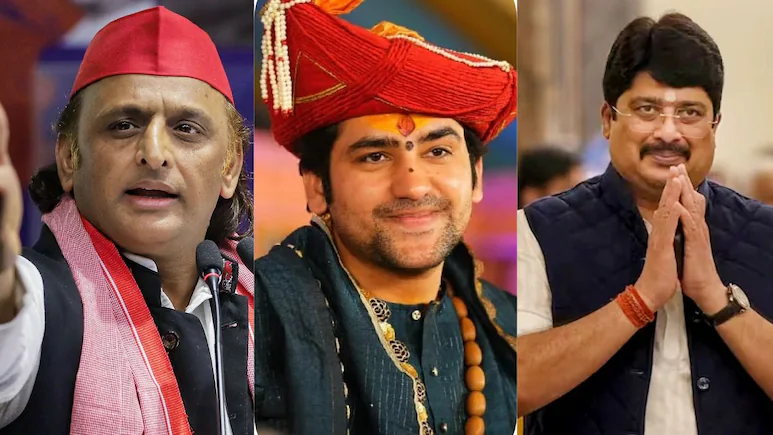
Uttar Pradesh’s political landscape is witnessing an intense tactical maneuvering as Samajwadi Party (SP) President Akhilesh Yadav gears up his campaign strategy for key assembly pockets. At the center of this electoral friction is the high-profile Kunda assembly constituency in Pratapgarh district. Kunda has been a political fortress for Raghuraj Pratap Singh, popularly known as “Raja Bhaiya,” who has maintained an unbroken winning streak as an independent candidate and Jansatta Dal (Loktantrik) chief since 1993. While the Samajwadi Party historically refrained from fielding aggressive campaigns against Raja Bhaiya in earlier decades, recent election cycles marked a sharp departure. The SP leadership has systematically intensified its grassroots presence in Kunda, aiming to challenge the long-standing socio-political dynamics of the region through targeted coalition building.
Decoding the PDA Formula: Can Pichhda, Dalit, and Alpsankhyak Shift Kunda?
The core engine behind Akhilesh Yadav’s renewed push across Uttar Pradesh is his flagship PDA coalition model—an acronym representing Pichhda (Backward Classes), Dalit (Scheduled Castes), and Alpsankhyak (Minorities). In Kunda and the broader Pratapgarh belt, local electoral mathematics heavily depend on a combination of Yadav, Kurmi, Pasi, Muslim, and upper-caste voting blocs. By deploying the PDA framework, the Samajwadi Party aims to consolidate backward castes and Dalits alongside traditional minority voters into a unified electoral block. Party strategists believe that an organized PDA alignment can significantly reduce victory margins in traditionally dominant strongholds. The strategy relies on highlighting localized development issues, public sector employment, social justice, and agrarian concerns to offer voters an alternative to established regional heavyweights.
Why the Samajwadi Party is Opposing Bageshwar Dham’s Dhirendra Shastri
Alongside localized constituency battles, a broader ideological debate has surfaced over public discourses delivered by Dhirendra Krishna Shastri of Bageshwar Dham. The opposition stems from controversial religious remarks and comparative statements regarding revered deities, which Samajwadi Party leaders criticized as divisive and public-attention maneuvers. Akhilesh Yadav and SP representatives have raised concerns regarding the political usage of religious platforms during election seasons, demanding regulatory oversight on large-scale public congregations. Political analysts note that opposing high-profile religious figures allows the Samajwadi Party to reassure its secular and minority voter base while maintaining its stance against religious polarization ahead of upcoming state contests.
Local Dynamics and the Future Political Alignment of Pratapgarh
As regional alliances shift and local campaign networks expand across Pratapgarh, the interaction between identity-based mobilization and localized leadership remains crucial. While Raja Bhaiya relies on his deep-rooted local network, personal accessibility, and traditional patronage across Kunda’s rural populace, the Samajwadi Party’s persistent focus on structural PDA voter consolidation ensures a closely watched contest. Whether the PDA blueprint can successfully re-align voting behavior in long-held strongholds or if traditional local dominance prevails will serve as a key bellwether for Uttar Pradesh’s broader political trajectory.