North India Statesman

A bizarre, grammatically disjointed phrase blending Arabic religious invocation with dramatic French phrasing—‘Bismillah c’est les ténèbres’ (loosely translated as “In the name of God, it is the darkness”)—has swept across France as an inescapable protest rallying cry. Scrawled across cardboard placards outside blockaded high schools (lycées), chanted at university demonstrations, and featured in thousands of satirical TikTok and Snapchat videos, the slogan has transformed an unverified online interaction into a symbol of generational defiance. What began as an apparent undercover police misstep has turned into an emblem of the student movement sweeping major French metropolitan hubs.
The Snapchat Screenshot That Started It All
The phenomenon traces its roots to early October 2026, when high schoolers in France were coordinating campus blockades to voice outrage over education budget cuts, deteriorating school infrastructure, and severe economic pressures. Amid attempts by security services to monitor and preempt student actions, a screenshot circulated on social media showing a message sent by an unfamiliar Snapchat account using the name “Mamadou”. The user clumsily attempted to extract operational details about an upcoming school blockade by awkwardly stringing together urban youth slang and religious vocabulary: “Hey, bismillah, it’s the darkness. When’s the school blockade, bro, wallah?”
Why The Phrase Makes No Sense—And Why That Is The Point
To native speakers and French youth from diverse multicultural suburbs (banlieues), the sentence was immediately recognized as an unnatural caricature. While “Bismillah” is an Arabic expression meaning “in the name of God”—traditionally recited before initiating a meal, journey, or task—pairing it with “c’est les ténèbres” (“it is darkness”) forms a nonsensical sentence that no teenager or speaker of French street slang would ever naturally utter. Protesters quickly concluded that the sender was an undercover police officer attempting to impersonate a minority French-Arab or West African student, relying on clumsy racial stereotypes and outdated jargon to blend in.
From Social Media Mockery To Placards On The Street
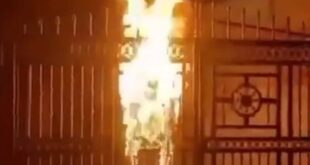
Within hours, the absurd message went viral across French digital channels, spawning thousands of parody memes poking fun at state surveillance techniques. As demonstrations escalated across Paris, Lyon, Marseille, and Nantes, the phrase leapt from smartphone screens onto the physical front lines. High schoolers spray-painted it onto school gates, held up cardboard signs emblazoned with the words, and chanted it during standoffs with law enforcement. What started as a joke quickly hardened into an anti-establishment catchphrase, symbolizing young people’s conviction that state institutions are dangerously out of touch with modern youth culture and reality.
Escalating Unrest And A Widening Youth Movement
The viral popularity of the slogan coincides with one of the most intense waves of civil unrest France has witnessed in recent years. Frustrations initially centered on education policy have broadened into nationwide protests over youth unemployment, high living costs, and heavy-handed police tactics. Demonstrations have drawn hundreds of thousands of participants to the streets, leading to record numbers of detentions and escalating tensions between demonstrators and riot control units. By turning a suspected espionage blunder into a viral emblem of collective unity, French students have made ‘Bismillah c’est les ténèbres’ a lasting testament to the power of internet satire in modern civil dissent.