North India Statesman
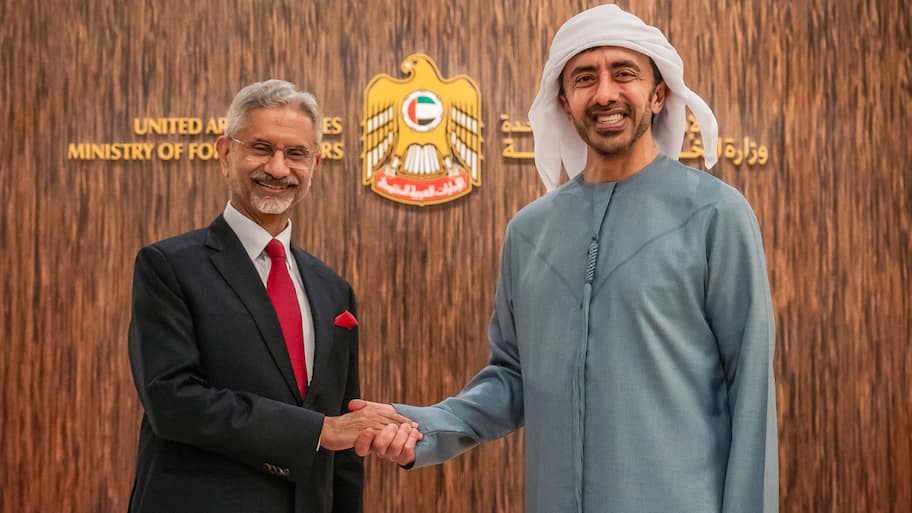
In a major milestone for New Delhi’s economic diplomacy in West Asia, External Affairs Minister S. Jaishankar announced that bilateral trade between India and the United Arab Emirates has officially crossed the $100 billion threshold. Speaking during high-level bilateral discussions with UAE Deputy Prime Minister and Foreign Minister Sheikh Abdullah bin Zayed Al Nahyan in Mumbai, Jaishankar declared that the relationship between the two nations is actively “living up to its promise as a comprehensive strategic partnership”. The landmark figure represents an extraordinary acceleration in commercial exchange, driven largely by the implementation of the historic Comprehensive Economic Partnership Agreement (CEPA), signed in 2022, which opened preferential market channels and deepened cross-border industrial integration.
High-Level Engagements Signal Unprecedented Diplomatic Alignment
The Mumbai meeting underscores an era of exceptional intensity in leadership-level contacts between New Delhi and Abu Dhabi. EAM Jaishankar noted that after more than a decade of deliberate, sustained diplomatic engagement, the partnership has shown remarkable resilience and growth despite turbulent global macroeconomic conditions and shifting geopolitical dynamics across West Asia. The talks served to review joint initiatives spanning commercial supply chains, strategic infrastructure ventures, and capital deployment. Both leaders emphasized that mutual investments have expanded steadily alongside goods trade, reflecting deep confidence within the business communities and sovereign wealth funds of both nations.
Expanding Beyond Trade into Defense, Energy, and High Technology
While bilateral commerce remains the cornerstone of the alliance, Jaishankar highlighted that bilateral cooperation is acquiring an increasingly strategic character across critical domains. Long-term energy security remains foundational, with the UAE standing as one of India’s foremost hydrocarbon providers, while both sides are actively scaling joint clean energy ventures, green hydrogen initiatives, and grid connectivity. Concurrently, defense and security coordination, maritime surveillance, counter-terrorism alignment, and critical technologies are transforming the relationship into an integrated geopolitical pillar for stability across the Indian Ocean and Gulf corridors.
Financial Modernization and People-to-People Connections
The trade milestone has been significantly aided by financial modernization mechanisms rolled out between the two countries. The institutionalization of the Local Currency Settlement (LCS) system—enabling traders to settle transactions directly in Indian Rupees (INR) and UAE Dirhams (AED)—alongside the Bilateral Investment Treaty has drastically lowered transaction friction and currency volatility risks for exporters. Beyond trade flows, Jaishankar emphasized the indispensable role played by the vibrant 4.3-million-strong Indian expatriate community in the UAE. Expressing gratitude to the UAE leadership for safeguarding the welfare of Indian professionals and workers, he reiterated that cultural synergies and shared community goodwill continue to form the living heartbeat of this thriving trans-regional partnership.