North India Statesman
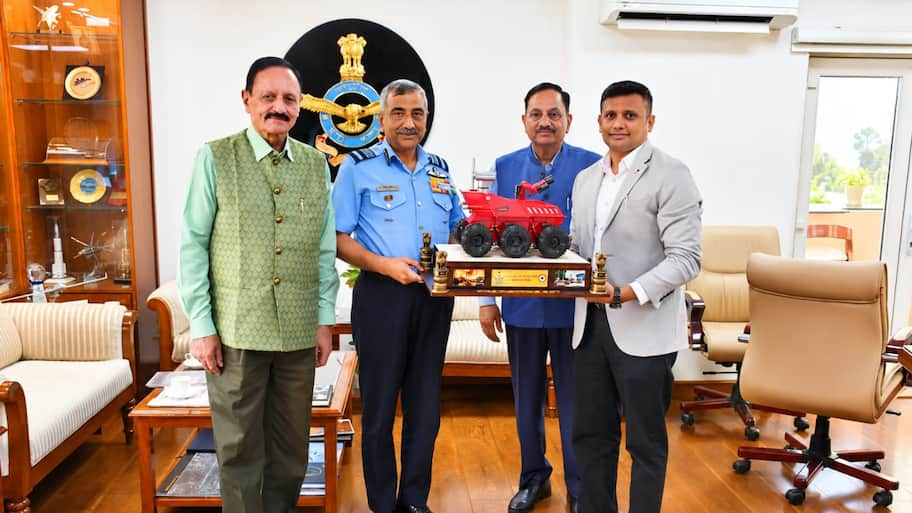
The induction of the indigenous firefighting robot (FF Bot), developed by Ahmedabad-based defence startup Swadeshi Empresa, into the Indian Air Force (IAF) marks a major operational triumph for the Make in India defence initiative. Initially incubated under the Ministry of Defence’s Innovations for Defence Excellence (iDEX) SPRINT framework, the platform has completed the journey from a competitive startup grant to frontline tri-service deployment. Procured under fast-track emergency procurement mechanisms and delivered within a tight 11-month timeframe, the unmanned ground vehicle provides military air bases with remote, rapid response to catastrophic fires involving aircraft fuel bays, ammunition revetments, and runway debris without endangering human fire crews.
Combat Reality: The Urgent Call for Runway-Clearing Robotics
The urgency to operationalize robotic firefighting shifted from peacetime trials to tactical necessity in modern warfare, where drone and missile barrages frequently threaten forward airfields and logistics depots. While advanced integrated air defence grids intercept incoming strikes, secondary fires caused by warhead fragments or burning fuel remain an immediate hazard to high-value infrastructure. When aviation fuel farms, liquid oxygen reserves, or ordnance revetments catch fire, standard crash tenders cannot safely enter due to the imminent risk of ammunition cook-offs. By deploying an unmanned platform to immediately contain the blaze, cool explosive casings, and clear blocked tarmac lanes, air bases can rapidly dispatch explosive ordnance disposal (EOD) units and runway repair squads to keep air operations running.
Built for the Inferno: Engineering the FF Bot
Certified by the Directorate General of Quality Assurance (DGQA), the FF Bot is built to withstand punishing high-temperature environments:
-
Rugged All-Terrain Mobility: Engineered on a corrosion-resistant stainless-steel chassis with a six-wheel-drive system and a 360-degree turning radius, allowing it to climb over debris, blast rubble, and constrained airfield revetments.
-
Thermal Vision & Target Acquisition: Equipped with high-definition optical sensors and thermal cameras that cut through dense smoke, zeroing in directly on the fire’s core and streaming real-time situational feeds back to base commanders.
-
Active Fire Suppression & Self-Cooling: Integrates high-pressure foam and water-fog monitors to smother volatile hydrocarbon blazes, backed by a self-cooling water curtain mechanism that prevents internal hardware from overheating under severe radiant heat.
-
Heavy-Duty Clearance Winch: Features an integrated winch capable of dragging long fire hose lines over obstacles or towing damaged vehicles and equipment weighing up to 5 tonnes away from fire paths.
-
Remote Standoff Command: Controlled via an intuitive remote console with a touchscreen and joystick, allowing operators to steer the machine and direct monitors from safe standoff distances.
Scaling Across the Services: Navy, Army, and Air Force
Swadeshi Empresa’s trajectory represents one of the smoothest examples of inter-service technology adoption in Indian defence procurement. Originally designed to meet stringent Naval fire-safety requirements aboard warships—including installations on aircraft carrier INS Vikrant—the platform was systematically adapted for the Indian Army, which signed a ₹62 crore contract for 18 units to safeguard high-risk ammunition depots and forward logistics hubs. The subsequent procurement of 80 units by the Indian Air Force for its major base perimeters cements the FF Bot’s status as a reliable tri-service asset, illustrating how iDEX platforms can rapidly evolve from niche startup innovations into mission-critical hardware.