North India Statesman
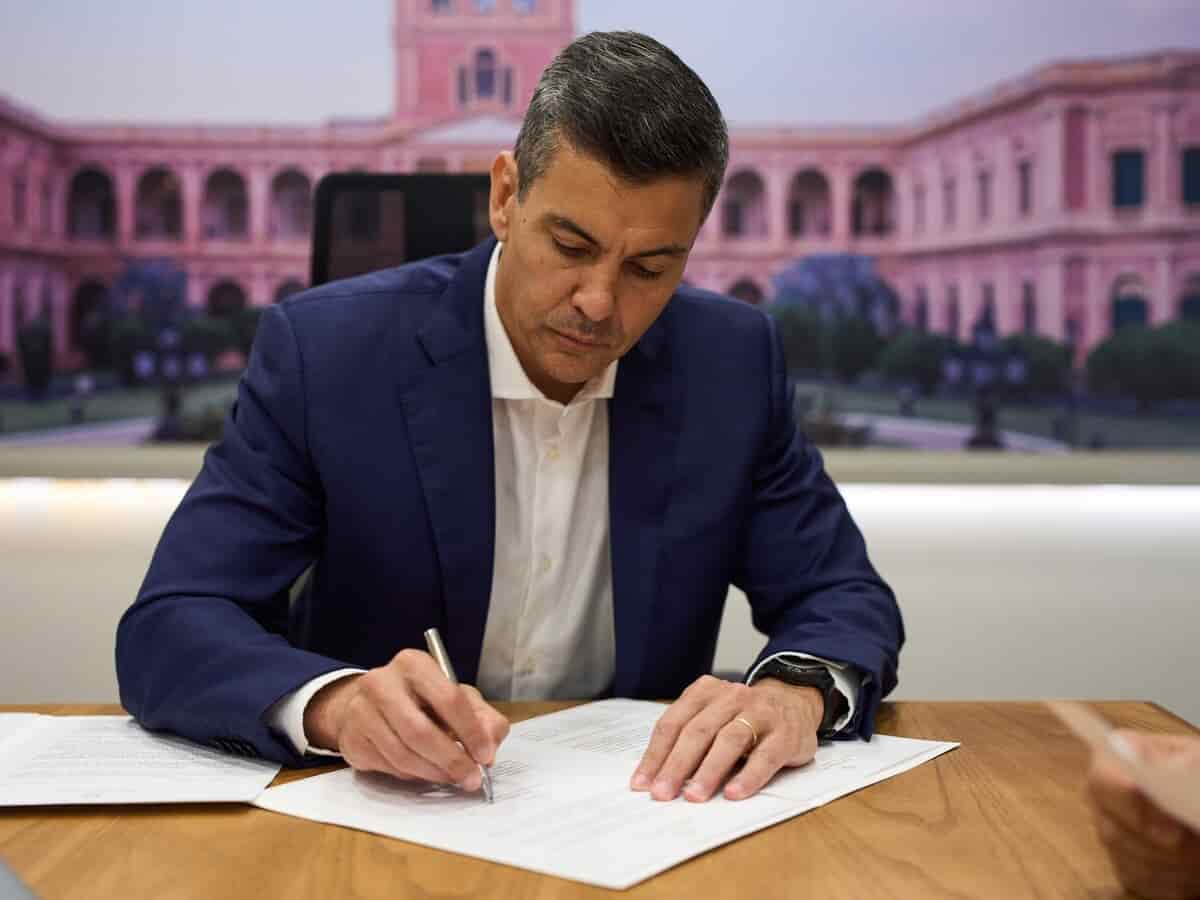
In one of the most dramatic economic and political implosions in South America’s recent history, Paraguay’s President Santiago Peña tendered his resignation after the catastrophic insolvency and seizure of Ueno Bank, the country’s dominant digital banking titan. The sudden failure of the institution has locked nearly three million depositors—representing almost half of Paraguay’s entire population—out of their life savings, small-business working capital, and monthly pensions, triggering a national emergency and furious street demonstrations.
What Led to the Sudden Freezing of Customer Funds
The crisis unfolded when the Central Bank of Paraguay unexpectedly intervened and took operational control of Ueno Bank following an acute liquidity and solvency collapse. Within hours, everyday banking services screeched to a halt. ATMs ran dry, online banking applications crashed, debit cards were declined at retail checkouts, and branch counters were shuttered under police guard, leaving millions of working-class families and small merchants unable to access their funds.
The bank’s rapid downfall stems from egregious corporate governance violations and unhedged insider exposures. Financial audit reports revealed that Ueno Bank had channeled massive, unsecured loans—often totaling tens of millions of dollars—to shell entities and holding companies tied directly to its own primary shareholders and directors, vastly exceeding statutory lending caps without adequate collateral buffers. When market whispers ignited a coordinated digital bank run, the institution’s liquid reserves evaporated, rendering it completely incapable of satisfying depositor withdrawal requests.
The Political Lightning Rod: Why President Peña Stepped Down
The banking disaster quickly metastasized into an existential political crisis for President Santiago Peña, a 47-year-old former International Monetary Fund (IMF) economist. Public fury reached a boiling point over deeply entangled conflicts of interest between the executive branch and the collapsed lender:
-
Direct Business Ties: Until shortly before taking office, Peña held a substantial financial stake in Grupo Vázquez, the corporate parent of Ueno Bank.
-
Regulatory Regulatory Regulatory Capture: Peña had appointed Carlos Carvallo—the former president of Ueno’s financial predecessor—to head the Central Bank of Paraguay, the very regulatory body tasked with supervising and auditing the digital bank.
-
Public Fund Deposits: Critics revealed that hundreds of millions of dollars in state funds, institutional royalties, and public payroll accounts had been systematically routed into Ueno’s reserves under government directives.
-
Dismissing Warnings: For months, Peña publicly brushed off independent warnings regarding Ueno’s balance-sheet rot, labeling regulatory concerns a politically motivated “smear campaign” designed to spook financial markets.
With thousands of angry citizens marching on the National Congress in Asunción chanting against government plunder and lawmakers drafting rapid impeachment motions, Peña announced his resignation in a televised national address, stating he never intended to betray the public’s trust while pledging that depositor recovery remains the state’s paramount priority.
Executive Arrests and Looming Systemic Fallout
As political power transitions toward Vice President Pedro Alliana, state prosecutors have moved swiftly to issue arrest warrants and freeze the personal assets of top bank executives and board associates implicated in breach of trust and fraudulent lending.
Meanwhile, international rating agencies and investment banks are closely watching the contagion risk. Paraguay, which had spent years cultivating a reputation as a stable, investment-friendly economy in the Southern Cone, now faces the monumental task of restoring confidence in its regulatory architecture while attempting to unlock frozen deposits before ground-level economic commerce grinds to a permanent halt.