North India Statesman
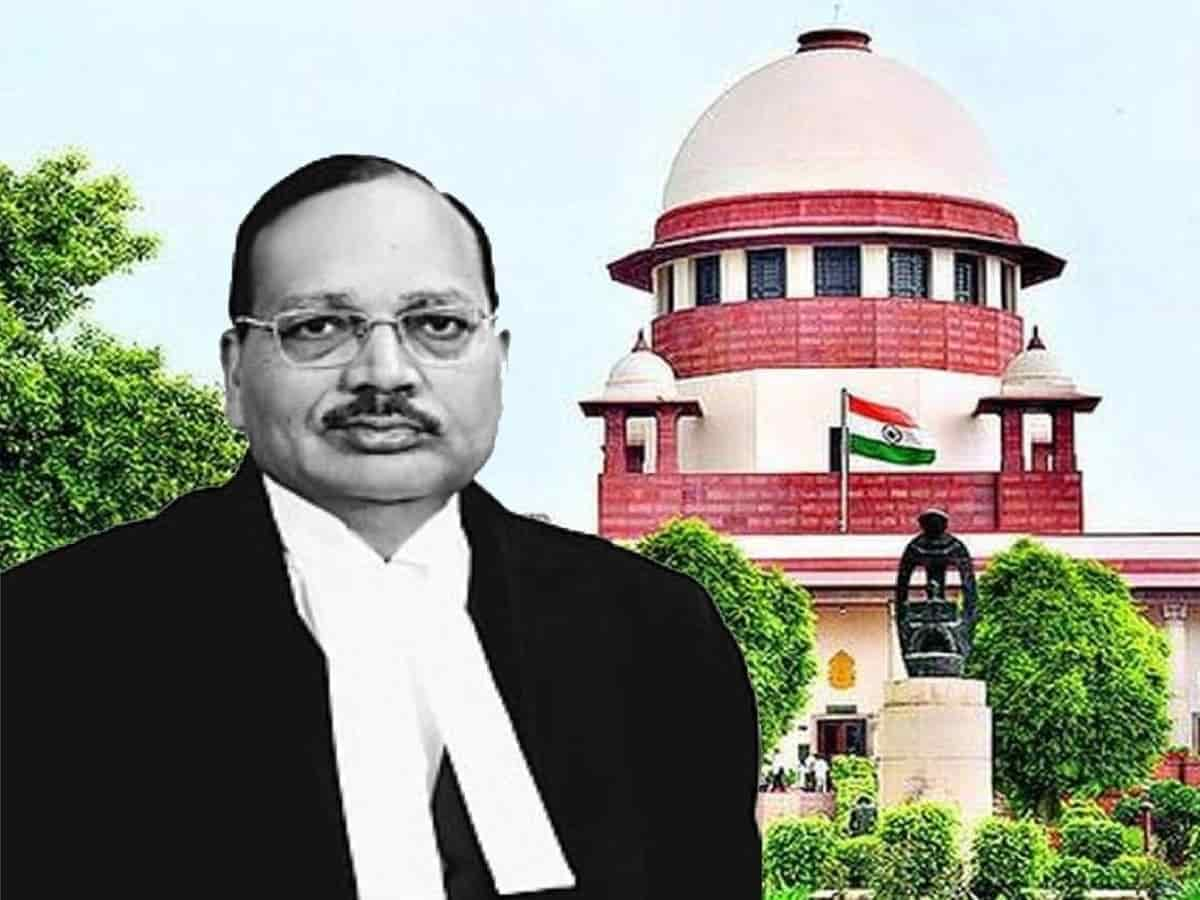
The Supreme Court of India delivered a stern rebuke to the political establishment on Friday, issuing formal contempt notices to all office-bearers of the Kerala unit of the Indian National Congress (KPCC). The apex court’s intervention follows a controversial social media post directly targeting the Chief Justice of India (CJI), Justice Surya Kant.
A bench comprising Justices Aravind Kumar and Vipul M. Pancholi unequivocally asserted that judicial independence is not an instrument of “political convenience,” underscoring that no individual or political organization stands above the Constitution of India. Demanding formal explanations from the party leadership on why punitive contempt action should not be initiated against them, the court signaled zero tolerance for attempts to erode institutional credibility.
“Freedom of Expression Cannot Be a Shield for Intimidation”
During the proceedings, the bench drew a clear boundary between fair criticism of judicial pronouncements and targeted personal intimidation directed at judges.
“Judgments are always open to criticism. Freedom of expression cannot be a shield of intimidation to interfere with the administration of justice,” the bench observed. “Howsoever high position a person occupies, any attempt to undermine the authority of the court needs to be dealt with an iron hand. Authority of the court does not require political endorsement; it rests on the rule of law. Where administration of justice is established, the law must take its course.”
The judges explicitly warned that the bench’s customary restraint should never be misinterpreted as administrative or institutional weakness. The proceedings will formally examine whether the conduct amounts to civil or criminal contempt under the Contempt of Courts Act.
The Controversial Social Media Post Behind the Notice
The legal confrontation stems from a post uploaded on October 12, 2026, from the official social media handle of the Kerala Pradesh Congress Committee. The post publicly addressed the Chief Justice of India with aggressive rhetoric:
“Dear Surya Kant, If law and order is not your domain, resign now. We will find your replacement who can handle it.”
The post sparked immediate nationwide backlash across legal and civic circles, with critics characterizing it as a blatant attempt to bully the head of the country’s constitutional court. Facing escalating outrage and legal notices from Supreme Court practitioners, the political unit hurriedly deleted the post from its channels.
The Party’s Defense: Rogue Worker and Unconditional Apology
Prior to the court’s formal order, the Kerala Congress attempted damage control by distancing its senior leadership from the incident. KPCC President Sunny Joseph maintained that the communication had been authored and published by an unauthorized social media team member without the consent, screening, or endorsement of the party executive.
The party stated that the responsible operative had been stripped of organizational duties and that an unconditional apology had been tendered in response to pre-litigation notices. However, the Supreme Court refused to close the chapter on the basis of internal delegation arguments, issuing notice across the entire slate of office-bearers to establish organizational accountability for official party communication.
Assistance of Amicus Curiae and Next Legal Steps
To ensure comprehensive legal assistance throughout the contempt hearings, the bench indicated that it may appoint Senior Advocates Arvind Datar and Siddharth Agarwal as amici curiae. The court has additionally requested the assistance of the Attorney General for India in the matter.
While clarifying that it has expressed no definitive conclusion on the merits of the case at this preliminary stage, the Supreme Court’s decisive action serves as an unmistakable warning to political entities nationwide: crossing the line from policy critique into public intimidation of the judiciary invites immediate and unyielding constitutional scrutiny.