North India Statesman
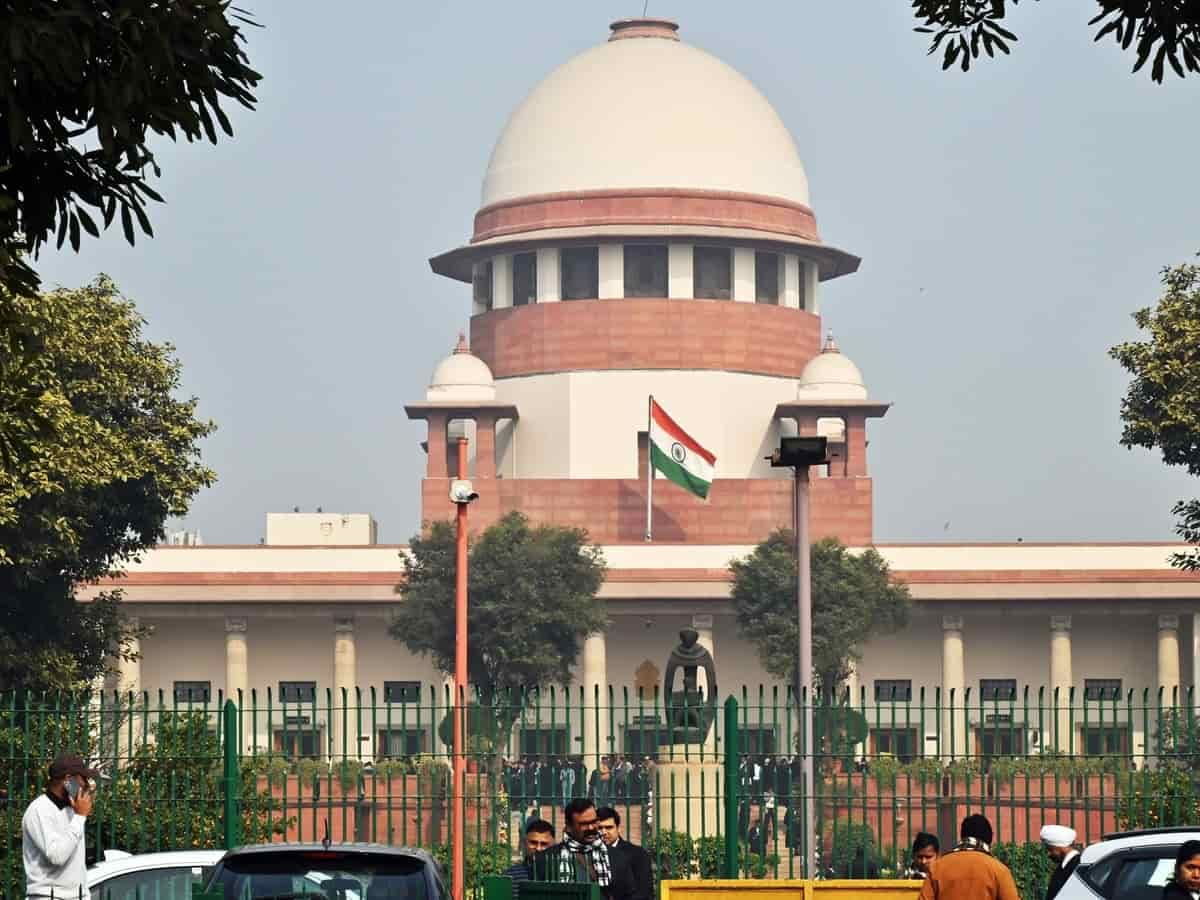
In a key clarification regarding Other Backward Classes (OBC) quota rules, the Supreme Court of India ruled that its landmark verdict on computing the “creamy layer”—which held that parental salary alone cannot be used to exclude an OBC candidate—will not apply retrospectively. A bench comprising Justices Pamidighantam Sri Narasimha and R. Mahadevan made it clear that settled appointments, seniority lists, and historical promotions across government services and public sector undertakings will not be reopened or disturbed.
The clarification addresses concerns raised by the Union Government and several state recruitment agencies over potential administrative paralysis and waves of litigation from past candidates challenging past recruitments.
What Was the Supreme Court’s Core Ruling on Parental Salary?
The genesis of the issue stems from the Supreme Court’s March 11, 2026 verdict in Union of India v. Rohith Nathan and Another, where the top court re-examined how administrative bodies determine whether a candidate falls within the non-creamy layer (and is thus eligible for 27% reservation in public employment and education).
Tracing the legal framework back to the nine-judge Constitution Bench in Indra Sawhney (1992) and the subsequent Justice Ram Nandan Committee recommendations of 1993, the court highlighted that:
-
Status Over Mere Salary: The primary determinant of social backwardness is parental occupational status and rank, not nominal economic payouts.
-
Category VI (Residual Wealth Test): In the government’s 1993 and 2004 orders, the economic income limit (currently ₹8 lakh per annum) was intended strictly as an asset/wealth test for individuals outside defined public-service categories (such as private professionals and unorganised trade).
-
Unlawful Aggregation of Salary: Government recruiting bodies, including the Union Public Service Commission (UPSC) and state departments, had routinely aggregated parents’ gross salary and agricultural income to breach the ₹8 lakh threshold, improperly tagging eligible candidates as creamy layer. The bench ruled that mechanically adding salary defeats constitutional objectives and that salary income cannot be the sole basis for exclusion.
Why the Centre Approached the Apex Court for Clarification
Following the March judgment, the Department of Personnel and Training (DoPT) and the Union Government approached the court with miscellaneous applications. The Centre pointed out that if the verdict were applied retrospectively across decades of public sector recruitment, it would unleash widespread administrative challenges:
-
Thousands of past candidates who were denied OBC non-creamy layer certificates over parental salary disputes might seek backdated service allocations, seniorities, and cadre reviews.
-
Ongoing service allocations—including for 958 candidates selected through the 2025 Civil Services Examination (CSE)—faced delays and risked deferring foundational training cycles.
The government sought clarity on the “temporal operation” of the judgment to avoid disrupting existing cadre structures.
The New Directive: Prospective Application and Pending Matters
Clarifying the scope of the judgment, the bench directed that:
-
No Reopening of Settled Seniority: The March 11 judgment will not act retrospectively to unravel established promotions, closed recruitment drives, or finalized seniority lists.
-
Application to Current and Pending Batches: The ruling will govern service allocations for ongoing recruitments, specifically applying to candidates selected through examinations such as the 2025 Civil Services cycle.
-
Individual Discretion for Pending Cases: For matters already pending adjudication before various High Courts and the Central Administrative Tribunal (CAT), the respective benches will decide disputes on their individual merits and factual entitlements, without treating the Supreme Court’s ruling as a blanket order to automatically rewrite historical service books.
-
Compliance Extension: To allow central ministries and recruitment commissions sufficient time to recalibrate verification protocols and complete service allocations smoothly, the bench extended the deadline for compliance by eight weeks.
Balancing Merit, Administrative Stability, and Quota Integrity
The Supreme Court’s prospective-only stance strikes a balance between constitutional equity and administrative stability. By firmly barring recruitment bodies from treating salary slips as standalone grounds to reject OBC non-creamy layer claims, the court safeguards deserving first-generation aspirants whose parents are salaried public servants. Simultaneously, by shielding past selections and established seniority lists from retroactive challenges, the verdict protects public administration from widespread legal disruption.