North India Statesman
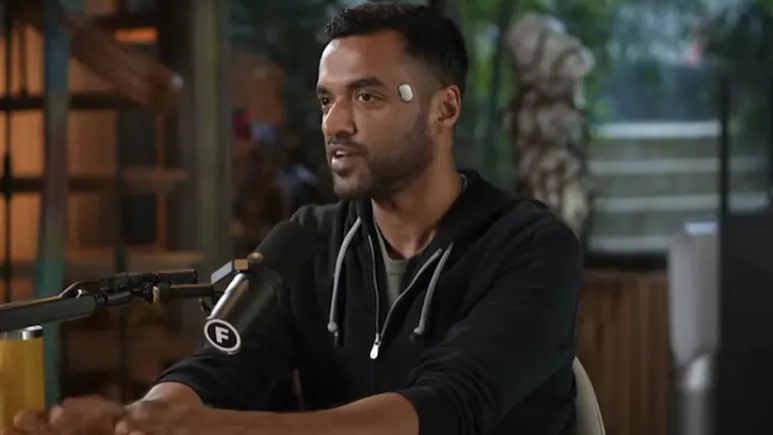
A high-stakes scientific controversy has erupted in India’s technology and medical sectors following the unveiling of ‘Temple,’ a sleek, bean-shaped head-worn wellness gadget created by Eternal and Zomato founder Deepinder Goyal. Priced at a steep ₹85,000 with pre-orders currently open, the futuristic device sits right on the side of the user’s head near the temple area. Goyal and his development team claim that Temple monitors physiological signals associated with cerebral blood flow and biological entropy to measure how the human mind and body handle stress. However, the ambitious consumer health-tech project has met immediate, intense skepticism from medical professionals, leading prominent Indian doctors and neurologists to publicly question whether a surface-level temple sensor can deliver scientifically valid insights about inner brain function.
What Does Temple Actually Do? Features, Metrics, and Innovation
Designed as a premium wellness companion rather than a certified clinical tool, Temple introduces several novel hardware features. The device focuses on tracking cerebral blood flow shifts and biological heat dissipation to calculate a composite score known as ‘Span’. In addition to tracking biometric signals, Temple incorporates an innovative “roomdeaf” voice AI companion. By utilizing motion sensors that detect physical vibrations from the wearer’s vocal cords, the device converts speech into text without using a traditional microphone—effectively ignoring ambient noise in the surrounding room. Despite these hardware innovations, doctors emphasize that consumer health tracking must be anchored in clinical accuracy, noting that cheaper wearables already measure general baseline metrics like heart rate.
Why Doctors and Neurologists Are Demanding Clinical Proof
The primary pushback from medical professionals stems from the absence of peer-reviewed clinical data backing the device’s brain-tracking claims. Prominent health advocates, including Dr. Cyriac Abby Philips (known online as ‘The Liver Doc’), along with leading neurologists, argue that surface-level skin sensors cannot accurately isolate or measure complex internal cerebral circulation. Medical experts point out that brain blood supply is regulated across multiple deep internal arteries, making single-location temple readings insufficient for assessing overall brain status. Physicians have warned that labeling unvalidated measurements as brain health indicators risks misleading consumers who might mistake non-medical wellness gadgets for genuine diagnostic tools.
Deepinder Goyal Responds: Science, Self-Funding, and the Path Forward
Facing mounting medical criticism, Deepinder Goyal hit back on social media to clarify the venture’s intent and defend its scientific foundation. Revealing that he stepped down from his CEO role at Eternal to focus full-time on Temple, Goyal shared that $30 million has already been invested into research and development, including $20 million from his personal funds. Goyal firmly rejected claims that the product is a scam, emphasizing a 14-day return policy and clarifying that Temple is explicitly positioned as a fitness and wellness device, not a medical-grade diagnostic tool. Drawing comparisons to other fitness platforms like Whoop, Goyal assured consumers that internal pre-prints and independent validation studies will be published progressively as Temple devices reach users ahead of initial shipments in early 2027.