North India Statesman
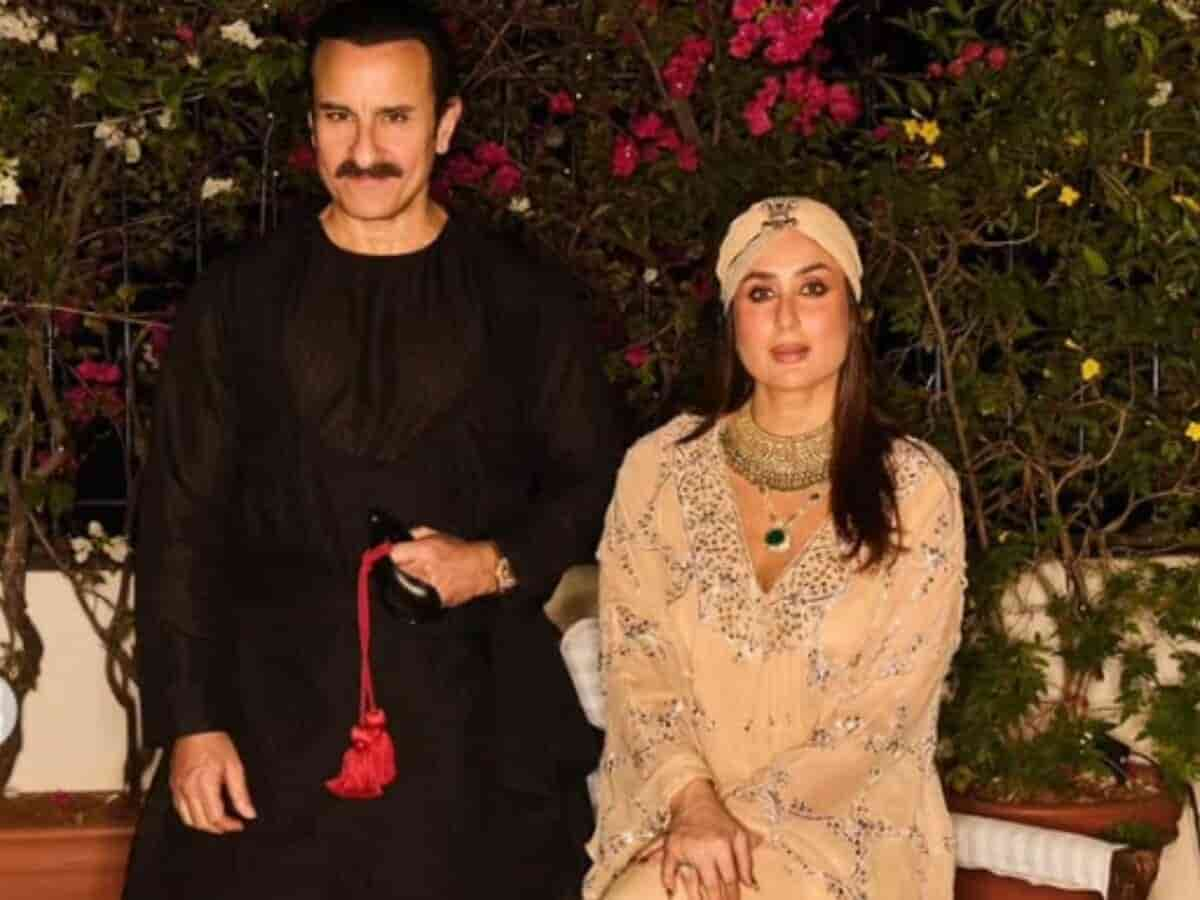
A festive jewellery choice by Bollywood star Kareena Kapoor Khan has ignited an unexpected cultural and political debate stretching from Mumbai to Bhopal, drawing sharp legal objections on one side and vocal backing from prominent Hindu organisations on the other. The controversy began after photographs of Kareena’s regal Diwali ensemble—highlighted by a vintage 30-carat emerald pendant inscribed with a sacred Quranic verse—went viral on social media earlier this week. Following a legal notice sent by a Madhya Pradesh Congress spokesperson demanding the removal of the images and a public apology, Bhopal-based Hindu outfits including the Hindu Utsav Samiti and Sanskriti Bachao Manch stepped forward on Thursday and Friday to defend the actor. Calling Kareena a “Sanatani” and a daughter-in-law of the erstwhile Bhopal royal family, Hindu Utsav Samiti president Chandrashekhar Tiwari declared that Bebo has done nothing disrespectful and does not need to apologise to anyone.
Why Hindu Organisations Came Out in Support of Kareena Kapoor
Speaking to reporters in Bhopal as the social media storm intensified, Hindu Utsav Samiti president Chandrashekhar Tiwari questioned the very premise of the demand for an apology. Tiwari argued that a pendant by its very design is worn around the neck, resting close to the wearer’s heart, which reflects reverence rather than disrespect. He maintained that if the heirloom piece bears verses from the Holy Quran, Kareena wore it with dignity and would never have carried it in a manner or setting considered offensive. Describing Kareena as a “Sanatani” who was celebrating Diwali, Tiwari noted that just as many Hindus wear lockets bearing images of deities close to their hearts, wearing a family pendant around the neck is completely natural. He further emphasised that as the wife of Saif Ali Khan and daughter-in-law of the former Bhopal royal lineage, Kareena has every natural and cultural right to wear jewellery passed down from her mother-in-law’s family. Alongside the Hindu Utsav Samiti, another Bhopal-based cultural outfit, Sanskriti Bachao Manch, also extended full solidarity to the actress, insisting that neither Kareena nor her stylist owes anyone an apology.
What Sparked the Legal Notice Over Kareena’s Diwali Look?
The dispute traces back to photographs shared on Instagram by Kareena Kapoor Khan and her longtime celebrity stylist Rhea Kapoor showcasing the actor’s royal festive look. Dressed in traditional festive attire paired with a turban and a 200-year-old diamond-studded royal kalgi, Kareena wore a striking 30-carat emerald pendant engraved with Ayat-ul-Kursi (the 255th verse of Surah Al-Baqarah in the Holy Quran). On November 11, Madhya Pradesh Congress spokesperson Abbas Hafeez, through his advocate Mohammad Zafar, issued a formal legal notice to both Kareena Kapoor Khan and Rhea Kapoor. In the notice, Hafeez objected not to Kareena wearing jewellery or celebrating Diwali, but to the public display of a sacred Islamic scripture as a “fashion statement” on social media. Hafeez contended that the historic Begums of Bhopal commissioned such inscribed pieces strictly out of spiritual devotion and faith rather than sartorial glamour, claiming that showcasing the verse in festive fashion posts hurt the religious sentiments of the Muslim community. He sought the immediate deletion of the photographs and a public apology, while clarifying that the legal notice was his personal initiative and did not represent the official stance of the Congress party.
The 200-Year-Old Bhopal Royal Family History Behind the Emerald Pendant
Beyond the immediate political and online backlash, the controversy has spotlighted a fascinating piece of Indian royal heritage linking Mumbai’s Pataudi family with Madhya Pradesh’s former princely state of Bhopal. While sharing details of the ensemble, stylist Rhea Kapoor noted that the emerald pendant is an approximately two-century-old family heirloom originating from the erstwhile royal house of Bhopal. The lineage connects directly to Kareena’s husband, actor Saif Ali Khan, whose paternal grandmother, Sajida Sultan, was the daughter of Hamidullah Khan—the last ruling Nawab of Bhopal—and was later recognised as the Begum of Bhopal. Sajida Sultan married Iftikhar Ali Khan Pataudi, and their son, legendary Indian cricket captain Mansoor Ali Khan Pataudi, was Saif’s father. Over generations, prized jewels crafted during the era of the Begums of Bhopal—who were renowned patrons of architecture, Islamic scholarship, and fine Mughal-influenced jewellery—passed down through the Pataudi family vault, eventually reaching Saif Ali Khan and Kareena Kapoor Khan.
How Social Media and Bhopal’s Public Sphere Reacted
As news of the legal notice and the counter-statements from Hindu groups spread across news channels and digital platforms in Bhopal, Indore, and Mumbai, public opinion split sharply along cultural and artistic lines. Supporters of the actress, including fashion historians and film fans, pointed out that wearing ancestral heirlooms during major family festivals is a common Indian tradition that honours family lineage rather than disrespecting any faith. Meanwhile, critics backing the legal notice maintained that sacred religious verses carry strict etiquette regarding where and how they are worn or photographed. Amid the heated back-and-forth between political spokespersons and cultural organisations in Madhya Pradesh, neither Kareena Kapoor Khan nor Rhea Kapoor has issued an official statement responding to the notice so far, leaving the 200-year-old Bhopal heirloom at the centre of one of Bollywood’s most talked-about festive debates of 2026.