North India Statesman
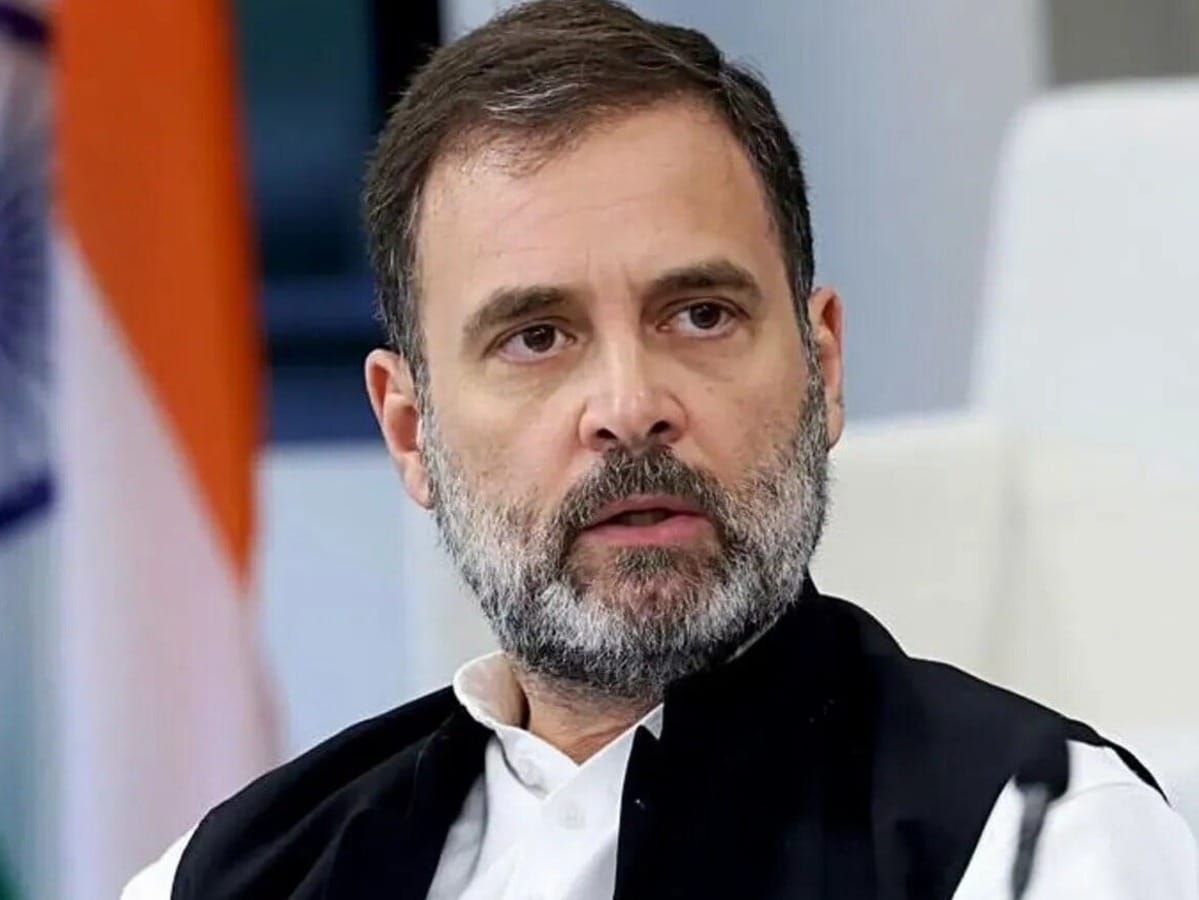
A fresh political debate has emerged within India’s opposition camp after Communist Party of India (Marxist) General Secretary M.A. Baby stated that Congress leader and Leader of the Opposition in the Lok Sabha Rahul Gandhi will naturally be at the forefront for the Prime Minister’s post if the INDIA bloc secures a majority in the next general elections. Speaking in an exclusive interview with news agency PTI on Friday, November 13, 2026, the veteran Marxist leader offered rare clarity on how Left parties view leadership dynamics inside the multi-party opposition coalition. While acknowledging Gandhi’s stature as the principal face of the largest constituent party in the alliance, Baby simultaneously stressed that formally debating or announcing a prime ministerial candidate ahead of elections is unnecessary. According to the CPI(M) chief, any final decision regarding the top executive post will be taken collectively by coalition partners only after election results are declared.
Why M.A. Baby Says Pre-Poll PM Face Discussions Are Unnecessary
Elaborating on the opposition’s internal deliberations, M.A. Baby revealed that during an earlier INDIA bloc meeting, certain constituent leaders had floated the idea of projecting Rahul Gandhi as the coalition’s prime ministerial face. However, senior Congress leaders themselves signalled a reluctance to dwell on the subject at this stage, choosing instead to keep the focus squarely on grassroots mobilisation. Endorsing that approach, Baby remarked that the immediate priority for every opposition party must be defeating the Bharatiya Janata Party (BJP) and Rashtriya Swayamsevak Sangh (RSS) politically rather than getting bogged down in premature leadership debates. He noted that Rahul Gandhi has been performing effectively as Leader of the Opposition in the Lok Sabha and, given the Congress party’s nationwide footprint within the INDIA alliance, his name would automatically lead the pack if voters hand the opposition a mandate.
Coalition Unity Across 543 Lok Sabha Seats and Regional Adjustments
Looking ahead to future electoral battles, the CPI(M) General Secretary expressed confidence that the INDIA bloc remains cohesive and determined to fight together across the vast majority of India’s 543 Lok Sabha constituencies. From major political battlegrounds across northern India—including Uttar Pradesh’s key political hubs such as Lucknow, Kanpur, and Unnao, as well as the national capital region of New Delhi—to southern and eastern states, opposition constituents have increasingly coordinated joint protests and parliamentary strategies. At the same time, Baby offered a pragmatic assessment of state-level political realities, noting that tactical exceptions in seat-sharing or direct contests may still occur in states like Kerala and one or two other regions due to local political dynamics.
Changing Dynamics in West Bengal: Left Signals Openness Toward TMC
Perhaps the most politically significant takeaway from M.A. Baby’s interview was his calibrated shift regarding West Bengal politics and potential cooperation with Chief Minister Mamata Banerjee’s Trinamool Congress (TMC). Historically bitter rivals in West Bengal, the Left Front and the TMC have often clashed over state-level governance and electoral turf. However, Baby acknowledged that the political landscape in the eastern state has evolved substantially, particularly in the wake of intensified BJP activity and recent controversies surrounding the Special Intensive Revision (SIR) of electoral rolls. While noting that ideological and political differences with the Trinamool Congress persist, Baby did not rule out tactical cooperation with Mamata Banerjee’s party in the broader fight against the BJP, adding that the CPI(M)’s West Bengal State Committee will carefully deliberate on the future course of action.
Critique of the BJP Government and Focus on Institutional Issues
Throughout the conversation, M.A. Baby mounted a sharp critique of the ruling BJP dispensation at the Centre, asserting that public support for the government is eroding. He pointed to recent nationwide agitations led by students and unemployed youth, arguing that administrative crackdowns on peaceful demonstrators have damaged the government’s credibility. The CPI(M) leader also echoed the opposition’s unified stand against Chief Election Commissioner (CEC) Gyanesh Kumar over alleged irregularities in voter list revisions, claiming that attempts by Prime Minister Narendra Modi and Union Home Minister Amit Shah to shield the poll panel leadership would only weaken the ruling party further in the eyes of the electorate. Simultaneously, Baby reflected candidly on the Left’s own historical trajectory in West Bengal, acknowledging that past administrative and policy missteps during land acquisition and industrialisation drives had alienated sections of farmers, even as he maintained that Left politics is witnessing renewed interest among Indian youth.
What This Means for India’s Opposition Strategy Moving Forward
M.A. Baby’s remarks underscore a maturing consensus within the INDIA alliance: keep the narrative anchored on voter concerns, institutional accountability, and seat-by-seat unity against the NDA, while deferring leadership arithmetic until the ballot box speaks. By recognising Rahul Gandhi’s natural pole position without turning it into a rigid pre-poll condition, the Left leadership has sought to reassure both Congress cadres and regional allies that coalition harmony comes first. As opposition parties prepare for upcoming state assembly contests and nationwide mass campaigns, the balance between collective leadership and Rahul Gandhi’s growing prominence will remain a central theme in Indian national politics.