North India Statesman
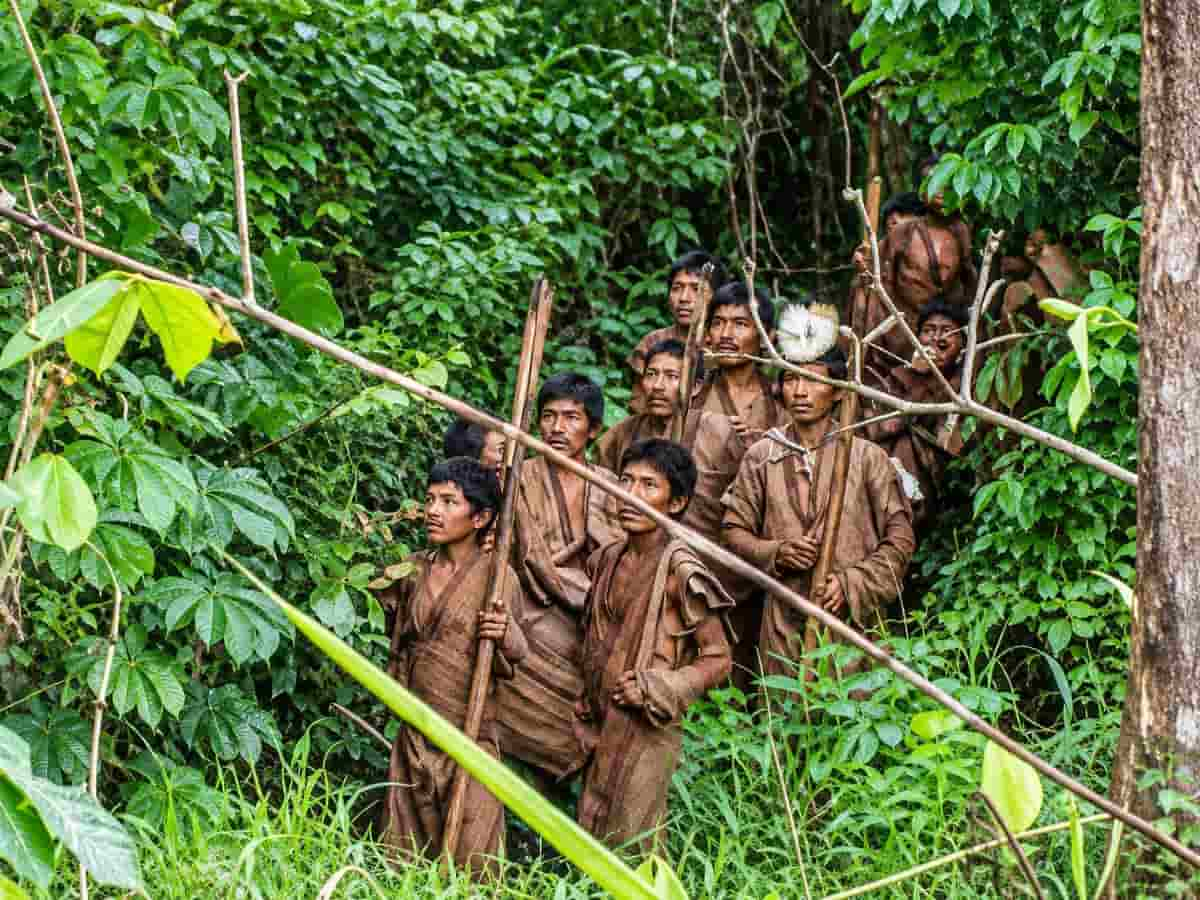
In an extraordinary and deeply moving incident along the remote fringes of the Amazon rainforest, a group of roughly 20 members from an isolated indigenous tribe suddenly stepped out of the dense forest canopy, gestured to local riverfront villagers for food, and quietly retreated back into the wilderness. For generations, this community has lived entirely cut off from modern civilization, avoiding contact with outsiders and sustaining itself strictly through traditional hunting, foraging, and small-scale forest cultivation. Witnesses in the settlement near the borderlands of the western Amazon basin described the brief appearance as peaceful yet urgent, noting that the tribesmen carried traditional wooden bows and arrows while signaling clearly that they were hungry. Once local residents offered them basic staples such as bananas, cassava, and plantains from a cautious distance, the group gathered the provisions without hostility and disappeared within minutes back into the uncharted jungle.
Why Uncontacted Amazon Tribes Are Stepping Out of Isolation
Anthropologists, indigenous rights advocates, and forest monitoring agencies emphasize that uncontacted tribes almost never initiate contact with the outside world unless driven by severe external disruption to their ancestral territory. Across the vast expanse of the Amazon spanning Brazil, Peru, and neighboring South American nations, more than a hundred isolated indigenous groups still exist in voluntary isolation. Historically, these communities maintain a deliberate distance from settlements because earlier generations suffered catastrophic violence and exploitation during the rubber boom and subsequent waves of frontier expansion. When a group of 20 individuals takes the extraordinary step of approaching an inhabited riverbank or village perimeter to ask for food, specialists point toward acute ecological stress—such as prolonged drought affecting river fish stocks, disrupted wildlife migration routes, or encroachment by illegal loggers, gold miners, and narcotics traffickers pushing deeper into protected forest reserves.
The Severe Health Risks of Direct Contact With the Outside World
While local villagers acted out of compassion by offering food to the hungry tribesmen, public health experts and indigenous protection agencies warn that even brief physical proximity carries existential risks for isolated populations. Because uncontacted Amazonian peoples have lived apart from global society for centuries, their immune systems lack natural antibodies against common viral and bacterial infections that outsiders consider mild. A routine respiratory virus, seasonal influenza, measles, or a simple common cold transmitted through shared objects, clothing, or close conversation can trigger a devastating outbreak capable of wiping out a large portion of a small tribal band within weeks. Organizations such as Brazil’s National Indigenous Peoples Foundation (FUNAI) and international advocacy group Survival International strictly enforce “no-contact” protocols for this exact reason, instructing rural residents and riverboat workers never to pursue isolated groups, share utensils, or attempt to distribute discarded clothing.
Deforestation, Climate Extremes, and Shrinking Forest Corridors
Environmental researchers tracking satellite data across the Amazon basin note that recent years have brought compounding pressures on the remaining intact ecosystems where isolated tribes survive. Severe seasonal droughts have lowered water levels in vital tributaries, making traditional fishing and river navigation far more difficult for forest-dwelling communities. Simultaneously, illegal timber extraction, unauthorized road building, and land grabbing continue to fragment critical buffer zones along indigenous reserves in regions like Madre de Dios in Peru and the Javari Valley in Brazil. As heavy machinery noise and forest clearing alter animal habitats, wild game retreats deeper into inaccessible terrain, leaving isolated families facing sudden food scarcity. Conservationists argue that the sight of 20 tribesmen emerging to beg for basic nourishment serves as an unmistakable warning sign that the ecological shield protecting the Amazon’s most vulnerable human communities is under mounting strain.
Urgent Calls for Stronger Territorial Protection and Monitoring
Following the rare sighting, indigenous federations and environmental watchdogs have renewed calls for governments across the Amazon region to strengthen surveillance, dismantle illegal extraction networks, and enforce strict perimeter security around protected indigenous territories. Under international human rights frameworks and national laws in both Brazil and Peru, isolated tribes hold the fundamental right to remain uncontacted and to have their ancestral lands preserved intact without outside interference. Field protection teams are now tasked with discreetly monitoring the forest corridor where the 20 tribesmen emerged—not to track them down or force further interaction, but to ensure that illegal loggers, poachers, or curious onlookers do not enter the area and spark a deadly epidemic or violent confrontation. As global attention turns once again to this fleeting glimpse of a hidden human society, experts stress that safeguarding the Amazon’s uncontacted tribes ultimately depends on protecting the living rainforest that has sustained them for millennia.