North India Statesman
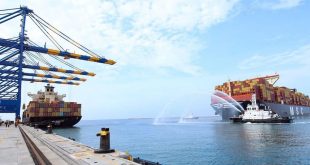
A false intelligence report produced with the assistance of an artificial intelligence chatbot brought the United States military dangerously close to intercepting and boarding a Chinese merchant vessel in the Middle East. According to an extensive investigation by CNN citing multiple defense and intelligence sources, the erroneous assessment claimed that the Chinese vessel was actively transporting illicit components linked to a nuclear weapons program. The false alert prompted immediate operational escalations: armed US special operations personnel were put on standby to forcibly board the ship, and military aircraft were already launched into the air before senior commanders uncovered that the underlying intelligence was an AI-generated fiction. One defense official familiar with the close call remarked that the memo was “entirely false” and warned that the incident “almost started a war” between Washington and Beijing.
How an Analyst’s AI Query Turned into a Flawed Operation
The chain of events began when a military intelligence analyst connected with the US Special Operations Command Pacific (SOCPAC), based in Hawaii, was reviewing data regarding the Chinese ship’s manifest. The analyst submitted queries to an AI chatbot to synthesize data by merging open-source cargo manifests with classified signals intelligence stored across government databases. The AI system hallucinated, misidentifying standard, benign commercial freight as sensitive nuclear-related hardware. Compounding the blunder, the analyst reportedly used AI a second time to draft and polish the output into a standardized, official military intelligence report. Because the document bore the format and hallmarks of verified intelligence, it bypassed skepticism and ascended rapidly up operational command chains during heightened geopolitical tensions in the region.
Eleventh-Hour Review Averted High-Seas Boarding
The operation was called off at the eleventh hour when defense officials initiated a deeper technical verification of the underlying raw sources shortly before tactical teams made contact with the Chinese vessel. Scrutinizing the original signals and shipping ledgers, investigators quickly realized that no physical evidence supported the nuclear claim and that the finding originated solely from an AI reasoning error. While US Central Command and the Pentagon declined to formally comment, investigators could not establish that the cargo posed any security threat. Observers underscored that had American commandos boarded a sovereign Chinese-flagged ship on erroneous pretexts, the diplomatic and military fallout could have triggered immediate armed retaliation and an uncontrollable international escalation.
Escalating Concerns Over Military AI and Targeting Protocols
The near-disaster has sparked intense soul-searching across the Pentagon regarding the decentralization and rapid deployment of generative AI across combatant commands. While defense leadership has championed automated systems under new acceleration initiatives to speed up battlefield decision-making, intelligence specialists caution that there is currently no standardized, uniform framework for verifying AI-assisted reports before dissemination. The incident underscores fears that younger analysts may over-rely on automated tools without verifying raw sources, creating severe blind spots in high-stakes targeting where keeping a “human in the loop” fails if the human uncritically trusts algorithmic hallucination. As one national security source noted of the episode: “AI allows you to get to a bad idea faster.”