North India Statesman
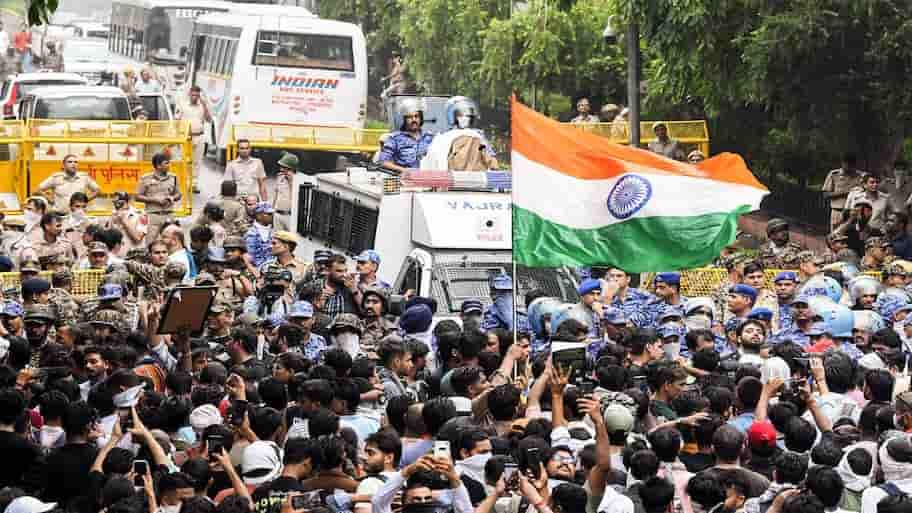
The confrontation surrounding the Cockroach Janta Party’s (CJP) massive agitation in the national capital has shifted directly into the courtrooms, triggering a multi-pronged judicial showdown across New Delhi. Following preemptive detentions, metro closures, and barricading to prevent demonstrators from marching to Jantar Mantar to demand the resignation of Chief Election Commissioner (CEC) Gyanesh Kumar, legal representatives and bar members have initiated immediate courtroom counter-measures. From contempt proceedings in the Supreme Court to formal applications seeking criminal cases against Delhi Police personnel, the administrative crackdown has sparked severe institutional backlash.
Contempt Petition in Supreme Court Against Home Secretary and Police Brass
Leading the top court offensive, advocate Shailendra Mani Tripathi filed a contempt petition in the Supreme Court against Union Home Secretary Govind Mohan, Delhi Police Commissioner Sanjay Arora, and other senior administrative functionaries. The plea alleges willful and flagrant violation of established Supreme Court precedents—including the landmark rulings in Anita Thakur and the Ramlila Maidan case—which recognize the fundamental right to peaceful protest under Article 19(1)(b) of the Constitution. The petitioner contends that the arbitrary enforcement of Section 163 of the Bharatiya Nagarik Suraksha Sanhita (BNSS), large-scale transit shutdowns affecting over 40 metro stations, and unauthorized detentions constitute unconstitutional obstruction and contempt of judicial orders safeguarding citizens’ civil liberties.
CJP Legal Affairs Head Moves Delhi Court Seeking FIR Against Police Officers
Simultaneously, the CJP’s legal affairs head, advocate Ratna Singh, approached a Delhi court demanding the registration of an First Information Report (FIR) against police personnel for illegal restraint and high-handedness. Singh alleged that law enforcement officers unlawfully surrounded and detained political workers, advocates, and students without furnishing formal detention memos, grounds of arrest, or legal authorization. The application argues that detaining lawyers on their way to represent or advise demonstrators violates legal professional privilege and amounts to wrongful confinement under criminal law, urging the magistrate to order a strict statutory inquiry and penal action against errant police officials.
Supreme Court Bar Voices Outrage, Turns to Chief Justice of India
The dramatic scenes on the streets—including the reported interception and detention of advocates and law interns across central transit nodes—have drawn the attention of the Supreme Court Bar. Members of the legal fraternity turned directly to the Chief Justice of India, raising urgent concerns over lawyers being prevented from discharging professional duties and representing detained agitators. Bar representatives argued that restricting legal practitioners from reaching protest sites or police stations undermines the constitutional guarantee of legal aid under Article 22, urging immediate judicial intervention to ensure that detaining authorities comply with the rule of law.