North India Statesman
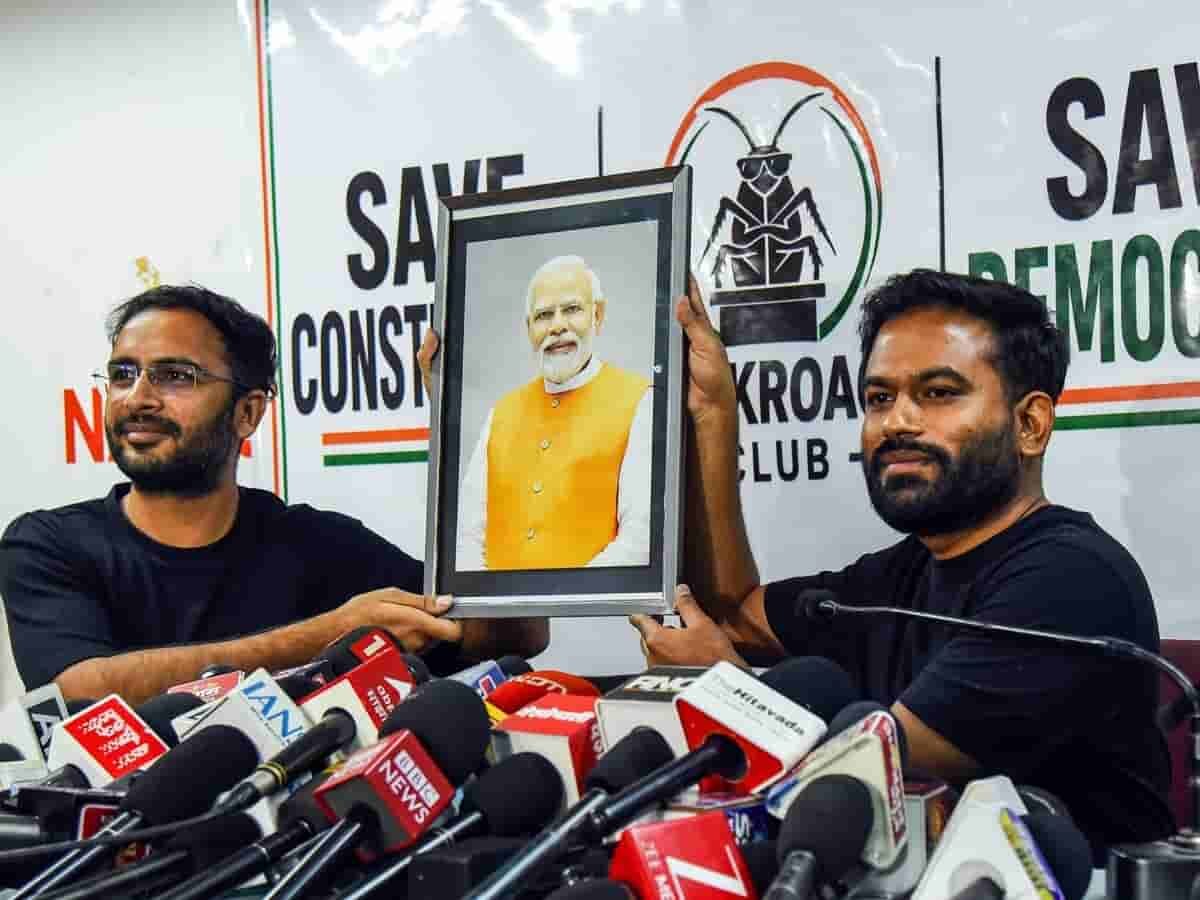
Just two days before Parliament convenes for its four-day special session on November 30, 2026, to take up the revised Delimitation Bill alongside legislation linked to women’s reservation, a viral mathematical breakdown has ignited fierce debate across political and social media circles. Abhijit Dipke, founder of the Cockroach Janata Party (CJP), has claimed that redrawing parliamentary and assembly constituency boundaries will allow the Bharatiya Janata Party (BJP) to win additional seats without gaining a single new vote. Sharing a step-by-step arithmetic example on social media platform X on Saturday, November 28, Dipke urged opposition parties not to fall into what he described as a deceptive electoral trap—warning that even when opposition outfits retain their existing strongholds, boundary reorganization can hand the ruling party fresh seats in regions where it previously held no ground.
Inside Abhijit Dipke’s 1,000-Voter Calculation
To illustrate how electoral outcomes can flip solely through boundary changes—a phenomenon widely studied in political science as packing and cracking—Dipke used a simplified model of a single hypothetical constituency containing 1,000 voters. Before delimitation, suppose the BJP secures 400 votes while the combined opposition receives 600 votes. Under India’s first-past-the-post voting system, the opposition wins that single seat comfortably by a 200-vote margin. Now, imagine delimitation splits that 1,000-voter constituency into two smaller seats of 500 voters each, with not a single voter changing their political preference:
| Scenario | Constituency | BJP Votes | Opposition Votes | Winning Party |
| Before Delimitation | Single Seat (1,000 voters) | 400 | 600 | Opposition (1–0) |
| After Delimitation | Seat 1 (500 voters) | 260 | 240 | BJP |
| After Delimitation | Seat 2 (500 voters) | 140 | 360 | Opposition |
Why Dipke Warns Opposition Parties Against Supporting the Bill
According to Dipke’s arithmetic, the post-delimitation tally ends at one seat each—even though overall public support across the 1,000 voters remains completely unchanged at 40 per cent for the BJP and 60 per cent for the opposition. Pointing directly to this outcome, the CJP leader argued that many regional and opposition parties appear willing to back the delimitation exercise because their existing seats appear numerically protected. However, he emphasized that while the opposition merely holds onto its traditional turf, the BJP captures a brand-new seat in an area where it earlier drew a blank. In a formal statement issued alongside CJP leaders Saurav Das and Mehr Pasricha, the outfit warned that concentrating opposition voters heavily into select pockets while spreading ruling-party supporters efficiently across newly carved constituencies could lock in a structural advantage for decades—citing Assam’s recent boundary redrawing as a cautionary reference.
Political Reactions Ahead of the November 30 Special Session
Dipke’s viral post arrives at a sensitive juncture as the Centre works to assemble a two-thirds majority in the Lok Sabha to pass the Constitution Amendment Bill. While the Congress and Trinamool Congress have voiced sharp reservations, several non-NDA parties—including the Sharad Pawar-led NCP (SP), YSR Congress Party, and BJD—have signalled openness or support toward the legislation, particularly as the proposed 816-seat Lok Sabha model aims to expand total seats by roughly 50 per cent while keeping state-wise percentage shares largely intact. Addressing the broader debate, CJP leaders maintained that while they fully support 33 to 50 per cent reservation for women, linking women’s quota to constituency boundary revisions diverts parliamentary focus from pressing public concerns such as unemployment, inflation, air pollution, and electoral roll transparency.
What Analysts Say About Delimitation and Electoral Math
Election analysts in New Delhi, Mumbai, and Lucknow note that Dipke’s 1,000-voter model accurately demonstrates a classic mathematical property of single-member district elections: seat share does not always mirror vote share when geographic boundaries shift. At the same time, constitutional experts point out that in India, delimitation is carried out by an independent Delimitation Commission guided by population figures, contiguity, and administrative boundaries rather than partisan voter data. Whether the upcoming parliamentary debate leads to stricter transparency safeguards around boundary drawing remains one of the defining political questions as lawmakers gather in New Delhi on Monday.